The Displacement Crisis in Somalia
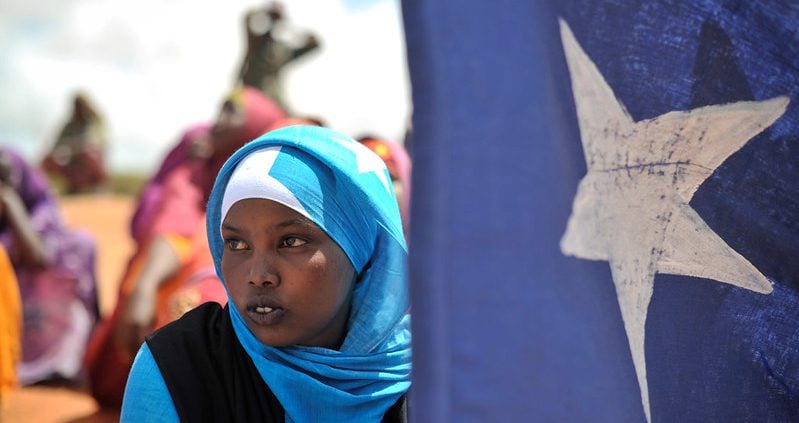 Somalia, a nation in eastern Africa, faces one of the most severe humanitarian crises in the world. Somalia is in the throes of a devastating civil war, and the crisis is further exacerbated by disease outbreaks, severe droughts, and food shortages. Due to this immense pressure on social and health infrastructure, poverty and the displacement crisis in Somalia are critical humanitarian issues.
Background on Poverty in Somalia
To achieve a more holistic understanding of these issues and how to alleviate them, the Somalia National Bureau of Statistics and Somalia’s Ministry of Labour and Social Affairs partnered to launch a new Multidimensional Poverty Index (MPI) in 2022.
Multidimensional poverty considers the challenges faced by people experiencing financial poverty as well as those who lack access to adequate educational opportunities, sanitation, electricity or clean drinking water. Under this more holistic approach to poverty, far greater numbers of people living in areas lacking basic infrastructure qualify as impoverished. Overall, approximately two-thirds of Somali citizens face multidimensional poverty.
The Internal Displacement Crisis
Internal displacement is another critical dimension of the crisis in Somalia. The number of internally displaced people has tripled in the last decade due to ongoing armed conflicts and droughts.
There are currently an estimated 3.8 million internally displaced people (IDPs) in Somalia, amounting to roughly 20% of the total population. Further, more than 80% of the IDPs in Somalia are women and children. This striking gender and age-based disparity shows the importance of aid specifically geared toward the most heavily impacted demographics of women and children.
Ongoing Efforts to Alleviate Displacement in Somalia
Save Somali Women and Children (SSWC) is a Mogadishu-based nongovernmental organization (NGO) that provides shelter to displaced women and children. The organization pursues this goal by constructing and managing temporary shelters for IDPs and providing non-food item (NFI) kits with a blanket, mosquito net, sleeping mat and other essential items to displaced people.
Further, the United Nations is engaged in active efforts to combat the marginalization of women, children and other minority groups in Somalia. Its action plans aim to alleviate the displacement crisis by working with the Ministry of Women and Human Rights Development and the Ministry of Planning and International Cooperation to support displaced populations.
Specifically, these partnered organizations will conduct research to generate accurate gender-relevant data to adequately inform their humanitarian responses and gender-responsive legislation. They also plan to incorporate more representatives of minority groups, including women and youth, to participate in humanitarian and public affairs, largely by supporting and partnering with women-led civil society organizations, NGOs and networks.
Additionally, Somalia’s federal government established the Durable Solutions Unit (DSU) at the Ministry of Planning, Investments and Economic Development. Some central aims of this unit include promoting government leadership in ameliorating the displacement crisis, coordinating across sectors to implement durable and efficient solutions, prioritizing interventions in governmental policy, and raising awareness and funds for lasting solutions. The unit recognizes that Somalia’s displacement interventions must be gender and age sensitive, giving special attention and support to the women and youth who make up the bulk of the displaced population.
The DSU created the Somalia Durable Solutions Progress Survey, which enables the local and federal government to identify and provide aid to more than two-thirds of Somalia’s IDPs. This survey gives the government a more comprehensive understanding of the displacement problem, helping inform how to effectively alleviate it.
Somalia has used the new information gathered from this survey to inform its National Solutions Pathways Action Plan for 2024-2029. Under this action plan, $288,055,732 is allocated to improving employment and livelihood opportunities. A key component of this goal is to promote business development for women, youth and disadvantaged communities, including targeted financial support for startups, finance programs for women’s groups and expanded employment opportunities.
Looking Ahead
Despite the severity of the ongoing displacement crisis in Somalia and its particularly profound impact on women and children, many groups are taking complementary approaches to alleviate it. NGOs such as SSWC provide immediate aid in the form of temporary shelter and emergency kits, while the United Nations and Somalia’s federal government continue working to alleviate the crisis both by providing direct aid to IDPs and by addressing the larger structural issues underlying the crisis.
– Melody Hubbard
Melody is based in Knoxville, TN, USA and focuses on Global Health and Politics for The Borgen Project.
Photo: Flickr
