Improving Africa’s Infrastructure: Top 5 Projects
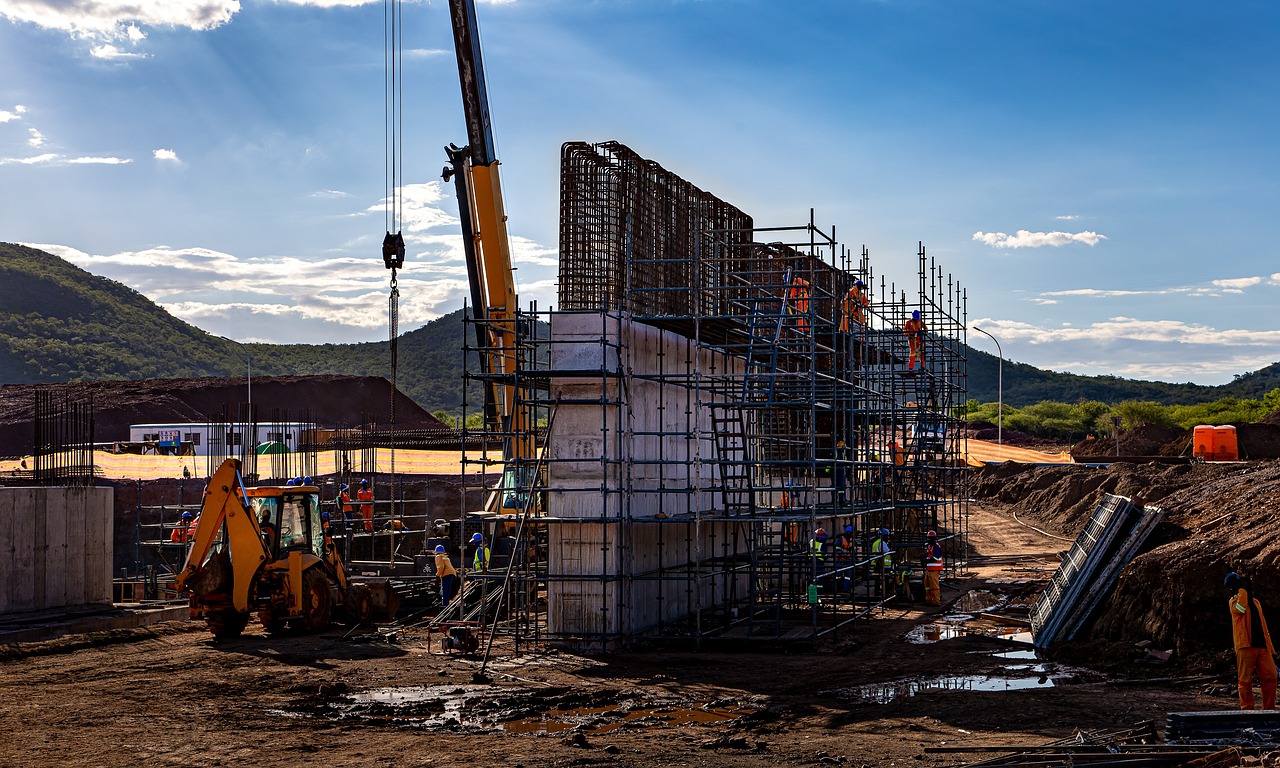 The continent of Africa is widely believed to be the cradle of civilization. Every historic country within its boundaries has cultural riches and natural resources. Even the untrained eye can find beauty in Africa’s scenery. That same untrained eye would recognize this beautiful and historic continent also lacks access to many of its inner countries. Lack of access makes it difficult for these countries to trade and grow with the outward countries and the rest of the world. Despite this, Africa is growing, though at times, an arduous process. The past few years have been full of positive change with the completion or expansion of new projects in the region. Here are the top five projects improving Africa’s infrastructure.
Grand Ethiopian Renaissance Dam (Ethiopia)
Under its original name, Project X, the Grand Ethiopian Renaissance Dam began construction in April 2011. Its construction immediately brought jobs into the region and, upon completion, would create a bridge allowing safe passage over the Blue Nile River. The project would be instrumental in improving Africa’s infrastructure by distributing water to Ethiopia, Sudan and Egypt. The dam would also handle significant floods in the area and help irrigation by watering 500,000 hectares of land (1 million acres).
Lekki Deep Water Port (Nigeria)
This aquatic marvel was started in 2003 to allow for more efficient trading and storage for the West African region. The Lekki Deep Water Port construction was granted non-recourse project financing, meaning the loan is paid back with profits from the finished project. With a capacity to hold 15,000 containers and handle 2.5 million TEUs (twenty-foot equivalent units) annually, the port has been critical in improving Africa’s infrastructure. The port has increased import and export turnaround times and reduced the delays of supplies and materials to the region.
Dangote Petroleum Refinery (Nigeria)
In addition to the country’s water port is the Dangote Petroleum Oil Refinery. Nigeria is the second biggest oil-rich country in Africa, but the country is reliant on imported petroleum products. The Dangote Petroleum Refinery broke ground in July 2017 with the expectations of meeting 100% of Nigeria’s gasoline needs and doubling the country’s refining capacity. With a capacity to produce 650,000 barrels of oil daily, the refinery is undoubtedly Africa’s most significant.
Siemens Mobility High-Speed Rail Lines (Egypt)
Egypt and Siemens are working on a project to lay 2,500km (1400 miles) of high-speed tracks through 60 cities in the coming years. The project began in September 2021 and is scheduled to conclude in 2027. The trains will significantly improve Africa’s infrastructure by linking cities and trade routes along the Red and Mediterranean Seas. This project is full of promises and will contribute substantially to the region’s growth.
Google Equiano High-Speed Internet
Google and its reach knows no ends and the Equiano High-Speed Internet project is just another example. This 12,000km subsea internet cable was dropped in April 2022 and operational by December 2022. The cable runs from Lisbon, Portugal, down the west coast of Africa to Cape Town, South Africa. The cable provides high-speed internet access and a digital connection to the outside world for many African countries.
This cable passes through several countries, vastly improving Africa’s infrastructure and creating substantial job markets in each area. Namibia is projected to add 21,000 jobs and South Africa is looking to add around 180,000 jobs, all thanks to Google Equiano. Additionally, Nigeria will see the greatest influx in job opportunities as the country is projected to add 1.6 million jobs. Fittingly, the high-speed cable was named after Nigerian-born writer and abolitionist Olaudah Equiano.
Looking Forward
Africa is preparing for and entering into the next incarnation of its development. Projects like those mentioned above are scattered across the continent and help assist with the transitions and new additions to the region. These projects help connect Africa to its neighbors near and far.
– Ryan Johnson
Photo: Pixabay
