Facebook Offers Online Education in Rwanda
Facebook plans to bridge the digital divide by connecting the remaining two-thirds of the world without Internet to the growing web of information. As a leader in this “knowledge economy,” CEO Mark Zuckerberg partnered with other industry giants to provide access to those who cannot afford it.
He continues to collaborate with leading companies in the technology field: Ericsson, Nokia, Qualcomm and Samsung. These prominent members formed Internet.org to offer connectivity to more than five billion people. In developing countries, his Internet.org initiative aims provide the following:
More affordable access
Collaborative efforts between industry titans, such as Samsung and Nokia, will expand mobile access. To decrease the cost of delivering data, companies seek to develop low-cost smartphones and partner with internet providers to broaden the reach.
More efficient use of data
Global partners also plan to invest in products to limit the necessary amount of data. Along with “data compression tools,” these products may offer the enhancement of network capabilities and mobile frameworks designed to reduce the data use of applications.
Assist businesses in increasing access
These companies plan to incentivize the development and manufacturing of affordable devices for developing countries. The partnerships also aim to “localize services,” offering more languages on mobile devices.
Education Online: SocialEDU
Internet access alone cannot address underlying issues in developing nations. Zuckerberg, as a result, will apply Internet.org to education inequities.
Referred to as SocialEDU, this program offers open online courses to students through a mobile application integrated with Facebook.
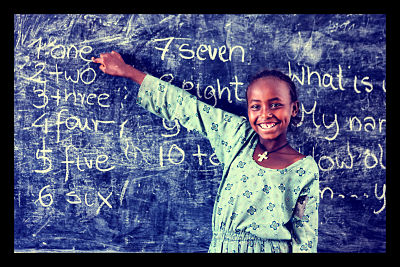
With a Facebook account, young Rwandans could learn from professors at the Massachusetts Institute of Technology and Harvard. Facebook prepares to combat the digital and educational barriers these students face and expand online education in Rwanda.
This social media platform partnered with “the Rwandan government, a telecom company, a device manufacturer and an educational content provider.” Such collaboration allows the for the following:
- Free content and data
- A supportive government
- Low-cost smartphones
- Innovative education on a local level
For one year, Airtel plans to provide the education content at no cost to participants.
Christian de Faria, the CEO of Airtel Africa, understands education drives social and economic growth. As a local carrier, Airtel will fuel this growth by offering a data subsidy.
Nokia has also joined this corporate collaboration, offering affordable smartphones to the region. This improves access to the Internet, enabling more students to join the open online classes.
The Nokia Vice President of Mobile Phones, Timo Toikkanen notes, “Our affordable smartphones help people make the transition from simple mobility to more sophisticated experiences. Playing a role in helping students get access to these experiences, such as social education through the SocialEDU initiative, is truly an honor.”
To promote further corporate innovation, the Rwandan government offers:
- Trade-in rebates
- Interest rate subsidies
- Micro-loan guarantees
- Targeted use of its Universal Service Fund
In support of corporate social responsibility, the government plans to expand its Smart Kigali program. This offers free wi-fi on college campuses and as a result, more students can access the multi-media SocialEDU content. The government will further support this initiative by adapting course materials to the needs of local students.
These educational apps require a large amount of bandwidth. To combat this, Facebook promises to provide technical assistance and support the app in a low-bandwidth region. Partnering with Ericsson, the company must test the app capabilities in a 2G environment.
Tailoring services to meet the needs of regions across the globe is but one part of the equation. Through such innovation and corporate cooperation, the digital divide gradually closes. With the expansion of online education in Rwanda, Facebook and its global partners will propel the country into a knowledge-based economy.
– Ellery Spahr
Sources: The Verge
Photo: PCI Podium
