Health Care in Armenia in 2026
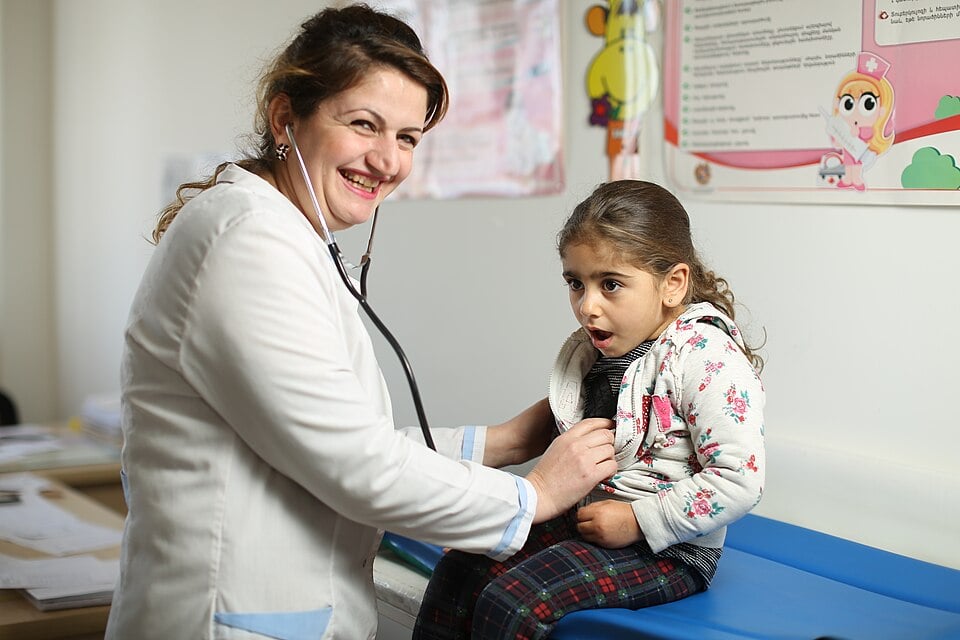 The Republic of Armenia is a mountainous, landlocked, upper-middle-income country of three million people, in Southwestern Asia. Once part of the Ottoman Empire, it gained independence after World War I (1918), was incorporated into the Soviet Union four years later, and regained its independence in 1991.
Armenia’s key economic sectors are services, mining and increasingly information technology. Armenia considers itself the “Silicon Valley of the Caucasus.” Here is information about health care in Armenia in 2026.
Armenia’s Health Care System
U.S. News in 2026 ranks Armenia #70 (out of 100) in health, with scores ranging from 1.0 (out-of-pocket spending) and 8.7 (medical research) to highs of 86.8 (immunization coverage) and 83.2 (infant mortality).
In 2022, the World Health Organization (WHO) reported several key points about Armenia’s decentralized health system, around 70% of which is in the public sector. Problems include:
- The Ministry of Health is the single payer for publicly funded health services.
- The system has been underfunded because of a low public budget for health ($1616 per capita in 2019; increasing to 7-7.5% of the government budget only after COVID).
- Out-of-pocket payments were the highest in the WHO European Region (84.8% in 2019).
- Provider payments incentivize inpatient services over primary care.
- While the number of physicians is above the average of the WHO European Region, there is a shortage of nurses.
- A disproportionately large share of the health care workforce is concentrated in the capital city.
- Noncommunicable diseases account for approximately 93% of all deaths, with major risk factors being high blood pressure, tobacco smoking and unhealthy diet.
- There was comparatively low antibiotic use.
At the same time, positive developments include a steady increase in service coverage, coordinated efforts toward universal health coverage, implementation of a nationwide electronic health information system (ARMED), screening and tobacco control programs, high childhood vaccination rates and declining infant and maternal mortality rates.
Increasing Health Care Coverage
Armenia’s first universal health insurance system was initially discussed in 2019 and was planned to begin in 2022, but was delayed by COVID-19, followed by war in 2020. The system finally came into being on 1 January 2026, following the adoption of legislation by parliament in December 2025.
In 2024, the World Bank estimated that 20% of Armenians did not receive health care in Armenia because they could not afford it. The new insurance scheme aims to reduce that financial barrier. The government has phased in the new program beginning with 1.6 million residents, planning to have the entire population, including agricultural and contract workers, entitled to a standardized package of covered health services by 2029. Enrollment is mandatory for employees earning more than $555/month, who pay an income-based monthly premium ranging from $0.83-30.00. Those earning below that amount are exempt from a monthly premium until 2027. Fully state-funded groups include children under 18, citizens 65 and older, disabled persons and socially vulnerable families, including families of deceased military personnel.
Armenians who are not yet eligible for universal coverage will continue to rely on state funding (e.g., various state-funded vulnerable groups), state-targeted disease and treatment programs (e.g., oncology, chronic kidney disease, cardiovascular emergencies, some infectious diseases—TB, HIV/AIDS), self-pay, charitable foundations and humanitarian aid.
In October 2026, Armenia’s health minister announced the second phase of the health insurance program, a proposal to split the cost of the monthly insurance premiums among the state, employers and employees. Based on income, employees would pay 18.5-44% of the monthly premium, or ($5.55-13,31). Employees will now also have the option to insure one or two additional family members (again, income based).
Impact of the New System
The immediate impact of the new health insurance system, which will substantially reduce patient self-pay, has been increased demand. There has been unexpected higher service use by workers who had accumulated health problems because of their financially limited access to care.
At the same time, historical regional disparities remain. There is a concentration of healthcare resources in the capital city of Yerevan, for example, which continues to have a comparative advantage over the quality of healthcare elsewhere. The Ministry of Health considers “proportionate regional development” as a priority now, however, constructing or improving facilities in other areas and reimbursing tuition fees of regional health workers.
The Future
Despite the underfunding of the health system noted in 2022, Geo Factbook has reported that per capita health care spending is estimated to be $2,277 in 2026, up 3.2% from 2025 (with the country ranking 63:193).
In addition, in August 2026, the Tender Alert Service reported a “comprehensive, multifaceted procurement drive of the Ministry of Health to upgrade medical infrastructure and secure essential medical supplies.
The initial rollout of universal coverage that revealed pent-up demand for health care perhaps will begin to decline as the healthcare system shifts toward prevention. Preventive visits and screenings are currently included in the new coverage and, from 2029, activating insurance coverage will first require designated screening examinations.
The latest reports, after implementation of the first phases of universal health coverage, seem to be an indication that changes are underway that will substantially change health care in Armenia for the better for all of Armenia’s people.
– Kelly Schoessling
Photo: Wikimedia Commons
