Poverty in Lesotho: Empowering Locals and Reviving the Agriculture Industry
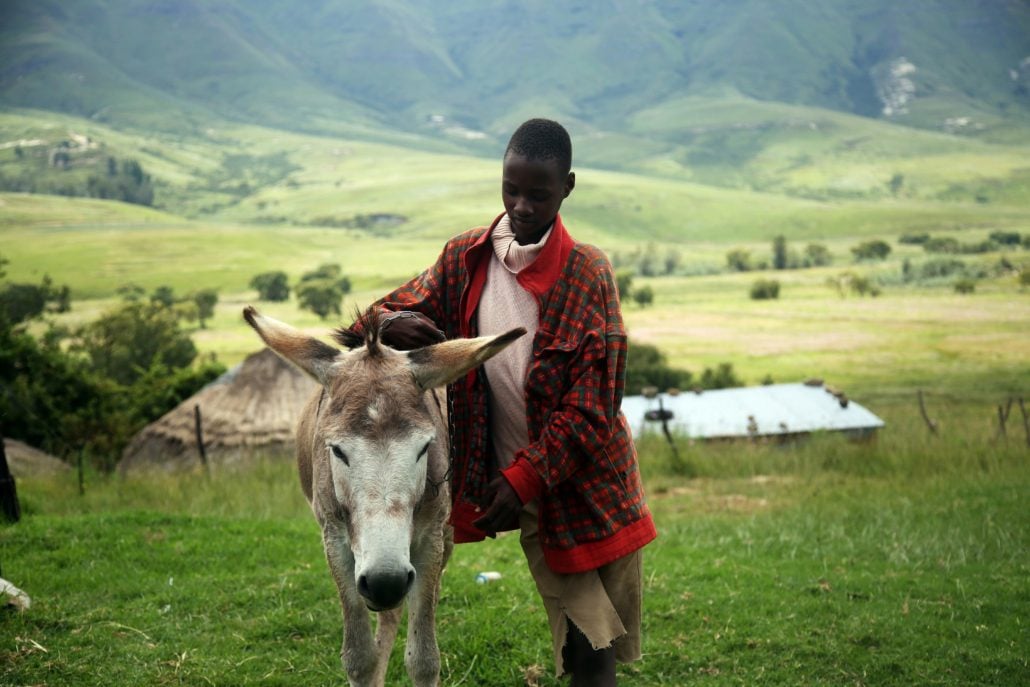 Poverty in Lesotho mostly affects rural residents whose livelihoods depend on agriculture. In 2017, the World Bank reported that almost half the population lived in poverty. According to the Oxford Poverty and Human Development Initiative, 35.9% of rural residents experience multidimensional poverty compared to just 6.8% in urban areas. This contrast shows that rural areas are the place to focus on when tackling poverty in Lesotho. The World Bank reports that more than 70% of locals depend on agriculture as a source of food and income.
However, changing weather puts the agriculture sector at risk, and the microclimate terrain and lack of infrastructure make it difficult for locals to reach institutions that can meet their basic needs. These factors have been keeping poverty in Lesotho alive. At the same time, recent innovations in agriculture and the growing digital payments economy are changing people’s lives for the better.
The Link Between Rural Living and Poverty
Since rural Lesotho has lacked digital infrastructure such as online banking, most rural poor people have limited access to larger commercial markets to support their businesses. In 2025, the UN Capital Development Fund reported that two-thirds of adults in rural areas face significant financial access barriers due to the country’s topography and lack of adequate infrastructure.
People who live in poverty pay higher costs than those who do not; this is also known as the poverty tax. In rural Lesotho, a cost a rural poor person would have to pay is traveling long distances to solicit help from a financial institution. In 2016, the Central Bank of Lesotho reported that 55% of the population needed to travel over an hour to reach a bank branch, while only 24% of residents live within a 30-minute travel time from a bank branch.
Traveling long distances takes time and energy, so one may lose income along the way compared to someone living in an urban area.
Furthermore, the Lesotho Financial Inclusion Strategy 2024-2028 reports that, while there has been some progress in tackling financial barriers, a gap between urban and rural residents’ access to financial services persists: 95% of urban residents are financially included, while only 88% of rural residents are.
So, while urban residents have more opportunities to support their businesses or seek help from nearby institutions, people in rural areas are more prone to stay in poverty. That is why it is so important to find ways to help rural residents access these institutions without paying a ‘poverty tax.’
What the World Bank is Doing
The World Bank has had multiple projects in Lesotho. One recent and ongoing example is the Lesotho Competitiveness and Financial Inclusion Project (CAFI), which helped locals access around $2.5 million in finance and created 2,100 jobs. With the help of grants, mentoring, and training helped enterprises such as Pay Lesotho, developed by a local founder, Lerato Masupha, were able to help develop the digital payments economy.
How Digital Payments Helps Those Living in Rural Areas and Poverty
Innovations in digital payments include LeSwitch, an initiative between the Central Bank of Lesotho and the banking sector, which aims to foster digital inclusion and create an efficient payment infrastructure.
Lesotho has an ongoing Lesotho National Financial Inclusion Strategy (2024-2028). Developing e-commerce helps reduce the poverty tax, as people in rural areas no longer need to travel long distances for financial matters; they can use online banking services to apply for grants, etc. This reduces transportation costs and makes people more willing to make digital payments. According to AFI, financial inclusion reached 91% through mobile money payments under the 2017-2021 Lesotho National Financial Inclusion Strategy. Furthermore, people’s savings are better protected through online services and digital payments rather than cash. This helps build people’s financial confidence. Together, these benefits show why this infrastructure is critical to connecting isolated businesses and households to a wider, more opportunity-rich economy, which can help many escape poverty. These gains also help explain why digital payments matter alongside agricultural support.
Protecting and Promoting the Agriculture Industry
Lesotho has a history of suffering from droughts that have led to severe food insecurity due to crop failures. Finding ways to stimulate crop production is key to reducing poverty in rural areas.
The Smallholder Agriculture Development Project (SADP) II, supported by the World Bank, provides grants to smallholder farmers and climate-smart agriculture technologies to boost crop production and commercialization in the agriculture sector. The SADP II taught locals to implement climate-smart drip irrigation. Drip irrigation systems reduce waste by delivering water directly to individual plants instead of over a large area. Making crops more climate-change resilient will protect locals better from future droughts and changing weather patterns. The project delivered strong results, with more than 56% of beneficiaries reporting better access to markets. In addition, business contracts between the private sector and farmer groups increased by around 20%. This bodes well for commercializing and strengthening Lesotho’s agricultural sector.
How Strengthening Agriculture can Empower Women in Lesotho
Poverty disproportionately affects women in rural areas. As of 2023, 40% of Lesotho’s workforce works in agriculture, and they are predominantly women.
The Strengthening Gender-Responsive Climate-Smart Agriculture (CSA) in Lesotho workshop discussed how “poverty is feminized,” as women were mostly affected by climate-related disasters and could not adapt because of limited access to land and financial resources.
While developing access to financial institutions can help many find opportunities to escape poverty, this assumes men and women have equal access to such resources. Women are less likely to have land ownership, making it difficult to apply for financial help, as many banks require land for collateral.
With this in mind, when strengthening the agriculture industry, it is important to consider how policies and developments can directly help rural women living in poverty.
What’s Next?
Poverty in Lesotho doesn’t have to be difficult to tackle. Looking forward, successful aid projects usually come from direct collaboration with locals. Given the microclimate and large rural population, it is important to create poverty-reduction programs that are resilient to supply shocks and long-lasting. With the right implementation, Lesotho locals can create successful poverty-reducing innovations such as digital payments and commercialize their agricultural businesses, helping reduce poverty in Lesotho.
– Yolanda Trujillo Rodriguez de Ledesma
Yolanda Trujillo Rodriguez de Ledesma is based in Beijing, China and focuses on Business and New Markets, and Politics for The Borgen Project.
Photo: Unsplash
