Food Systems in Namibia: Water, Trade and Resilience
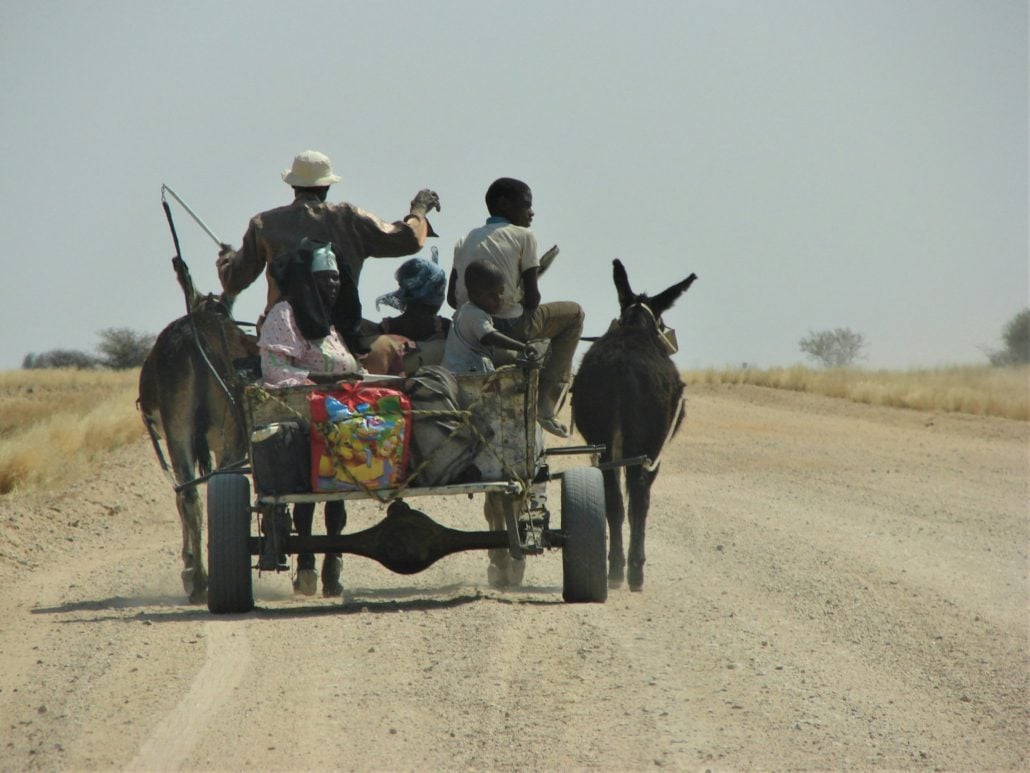 Namibia is one of the driest countries in sub-Saharan Africa, and less than 1% of its land is suitable for arable farming. Water scarcity places pressure on food systems in Namibia, while poverty can make it harder for families to obtain enough food. The country’s 2021 Multidimensional Poverty Index report, based on the 2015–2016 household survey, identified 43.3% of the population as multidimensionally poor. This measures overlapping deprivations in education, health and living standards, rather than income poverty alone.
Trade and Food Supplies
A May 2023 Freight News report estimated that Namibia relied on imports for 80% of its food consumption, with much of that trade moving through South Africa. This dependence connects food supplies to transport routes and conditions beyond Namibia’s borders.
Livestock also plays an important role in the economy. Namibia exports beef and other livestock products to international markets. Agriculture Minister Inge Zaamwani described the livestock value chain as sustaining the livelihoods of approximately 70% of the population. This claim refers to the wider value chain, rather than export earnings directly supporting that share of people.
Disease can disrupt this trade. In October 2026, foot-and-mouth disease prompted restrictions on animal movements and affected access to export markets. The European Union amended its import rules for Namibia’s previously authorized export zone. The measures were not a blanket suspension of every meat import and export; eligible cattle could still be slaughtered at export abattoirs under specified conditions.
Outside livestock, table grapes grown in the Aussenkehr Valley offer another export opportunity. Reporting on efforts to enter the Chinese market illustrates how producers are seeking additional buyers. Market-access plans should not be confused with completed shipments or guaranteed orders.
Improving Water Access
Water is essential to food systems in Namibia. In January 2026, the Social Security Commission’s corporate social responsibility fund financed three solar-powered boreholes serving four villages in the Kunene Region. The project brought clean groundwater closer to more than 800 community members who had previously relied on lengthy walks to seasonal water sources.
In September 2026, Chinese experts began a two-week study of possibilities for borehole drilling and groundwater development across Namibia’s 14 regions. The work was an assessment of potential water resources, rather than confirmation that new boreholes had already been completed nationwide.
Supporting Recovery and Local Innovation
Following the 2024–2025 drought, the Republic of Korea contributed 4,896 metric tons of rice through the World Food Programme’s OnDemand Service. The World Food Programme’s (WFP) March 2026 announcement said the contribution was intended to support approximately 300,000 people between April and December 2026 as households rebuilt their livelihoods.
International cooperation also supports farming innovation. A German-Namibian biochar project uses encroacher bush to produce a charcoal-like material that can improve soil. Farmer Marieke Voights has used biochar in vegetable and animal-feed production. The project shows one approach to making use of problematic bush, although one farm’s experience does not demonstrate nationwide results.
Education offers another potential route to developing skills. Namibia began rolling out free higher education in 2026 following President Netumbo Nandi-Ndaitwah’s earlier pledge. Tuition and registration support can reduce some barriers, although accommodation, transport and other living costs remain challenges. The policy’s effects on agricultural skills and food production have yet to be established.
Looking Ahead
Together, trade, water projects, drought relief and local innovation offer ways to strengthen food systems in Namibia. Their long-term contribution will depend on continued access to resources and the country’s ability to respond to drought and other disruptions.
– Timon Geoffrey Heckroodt
Timon is based in Worcester, Western Cape, South Africa and focuses on Global Health and Politics for The Borgen Project.
Photo: Unsplash
