Food Systems in Tanzania: Food Production on Land
 In 2018, 51.3% of Tanzania’s population lived below $3 a day, illustrating the country’s continuing poverty challenges. The World Bank classifies Tanzania as a “lower-middle-income country” (LMIC).
Key parts of Tanzania’s food system include rice and livestock. As pressure on these resources increases due to growing global demand, many environments are exploited, leading to biodiversity loss, ecosystem degradation and reduced crop yields. However, international and regional demand for these products continues to grow, and a focus on sustainable farming solutions is crucial as demand for higher yields increases and climate extreme events continue. Here is more information about food systems in Tanzania.
Agriculture and Smallholder Farmer’s Poverty
The agricultural sector is a major contributor to Tanzania’s economy, accounting for 65% of employment. It is most present in Tanzania’s rural areas. Many are marginalized smallholder farmers who face barriers to training and finance as they respond to climate-related challenges.
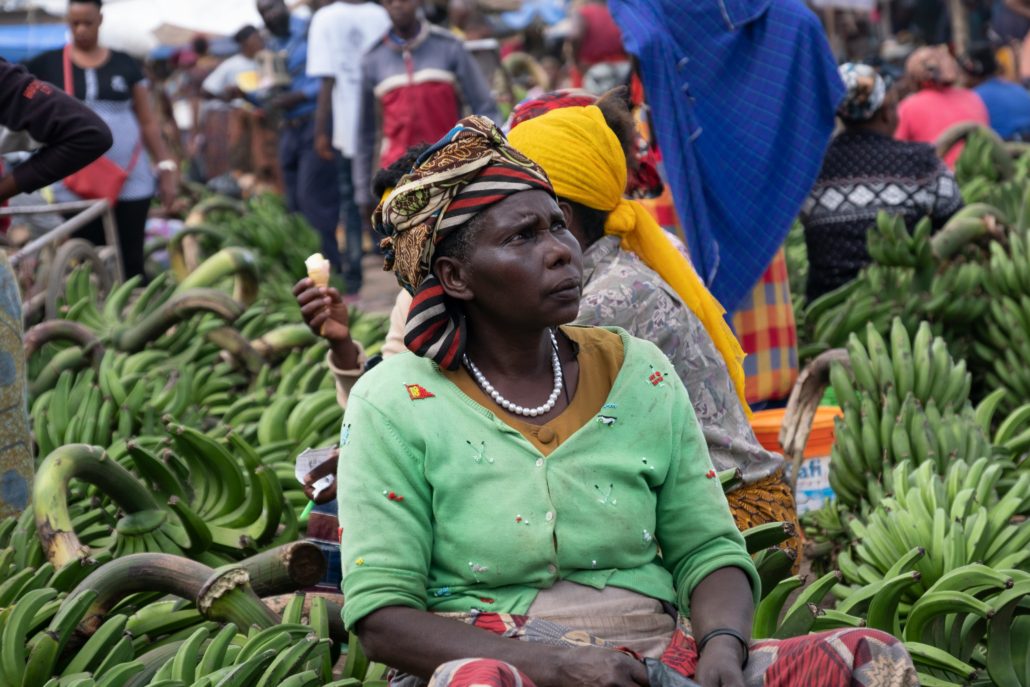
Primary agriculture, which includes farm-produced products, is the main source of income for these smallholder farmers, yet they are the ones more likely to suffer in a crisis. Top areas for primary agriculture include the Southern Highlands and Northern Highlands. The main crops in Tanzania are maize, rice, bananas and sweet potatoes.
The agricultural sector has introduced market changes to create and sustain the agricultural sector, so that workers can excel. The share of off-farm components is growing faster over time. Off-farm components include other income sources for primary agriculture farmers, which include the rest of the Agrifood System, such as food processing. This displays a shift towards a market-driven agriculture sector. However, access to these opportunities is not always available to all farmers, creating a challenge for those who may be unable to benefit from the changing market.
An effective food system structure is critical for improving food security and reducing poverty. Research on Tanzania’s food systems highlights the importance of adapting to market-driven changes sustainably. For example, recent results show that maize and rice are among the value chains most important for reducing poverty and improving dietary quality.
Opportunities for most rural smallholder farmers to escape the poverty trap are limited. One article defines the poverty trap as “a self-reinforcing situation where those affected by poverty are unable to escape due to stressors.” These traps stop farmers from improving productivity.
Livestock
Both livestock and primary agriculture receive little government funding and are also affected by climate change. This hinders its competitiveness in the world market and highlights the need for more production in Tanzania, as well as higher export and import volumes. Despite this, the sector is smaller than agriculture, yet livestock farming accounted for 7.4% of the country’s GDP in 2022 and provides 33% of employment within the country.
Project Solutions
Sustainable Agriculture Tanzania (SAT) is an example of a bottom-up initiative. “In 2020, 11,086 farmers from 122 villages received training from SAT.” It uses agroecological methods to improve farming and maximize yields. In the face of climate change, this organization specializes in building climate-resilient systems. These practices avoid methods that ruin soils and habitats or produce greenhouse gases.
Research/Proposals Still in Development
Tanzania’s participation in the GEF-8 Food Systems Integrated Program offers a new avenue for strengthening its food systems. FAO lists a $12 million GEF grant for the Tanzania project, which focuses on sustainable rice, livestock and aquaculture systems. The project is intended to improve resilience while addressing challenges including climate change, land degradation and biodiversity loss.
The World Bank has recommended climate-smart strategies to strengthen Tanzania’s livestock sector and improve its competitiveness. Its 2024 Tanzania Economic Update recommended at least $546 million in public investment between FY2024 and FY2029. The report identifies climate-smart livestock practices, stronger frameworks and effective incentives as measures that could support more sustainable production and job creation.
Conclusion
Overall, strengthening the sustainability of food systems in Tanzania remains important for food security and poverty reduction. Initiatives such as Sustainable Agriculture Tanzania, the GEF-8 food-systems project and the World Bank’s livestock recommendations show how community-level programs, public investment and national policy can contribute to more resilient agricultural systems.
– Emilia Upton
Emilia is based in London, England and focuses on Global Health for The Borgen Project.
Photo: Unsplash
