Vocational Education Training Centers in Colombia
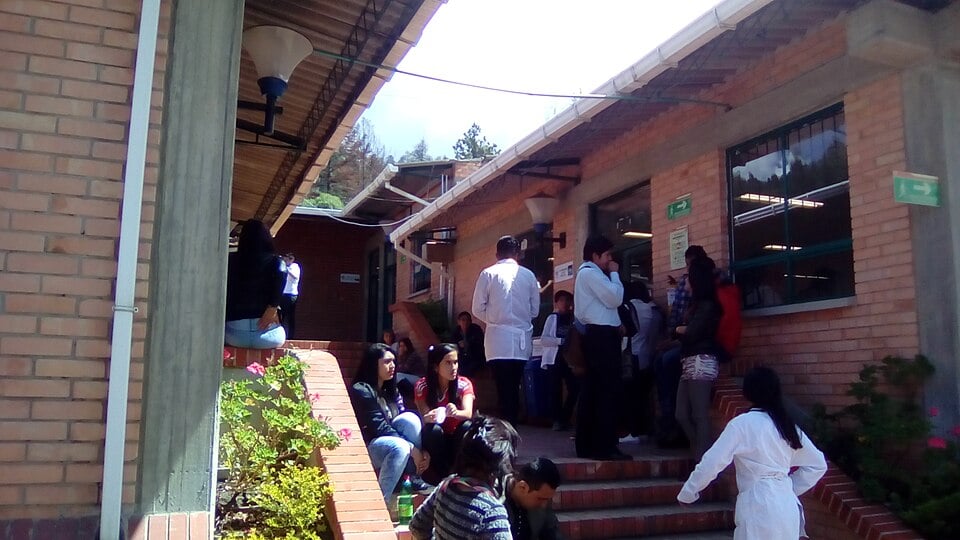 Vocational education training centers in Colombia are helping people develop practical skills that can lead to employment and entrepreneurship. This training can be particularly important for people experiencing poverty, as access to skills and employment opportunities can affect a person’s ability to obtain a stable income. One of the country’s largest providers of vocational education is the National Training Service, known as SENA. The public institution provides free training programs designed to prepare Colombians for occupations in areas ranging from technology and business to agriculture and manufacturing.
Poverty and Employment in Colombia
Poverty remains a challenge in Colombia, particularly in rural communities. According to Colombia’s National Administrative Department of Statistics (DANE), 28% of the country’s population lived in monetary poverty in 2025. The rate was higher in rural and dispersed areas, where 39.5% of people lived in monetary poverty. Monetary poverty measures whether a person’s income is sufficient to meet the basic needs represented by Colombia’s official poverty line.
Employment opportunities can also influence the ability of people to move out of poverty. The OECD reports that around 56% of workers in Colombia are employed informally, meaning they generally do not have access to employment protections or social security benefits. The organization identifies high informality, low access to high-quality education and other inequalities as factors contributing to poverty in Colombia. Developing skills that correspond with labor-market needs can help workers pursue more productive employment opportunities.
For people in low-income and underserved communities, vocational education can therefore provide a pathway toward employment and greater economic stability. By giving students practical skills that employers need, vocational education training centers can help address some of the barriers that make it difficult for people to access higher-quality work.
SENA Provides Free Vocational Training
SENA offers vocational training at several levels, including auxiliary, technical and technological programs. Its certified training programs are designed to prepare people for occupations needed by Colombia’s productive and social sectors. SENA also provides free virtual training, allowing Colombians to access courses without attending a physical training center.
SENA has a large network throughout the country. The institution currently provides in-person services through 33 regional offices and 118 training centers. This network allows vocational education to reach communities throughout Colombia rather than being concentrated solely in the country’s largest cities.
Connecting Training to Employment
Vocational education training centers in Colombia can be especially valuable when training is connected to the needs of employers. SENA’s Public Employment Agency helps connect job seekers with companies while also providing occupational guidance and employment services. The agency works to coordinate labor-market needs with vocational training, occupational certification and employment opportunities.
The connection between vocational training and employment is reflected in recent results from SENA’s Labor and Occupational Observatory. More than 35,600 people who completed SENA programs during the first half of 2025 obtained formal employment within six months of receiving their certification. According to SENA, 58% of the graduates evaluated entered the formal labor market during the six-month period following their certification.
These employment opportunities can be especially significant for people who previously relied on informal or low-quality work. Access to formal employment can provide greater economic stability and access to benefits that are often unavailable to informal workers. In this way, vocational education can help address employment challenges that contribute to economic insecurity and poverty.
Reaching Communities Across Colombia
SENA also works to expand vocational education beyond Colombia’s major urban centers. The OECD has identified SENA as an important provider of job training in Colombia and noted that it reaches some of the country’s more remote areas. Expanding access to training can give people in underserved communities opportunities to develop skills that can be used in the labor market.
The importance of reaching rural communities is particularly evident because poverty rates are higher outside Colombia’s urban centers. Providing training opportunities in these areas can help reduce geographic barriers to skills development and give people more opportunities to pursue employment without leaving their communities.
Other Vocational Education Training Centers
SENA is one of the most prominent providers of vocational education in Colombia, but it is part of a broader network of institutions that provide technical and technology-focused education. The Institución Universitaria Pascual Bravo in Medellín, for example, offers programs in areas including software development, electrical technology, mechanics, mechatronics and industrial production. Some programs are available through in-person, distance or virtual formats.
The Instituto Tecnológico Metropolitano (ITM), another public institution in Medellín, also maintains a strong technological focus. The institution offers programs in technological and professional fields and has been recognized for its emphasis on preparing students for life and work. Government sources have also highlighted ITM and Pascual Bravo as institutions participating in programs designed to expand access to technological education.
Together, these institutions demonstrate that vocational and technology-focused education in Colombia extends beyond a single organization. Different training centers provide pathways into fields that correspond with the needs of Colombia’s labor market, giving students opportunities to develop skills that can improve their employment prospects.
Preparing Colombians for the Future
Vocational education in Colombia is also adapting to changing demands in the labor market. The International Labour Organization (ILO) has worked with SENA and Colombian partners to develop training based on occupational competencies and current labor-market needs. According to the ILO, its professional training program in Colombia has reached more than “387,000 direct beneficiaries” since 2016.
SENA’s programs include fields such as software development, accounting, tourism, marketing, logistics, electrical installation and health services. By providing free opportunities to gain practical skills, vocational education training centers can help Colombians prepare for employment while supporting the country’s broader economic development.
Looking Ahead
For Colombians living in poverty or working in informal employment, gaining skills that correspond with labor-market needs can provide an opportunity to pursue more stable sources of income. As training centers expand access to technical and technological education, they can help address employment barriers while giving people tools to improve their economic circumstances.
The diversity of programs in vocational education training centers in Colombia demonstrates how practical education can create pathways toward employment and economic opportunity. As SENA and other institutions continue expanding access to training and connecting education with labor-market needs, vocational education can remain an important tool for helping Colombians build skills, find employment and pursue greater economic stability.
– Kenneth Dyer
Kenneth is based in Westwood, CA, USA and focuses on Good News for The Borgen Project.
Photo: Wikimedia Commons
