The Fight to End Child Marriage in Niger
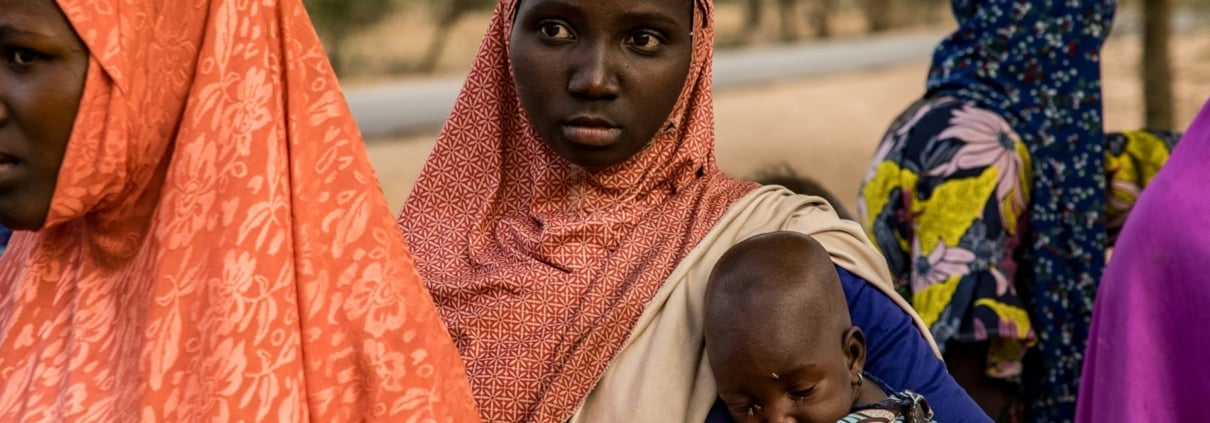 Child marriage in Niger has the highest rates in the world, with 76% of girls married before age 18 and 28% married before age 15. According to Girls Not Brides’ atlas, the percentage of girls married before 18 in central and western Africa is 32%, less than half of Niger’s rate. These numbers increase within rural and low-income communities and regions, such as the Maradi Region, where the child marriage rate is as high as 89%. Poverty often forces women to marry young, as they cannot rely on their own income. It also leads parents to marry off their daughters for financial gain.
Traditional and religious Nigerien values encourage high rates of child marriage by prioritizing marriage and childbearing over education and careers for women. These traditions often involve arranged marriages where young girls may not be aware of discussions, as well as polygamous marriages where men marry girls as additional wives to have someone younger, attractive and obedient.
What Needs to Change
Currently, the minimum marriage age for boys in Niger is 18. However, for girls, it is 15, making child marriage fully legal without exceptions. Under customary law, girls can marry even younger. While this is being revised so that children cannot marry under the legal age, leaders supporting religious and cultural traditions have slowed the process.
Beyond legal factors, child marriage is driven by high poverty and low education rates, especially for girls. In Niger, 44% of the population lives in extreme poverty, many of whom are children. Additionally, only 66% of Nigerien girls enroll in primary school, and a mere 17% complete secondary school.
Efforts to End Child Marriage
The Nigerien government has made multiple claims and demonstrations to show involvement in the fight to end child marriage. In 2017, President Issoufou Mahamadou stated that child marriage would no longer be tolerated, though a bill to raise the minimum age for girls is still under debate. Niger has committed to ending child marriage by 2030 as part of target 5.3 of the Sustainable Development Goals (SDGs), and has co-sponsored two resolutions to end child marriage, one in 2015 and another at the 2018 United Nations (U.N.) General Assembly.
Niger is a focus country of the United Nations Children’s Fund (UNICEF) and United Nations Population Fund (UNFPA) Global Programme to Accelerate Action to End Child Marriage. The program has provided more than 19,500 girls with life-skills training, supported the education of 3,000 girls and educated more than 94,800 boys and girls on girls’ rights and gender equality. This training and education provide girls with knowledge on reproductive health and financial literacy, reducing reliance on parents or husbands.
Various charities, such as Girls Not Brides, also work against child marriage. The organization has 31 members working in Niger. The country is part of a Girls Not Brides national coalition advocating for better strategies and law implementation. Save the Children has also worked in the country since 2005 to end child marriage by alleviating poverty and food insecurity. Last year, it helped more than 490,000 children through health care, education, financial aid and protection from harm.
Looking Ahead
While child marriage in Niger may not end by 2030, having this and other resolutions in place shows increased awareness of the problem. With the help of UNICEF and various charities, child marriage may eventually become a thing of the past in the country.
– Ally Jones
Ally is based in Bethany, OK, USA and focuses on Good News and Politics for The Borgen Project.
Photo: Unsplash
