3 Ways ‘Moving The Goalposts’ is Empowering Girls in Kenya
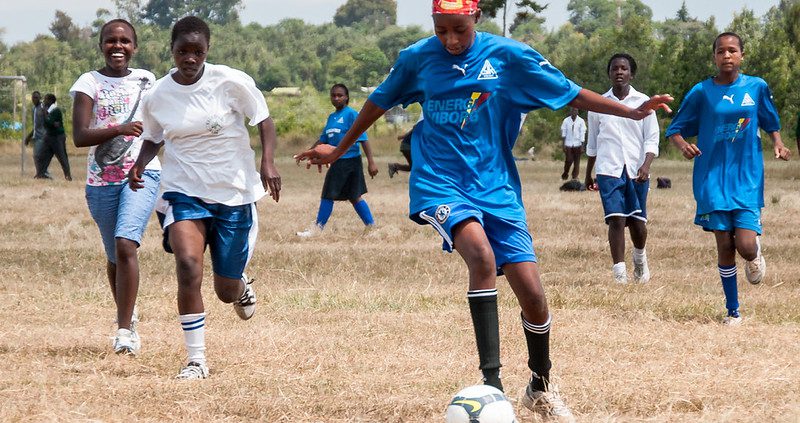 Empowerment means having the confidence, resources and opportunities to make decisions about one’s own life. However, many women in Kenya still face significant barriers to achieving this due to persistent poverty, unequal access to education, restrictive gender norms and limited economic opportunities. The United Nations Children’s Fund (UNICEF) reports that in rural areas of Kenya only 27.6% of women are considered empowered, while girls are much less likely than boys to complete their education due to factors such as poverty, child marriage and teenage pregnancy.
To address these challenges, the nonprofit organization Moving The Goalposts (MTG) has been using football as a tool for social change since 2001. Founded in Kilifi County, MTG describes itself as “a movement powered by sport, community and purpose.” Through its sports, education and health programs, the organization has reached over 50,000 girls and young women ages 9 to 25 across Kenya. Here are three ways Moving The Goalposts is empowering girls in Kenya.
Building Female Leadership Skills
Moving The Goalposts empowers girls by developing them into leaders within their own communities. The football program trains girls as peer mentors, referees and coaches, giving them the opportunities to develop leadership and communication skills on and off the pitch. There are 6,000 women in the program serving as mentors, supporting younger girls and acting as role models in their communities. These leadership abilities build confidence and encourage girls to use their voice to advocate for their rights in education and community development, as well as improving their future employment opportunities.
This is especially important as gender inequality persists in Kenya. Women’s opportunities take a hit after an early marriage or pregnancy, closing the door to higher education. A lack of affordable, quality child care worsens this cycle. The World Bank states that about 31% of 19-year-old girls are already married or have children, a figure that jumps to 49% among the poorest. Helping girls stay engaged in education is therefore key to MTG’s mission.
Supporting Education and School Retention
Education is one of the most effective ways to reduce poverty, yet in Kenya many women leave school without completing their education. According to the World Bank, in Kenya’s poorest areas, 51.3% of women have no education, compared to a national average of 17%. The MTG education program aims to reduce the number of girls who drop out by supporting their educational development, from primary to secondary school and even through vocational training. MTG has a 90% transition rate from primary to secondary school through its academic program and has supported the education of more than 5,000 girls.
To achieve this, MTG provides essential resources such as school fees and learning materials, allowing girls from low-income backgrounds to continue their education. This also gives them the opportunity to increase their future earning potential and improve outcomes for their families, helping break the cycle of poverty.
Improving Health Knowledge
The program considers access to health care and knowledge a fundamental right and trains peer mentors to educate girls on women’s health. MTG has provided these services to more than 50,000 girls and young women. This support is particularly important as teenage pregnancy remains common among girls living in poorer communities; in Kenya, 21% of women living in the poorest communities reported having experienced a teenage pregnancy. By providing accurate health information and peer support, MTG allows girls to make informed decisions about their futures. Better health outcomes can help girls stay in school, pursue employment opportunities and improve their long-term economic prospects.
Empowering Girls in Kenya
As Kenya continues working toward greater gender equality, organizations such as Moving The Goalposts demonstrate how sport can serve as a powerful tool for social and economic development. By helping girls develop leadership qualities, stay in school and make informed choices about their health and futures, the organization is creating opportunities that extend far beyond the football field. In doing so, MTG is helping thousands of young women in Kenya build brighter futures while contributing to the long-term fight against poverty.
– Emma Wheeler
Emma is based in Valencia, Spain and focuses on Good News and Global Health for The Borgen Project.
Photo: Flickr
