Agrarian Initiatives Aiding Poverty Eradication in Kyrgyzstan
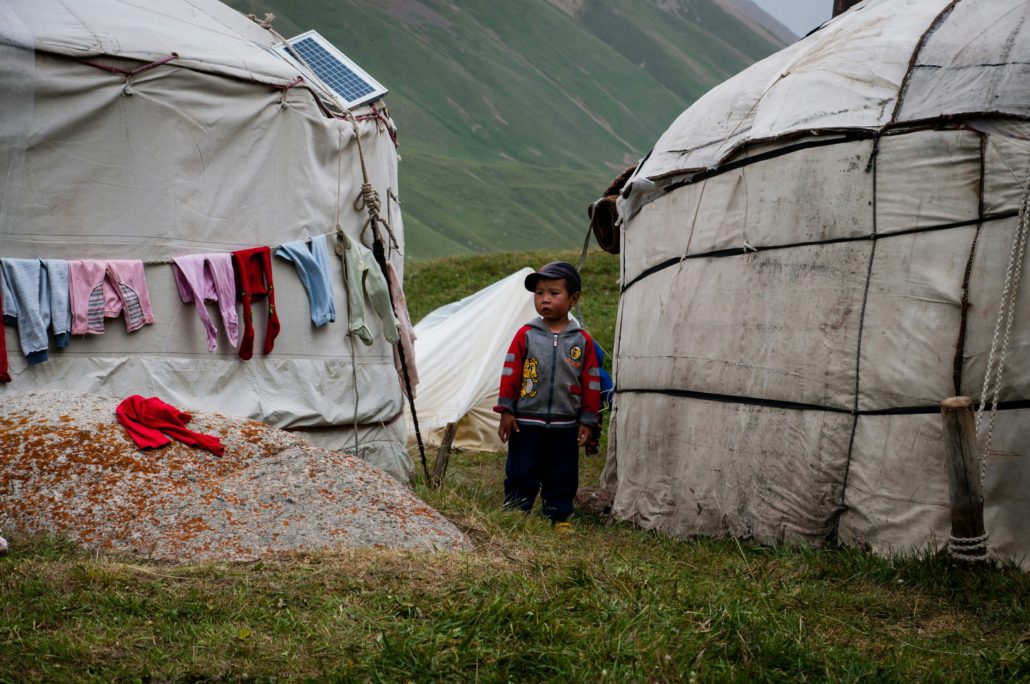 Worn by frequent footfall and the hooves of travelling horses, the dendritic paths of the ancient Silk Road lead to the wild heart of Central Asia: Kyrgyzstan. A landlocked nation where steppe plains stretch beyond the horizon and the tundra peaks of the Tian Sian and Pamir mountain ranges touch the arid skies. Kyrgyzstan remains untamed: a geographically isolated country retaining its deeply nomadic roots. Testament to this, agriculture maintains its position as a ‘key structural component’ in Kyrgyzstan’s economic development and measures to address poverty, alongside the traditional activity of livestock rearing. Here is information about how agrarian initiatives are working toward poverty eradication in Kyrgyzstan.
Kyrgyzstan Under the USSR
As a constituent republic of the USSR, the former Kirghiz Soviet Socialist Republic experienced rapid industrialization, modernization and, most pertinently, the collectivization of agriculture under the Stalinist “5 year plan.” A USSR Republican Committee targeted Kyrgyz nomads, focusing upon their settlement on collectivized land, while the large influx of Russian migrants were also given land to cultivate. The proportion of native Kyrgyz in Kyrgyzstan dropped to a total of 40% of the population by 1959.
Tensions and sporadic paroxysms of violence exacerbated by collectivization, migration and food scarcity generated emigration to neighboring China and towards urban hubs in Kyrgyzstan. The collapse of the Soviet Union in 1991 produced partial de-industrialization across Central Asia; many of the industrial enterprises lost their previous markets. Between 1991 and 1999, agricultural employment increased exponentially by almost 20%, with 41.44% of total employment coming from the agricultural sectors. The industrial and manufacturing opportunities once available under the USSR ceased to exist.
A Return to the Sickle
Henceforth, agriculture has endured as a major contributor to GDP. About 30% of the country’s workforce remain in agricultural industries, many of whom are dependent on farming for social security. Across Kyrgyzstan, smallholder farms produce the majority of goods using traditional methods to minimize costs. Agricultural endeavors remain laborious and time-consuming with low productivity. In order to reach the SDG 2, which is the goal of zero hunger and improved nutrition, initiatives such as the WFP-GAFSP operate by providing smallholder farmers with the equipment to increase food security. The installation of greenhouses, with drip irrigation systems, has markedly improved the agricultural landscape for these farmers. Such programs have taken positive, innovative steps towards poverty eradication in Kyrgyzstan. With only 12% of Kyrgyzstan’s land being arable and water scarcity becoming an increasingly pressing issue, such initiatives help provide technology and high-quality seeds to produce more hardy crop yields.
Yet, crop farming is only one side of the coin in Kyrgyzstan. Alongside crop cultivation exists the 1.7 million cattle and 6.3 million sheep and goats which generate milk, cheese and meat for trade and for subsistence. In order to truly eradicate poverty in Kyrgyzstan, innovations must tackle both aspects of agrarian activity. Many individuals rely on these animals and yet, as the IFAD cautions, the chains of value of produce and the animals themselves are severely underdeveloped. The reasons for this are complex and varied: the harsh and inhospitable climate, the lack of pastures and nutritious fodder to graze the animals upon which intersects with the hardships of immobility for herders due to disputes over land rights. Changing weather patterns loom to compound upon such issues, bringing with it new livestock pests and diseases. As such, initiatives require a holistic approach.
Herd Mentality: Improving Livestock Productivity
Between 2014-2021, the IFAD’s Livestock Market Development Programme II (LMDP II) addressed improving the productivity of the animals. The initiative interacted directly with the threat of pasture degradation. Simply increasing the number of livestock would lead to an increase in unsustainable grazing practices. Therefore, the initiative targeted the productivity of the animals themselves in an effort to improve these chains of value.
With 3,000 households and 157 pasture committees included, the initiative successfully increased the value of livestock production by 69%, resulting in a 25% poverty eradication amongst these communities Kyrgyzstan. The LMDP II included research into cattle breeding, introducing affordable artificial insemination accessible to smallholder farmers. The focus fell upon high-quality breeds in terms of milk productivity, combining them with local Alatoo breeds, maintaining the herds’ durability living in the harsh and variable climatic conditions of Kyrgyzstan. Knowledge hubs across Kyrgyzstan, generated through the program, continue to innovate, increasing animal productivity and thus, continue to decrease poverty in pastoral communities.
In combination with increasing the productivity of livestock, the LMDP II and the Ministry of Agriculture in Kyrgyzstan worked to improve animal health. The motorcycle initiative provided 630 motorcycles to veterinarians as a cost-effective way to navigate the winding mountainous terrain, increasing the accessibility of veterinarian services, even in the most remote locations. The Kyrgyzstan National Agrarian University – supported by LMPD and LMPD II – has bolstered this effort to make animal healthcare accessible. More than 100 students have received scholarships to study veterinary science and the number of veterinarians has almost doubled between 2013 and 2018.
A Vision of the Future
Such collaborative effort works towards producing healthier and thus, more productive animals which will increase incomes for herders and smallholder farmers. By producing a stronger knowledge hub to support the greatly important agrarian activity in Kyrgyzstan, rural communities will become increasingly resistant in the face of future threats posed to their industry. Continued innovations only prove that the quality of life in Kyrgyzstan is destined for greener pastures.
– Millie Lavington-Owen
Millie is based in London, UK and focuses on Technology and Solutions for The Borgen Project.
Photo: Unsplash
