5 Facts About Education in Iran
 In today’s world, it is easy to take the ability to read for granted. From commuting to work to taking online college classes, technology has become an important part of our lives. As these tools continue to evolve, reading comprehension may seem less important to some individuals, particularly with the increasing use of artificial intelligence (AI) in educational settings.
Yet, even in a fast-paced, tech-driven world, literacy remains an important skill. Many countries continue to struggle to provide children with safe and effective education. In recent years, Iran has taken steps to strengthen its education system, introducing several reforms aimed at improving learning outcomes.
With that being said, here are a few facts about education in Iran:
Literacy Rates
As of 2023, the literacy rate in Iran is relatively the same for both men and women. According to a study by the World Bank Group, women, specifically those aged 15 to 24, have a literacy rate of 99%. Currently, this represents the country’s peak literacy rate for this group, with the lowest rate recorded at 42% in 1976.
Similarly, the literacy rate among men in Iran mirrors that of women. As of 2023, men, specifically those aged 15 to 24, had a literacy rate of 99%. The lowest literacy rate among men in Iran was 71% in 1976.
With that data in mind, historically, Iranian women have had a lower literacy rate than men, with a 29% gap between the two groups. In another study by UNESCO, in 2019, it was reported that around 2% of Iranians, particularly those under the age of 24, were considered to be “absolute illiterates.” Of course, with the newly presented data, this statistic may not be as accurate following the release of the World Bank Group’s 2023 literacy data.
Low Education Funding
Education in Iran is very underfunded. The National Council of Resistance in Iran reports that the annual salary or the amount of money earned by Iranian teachers in a year, is less than $2,000, even below the international wage average in the country. This may be the contributing factor to the current national teacher shortage.
After completing mandatory primary education (ages 6–11), students spend three years in a guidance cycle designed to assess their academic strengths and determine which vocational track they will follow in high school. These tracks may be academic, vocational or science-based.
Unsafe Learning Environments
Budget cuts affect far more than teachers’ salaries. Beyond staff shortages caused by low pay, many schools struggle to provide safe learning environments. Issues range from unsafe transportation, sometimes resulting in the deaths of school-aged children, to poor infrastructure, including faulty heating systems and collapsed walls.
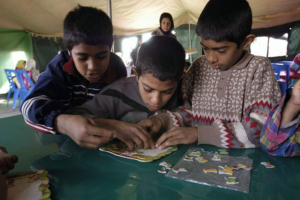
In rural areas, classes are often held in mud huts, temporary shelters or tents, creating additional health and safety risks for students.
What’s To Come?
The U.N.’s Convention on the Rights of the Child calls on Iranian authorities to guarantee every child’s right to education on an equal basis. It urges the government to make primary education fully free and to expand access to secondary education, providing more opportunities without cost to children or their families.
– Megan Akers
Megan is based in Fredericktown, OH, USA and focuses on Good News and Technology for The Borgen Project.
Photo: Flickr
