Programs Driving River Cleanups in India
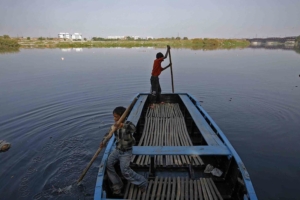 Home to approximately 1.5 billion people, India has the highest population of any country in the world. Stretching more than 1.269 million square miles (3.3 million square kilometers), it is the seventh-largest country in the world by area. It is home to several climates, including snowy mountain ranges, deserts, flat plains and tropical rainforests.
India’s Pollution Crisis
Due to its large population and industrialization, India has consistently ranked as one of the most polluted countries in the world. In 2024, India ranked fifth on the Air Quality Index (AQI) and 120 out of 122 on the Water Quality Index. Only one-fifth of India’s industrial waste is processed and disposed of properly, leading its citizens to dump waste into rivers.
Every year, millions of tons of waste, sewage and runoff collect in these rivers, resulting in terrible smells, contamination and health issues from water-borne illnesses like cholera, hepatitis A, dysentery and typhoid.
India’s Water Scarcity Challenge
Despite being home to 18% of the world’s population and 400 rivers, India remains one of the most water-stressed countries globally. About 600 million Indians, nearly half the population, face water-related challenges such as contamination and limited access. Around 70% of rivers are polluted with sewage and industrial waste, while 75% of rural households, totaling 63.4 million people, lack access to safe water. Environmental experts in India warn that by 2030, the country’s water demand could be twice the available supply.
The lack of clean water affects all aspects of life in India, especially agriculture, on which 70% of households depend for their livelihoods. About 52% of the sector still relies on rainfall, as groundwater is rapidly depleting across the country. Given India’s intense monsoon season and high rainfall, rainwater harvesting remains the only reliable method for many farmers to secure clean, usable water for food production.
However, India’s agricultural industry doesn’t just affect the country itself. India is the world’s largest producer and consumer of milk and legumes and the second-largest producer of cattle, rice, fruit, cotton and sugarcane. The lack of clean water impacts every part of the environment, hindering domestic crop production and global food accessibility.
River Cleanups in India
Fortunately, several initiatives in India and beyond are working to clean up the country’s most polluted rivers and expand access to safe water for its citizens. Below are some key programs tackling India’s water crisis:
- The River Cities Alliance (RCA): Launched in 2021 by the United Nations, the RCA invests in river cleanups across polluted cities worldwide and in India, it works closely with the Namami Ganga Mission, a government-led effort to restore the Ganga River, the country’s third-longest river. The RCA program is scheduled to end by March 2026.
- Bharat Clean Rivers Foundation: Founded in Mumbai, a city burdened with 13 of the world’s 144 most polluted river systems, the foundation partners with global organizations to achieve two main goals: removing plastic pollution from rivers and oceans and preventing further plastic inflow into Mumbai’s waterways.
- The Ocean Cleanup: Founded by Dutch innovator Boyan Slat, this initiative deploys fleets of riverboats to collect plastic waste from rivers and oceans. Since 2024, in partnership with the Bharat Clean Rivers Foundation, The Ocean Cleanup has intercepted millions of tons of plastic from Mumbai’s rivers before entering the Indian Ocean.
Conclusion
India’s water crisis stems from rapid growth, industrialization, and agricultural pressures, but progress is possible. Initiatives like those above prove that collective action can restore rivers, protect health, and secure livelihoods.
– Zoe Alatsas
Zoe is based in Brooklyn, NY, USA and focuses on Global Health for The Borgen Project.
Photo: Flickr
