Empowering Rural Girls in India To Complete Their Education
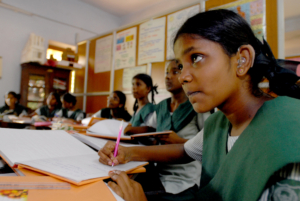 In many rural areas in India, despite making strides in increasing school enrollment over time, many girls still face challenges hindering them from completing secondary school. Adversities such as social norms, financial hardship and safety contribute to the lack of graduation among this demographic.
Approximately 29% of children drop out before completing elementary school. As for secondary education, around 50% of adolescents do not complete secondary education. Nearly half of primary school children fail to achieve sufficient grade-level learning levels. Initiatives and efforts aim to address gender equity and poverty reduction holistically.
Challenges Facing Rural Girls’ Education
Despite progress in enrollment, education in India for many rural girls is harsh. Social expectations often prioritize early marriage and household duties over schooling. Girls are often seen as economic burdens and early marriage (before 18 years old) is seen as a way to secure a stable financial future.
The study “Students and Brides: A Qualitative Analysis of the Relationship Between Girls’ Education and Early Marriage in Ethiopia and India” is crucial for understanding the link between education and early marriage in rural India, particularly in Jharkhand, where early marriage persists despite increasing awareness of education’s benefits.
The study found that while girls often viewed education as a way to gain confidence and life skills, its perceived value was frequently tied to improving their marriage prospects or household management, rather than fostering independence and knowledge. For instance, one participant remarked that an educated girl “will be able to manage her house and family well and chances of conflicts with husband and in-laws will reduce substantially,” highlighting how strongly gender roles shape expectations.
The study also documented how poverty and social pressure continue to push girls out of receiving an education in India. Some girls were withdrawn due to financial constraints, while others were married off to avoid gossip about their character. In contrast, girls who were able to delay marriage, such as the girl who canceled her engagement with the help of Project RISHTA peer educators, often had strong personal motivation and support from parents or teachers.
These specific examples underscore why education alone is not enough; tackling early marriage requires interventions that address social norms, offer economic support and provide continued education pathways even after marriage.
Safety Concerns
In March 2025, the Luena Foundation collaborated with the Women Development Welfare Society (WDWS) to help 46 girls in Choppadandi village, Telangana, stay in school by providing bicycles for transportation. Many of these girls previously walked up to six kilometers to school each day, facing safety risks and long travel times that often led to dropout or early marriage. With a $4,000 investment, the project supplied bicycles and ran awareness campaigns to encourage families to support girls’ education.
The impact was significant because the girls now get to arrive at school on time, feel safer and have more time and energy for studies and sports. Families save money on transportation, which they can use for essentials or future education costs. The project also shifted attitudes as parents became more supportive and some began saving for their daughters’ futures rather than planning early marriages. The initiative improved safety, access to education and community mindsets around girls’ schooling through a simple yet effective solution.
A Brighter Tomorrow
Although education in India has made considerable progress in boosting enrollment, many rural girls continue to face major barriers that prevent them from completing secondary school. Social norms, financial hardship, early marriage and safety concerns limit their educational opportunities. However, there are promising efforts underway. Programs like Project RISHTA provide safe spaces and peer-led education that help delay early marriages and promote healthier adolescent decision-making.
Additionally, initiatives such as the Luena Foundation’s bicycle distribution project in Telangana offer practical solutions with immediate impact. By addressing safety and transportation challenges, this project enabled girls to attend school regularly and on time. Despite the ongoing challenges, these targeted interventions show that change is possible!
– LaRayee Lee
LaRaymee is based in Missouri City, TX, USA and focuses on Global Health for The Borgen Project.
Photo: Wikimedia Commons
