How Urine Fertilizer in Burkina Faso is Boosting Food Security
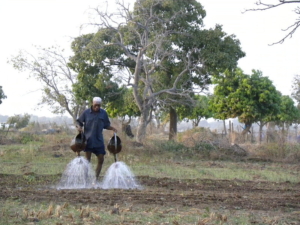 In Burkina Faso, smallholder farmers are grappling with a crisis that is both old and new: declining soil fertility and skyrocketing fertilizer prices. In a country where approximately 80% of the population depends on agriculture for their livelihood, even slight drops in yield can push families deeper into poverty. Now, an unusual solution is turning human urine into a powerful, low-cost fertilizer that could help farmers grow more food with fewer resources.
Urine Fertilizer in Burkina Faso
Human urine is naturally rich in nitrogen, phosphorus and potassium, the same nutrients found in commercial fertilizers. By separating urine at the household level using urine diversion toilets, farmers can collect, sanitize and apply it directly to their crops. According to a study in Burkina Faso, using urine fertilizer and compost together increased maize and eggplant yields by up to 90% compared to unfertilized plots.&amp;amp;lt;/p&gt;</p></p>
style=”font-weight: 400;”>Programs led by organizations like CIRAD and the Institut de Recherche pour le Développement are helping farmers in Burkina Faso and neighbouring countries adopt safe collection and application practices. These nutrient recycling pilots demonstrate that farmers can reduce reliance on expensive imported fertilizers while protecting groundwater from untreated waste runoff.
How it works
Simple ecosan toilets separate urine and feces, allowing households to store urine in sealed containers for a few weeks to kill pathogens. Once sanitized, the liquid can be diluted and spread on fields as urine fertilizer. A recent study in Mali found that farmers using urine fertilizer on rice paddies produced 1,623 kg/ha, outperforming plots fertilized with mineral fertilizer and achieved a benefit-cost ratio of 3.3. Farmer cooperatives and local nongovernmental organizations (NGOs) provide training on safe handling, dosage and storage, helping communities overcome taboos around human waste. Many see this as a crucial step for smallholders who struggle to afford chemical fertilizers, which can use 20% to 30% of their annual household budget.
Benefits for Health, Food Security and the Environment
Urine recycling boosts both yields and reduces pollution. Poor sanitation systems in West Africa often leak nutrients into rivers and groundwater, harming ecosystems and drinking water supplies. By recovering the nutrients from urine for farming, communities can close the loop between sanitation and agriculture in a safe, circular way. This practice directly supports the Sustainable Development Goals (SDGs):
- SDG 2 (Zero Hunger): Increasing food production for rural families
- SDG 6 (Clean Water and Sanitation): Improving waste management
- SDG 13 (Climate Action): Replacing synthetic fertilizers whose production is carbon-intensive
Looking Ahead
Nutrient recycling is not so widespread in Burkina Faso, but the evidence shows it could be transformative for food security in regions where soil fertility is falling and fertilizer prices are rising. As farmer cooperatives expand training and share success stories, more communities may see that the solution to hunger can be as simple as the waste they flush away.
– Rebecca Lee
Rebecca is based in Scotland and focuses on Technology and Global Health for The Borgen Project.
Photo: Flickr
