Access to Higher Education in Tajikistan
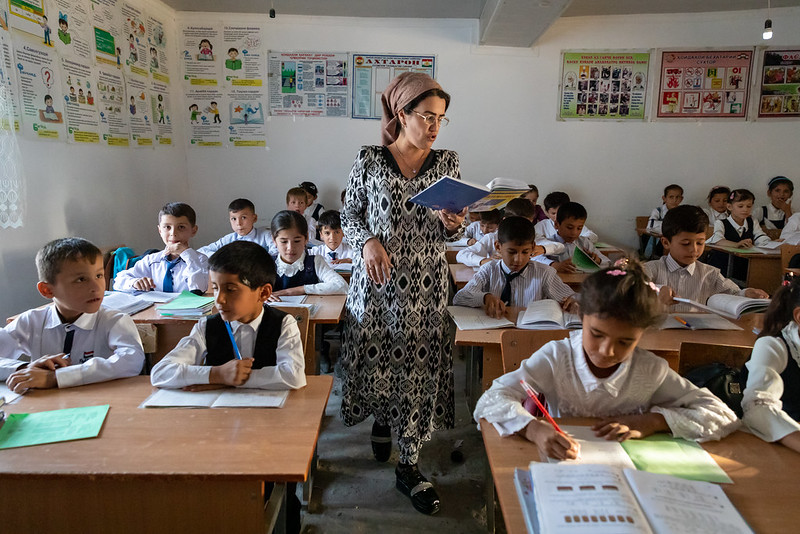 As of 2023, Tajikistan remains one of the poorest countries among the former Soviet republics. Only 22% of Tajiks have received any education beyond high school, and children born today could complete less than one year of tertiary education. This limited access to higher education in Tajikistan happens due to several factors, including poverty, traditional gender roles, and the lingering effects of the post-Soviet transition.
Poverty
From 2000 to 2020, poverty in Tajikistan dropped significantly, from 83% to 26%. Despite this remarkable progress, the country still struggles to promote higher education. As in many parts of the world, families facing financial hardship often find it difficult to afford university or college, making higher education in Tajikistan an inaccessible goal for much of the population.
In Tajikistan, 73.6% of the population lives and works in rural areas, and nearly half of them remain below the poverty line. These economic constraints make it especially difficult for rural families to support higher education, both financially and logistically. In many cases, families rely on their children to contribute to the household income, making school a lower priority. Child labor laws in Tajikistan are relatively lenient, allowing this practice to continue with limited regulation or enforcement.
The Tajik government officially condemns child labor but has yet to implement effective policies to regulate or eliminate its use. In practice, society often views child labor as a necessary means to an end for families facing severe poverty, especially in rural areas where economic opportunities are limited and survival takes precedence over schooling.
Tradition
In many societies, a woman’s role is traditionally seen as that of a homemaker, and Tajikistan is no exception. Deeply rooted gender norms continue to shape expectations for women, limiting their access to higher education. In 2012, only 23% of college students in Tajikistan were female, compared to a global average of 51%, highlighting a significant gender gap. While female enrollment has steadily increased over time, now averaging 58 female students for every 100 male students, representation remains uneven. Among those who do attend college, only about 7% of women pursue scientific or technical disciplines, reflecting continued gender segregation in academic and professional fields.
In Tajikistan, work sectors dominated by women tend to pay far less than those dominated by men. For many women trying to support themselves or their families, this means earning just 60% of what a man in the same country might make. The struggle often starts early, as girls are more likely to drop out of school before finishing primary or secondary education. Whether due to financial strain, family expectations, or lack of opportunity, many young girls have to put their futures on hold long before they ever reach a classroom door in a university.
Efforts to Enable Prospective Students
The National Strategy for the Education Development of the Republic of Tajikistan (NSED) outlines key goals and initiatives aimed at making education more accessible, while also promoting meaningful changes to the country’s social and cultural framework. Despite significant growth in Tajikistan’s Gross Domestic Product, official employment among citizens remains low and has shown little progress. To address this gap, the NSEDRT calls for a stronger alignment between the education system and the domestic labor market.
In 2018, the President of Tajikistan emphasized that improving education is essential to enhancing the quality of life for all citizens, a statement that helped catalyze the development of the NSED, which spans from 2021 to 2030. By 2030, the strategy aims to ensure that education is free, equitable and of high quality. It also seeks to guarantee that the skills taught are both relevant and practical, while prioritizing improvements in literacy, student safety, and teacher qualifications.
Tajikistan’s path toward educational equity remains challenging, shaped by poverty, tradition, and limited resources. Yet with continued reform, growing awareness, and the resilience of its youth, there is hope that access to higher education in Tajikistan will become not a privilege, but a possibility for all.
– Abegail Buchan
Abegail is based in Johnstown, PA, USA and focuses on Business and Good News for The Borgen Project.
Photo: Flickr
