The Rise of Mpox in Sierra Leone: Assistance and Vaccination
 From 1991 to 2002, Sierra Leone faced a devastating civil war that left the economy, government, and infrastructure in shambles. The country has made substantial progress in rebuilding itself and has seen significant economic growth within the last few years, but the effects of the civil war and health outbreaks such as Ebola, COVID-19 and Mpox have kept it a low-income country in need of health care assistance.
About Mpox
Mpox is a viral disease belonging to the Orthopoxvirus genus family, first discovered in 1958 with an outbreak of infected monkeys in an animal facility in Denmark. In 1970, the first known human case of mpox was a 9-month-old baby in the Democratic Republic of Congo (DRC). Since then, countries worldwide have reported mpox, majority being in Africa.
Mpox causes painful skin lesions, swollen lymph nodes and high fever. In severe cases, the disease can be fatal. In fact, 1-10% of cases result in death, a large percentage of which are young adults and children.
Mpox can cause further health complications when not properly treated, such as infected lesions, pneumonia, corneal infection with loss of vision, and even sepsis. In cases of pregnancy, mpox can reach the fetus and lead to birth complications.
The virus spreads from person to person primarily through sexual activity. However, it can be contracted when close to a person with mpox, through infectious respiratory particles. It is considered contagious until all lesions have healed and are covered by a new layer of skin. However, not all infected individuals develop symptoms, which can make the spread of mpox in Sierra Leone difficult to trace. There is only a 0.001% chance that a person will contract mpox for a second time. Further, for the rare few who do get mpox again, the symptoms are much milder than the first time.
Mpox in Sierra Leone
Sierra Leone has seen an influx of mpox infections within the last two years. In 2024, the World Health Organization (WHO) declared its highest level of alert regarding the rise in cases. The situation has only worsened, with 2025 alone accounting for 1,140 cases of mpox and nine mpox-related deaths in Sierra Leone.
Resulting from its low-income status, Sierra Leone faces many difficulties in providing health care services to those infected because of a lack of supplies and a limited number of health care workers and medical facilities. However, as foreign assistance and health care agencies have stepped in to help Sierra Leone tackle the current mpox outbreak, there is hope that cases will become manageable.
Assistance in Mpox Prevention and Care
Gavi, the Vaccine Alliance, is working with Sierra Leone to implement mpox preventive measures such as promoting hand washing and the use of facemasks. The National Public Health Agency, along with the WHO, is also assisting the country by increasing disease surveillance protocols to detect the virus faster, allowing for early-stage treatment and quarantine to lessen the spread of mpox in Sierra Leone.
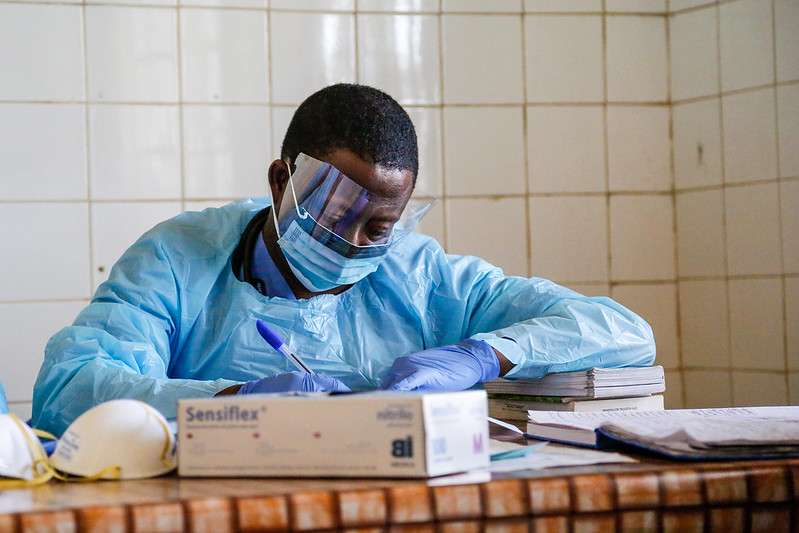
The WHO is also supporting Sierra Leone in the education of health care workers, providing 160 individuals with training in infection prevention, laboratory protocols, and community risk awareness. The organization provided the country $38,000 worth of laboratory supplies, such as testing kits and safety equipment, including medical gloves, gowns, biohazard waste bags and infrared thermometers, according to its website.
Mpox Vaccine
At the beginning of April, Sierra Leone received 61,300 doses of the mpox vaccine from Gavi, the Vaccine Alliance, the Republic of Ireland, as well as immunization assistance from the HO, the African Centres for Disease Control and Prevention and UNICEF, Gavi reports.
The country has begun the process of nationwide vaccination, beginning with exposed health care workers, those at higher risk of infection and children 12 and up, according to Barron’s. It requires two doses, the second administered four weeks after the first. As of May 8, 2025, 24,000 people have received full vaccination for mpox in Sierra Leone.
With the mpox vaccine and aid from health agencies such as the WHO and Gavi, the Vaccine Alliance, Sierra Leone has the resources it needs to curtail the rising number of mpox cases.
– Amelia Dutch Player
Amelia is based in Savannah, GA, USA and focuses on Global Health for The Borgen Project.
Photo: Flickr
