• Link to X
  • Link to Facebook
  • Link to Instagram
  • Link to TikTok
  • Link to Youtube
  • About
    • About Us
      • President
      • Board of Directors
      • Board of Advisors
      • Financials
      • Our Methodology
      • Success Tracker
      • Contact
  • Act Now
    • 30 Ways to Help
      • Email Congress
      • Call Congress
      • Volunteer
      • Courses & Certificates
      • Be a Donor
    • Internships
      • In-Office Internships
      • Remote Internships
    • Legislation
      • Politics 101
  • The Blog
  • The Podcast
  • Magazine
  • Donate
  • Click to open the search input field Click to open the search input field Search
  • Menu Menu
Blog - Latest News
Foreign Aid, Poverty Reduction, United Nations

Extreme Poverty Has Been Cut in Half Since 1990
Economist_global_poverty_stats _opt
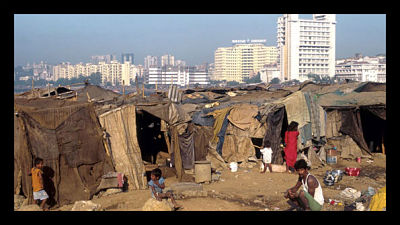
In 1990, 43% of the world’s population subsisted on less than $1.25 per day. By 2010, that number had shrunk to 21%. This success comes 5 years before the United Nation’s Millennium Development Goal of achieving such a number by 2015.

The conversation has now shifted to the remaining 21%. Optimists hope to achieve similar success by 2030. However, there are several unique obstacles to addressing that 21%, and the economic conditions that allowed such a rapid decline before are unlikely to be replicated in the coming decade.

Much of the success of the last two decades was achieved by slightly elevating the conditions of those living just below the $1.25 per day line. Pulling a person living at $1.15 per day over the $1.25 line is much easier than pulling someone living at $0.25 to over $1.25. In other words, much of the remaining 21% was the bottom half of the original 43 percent. The challenge of the next decades will be to improve the lives of the most impoverished people on Earth.

China’s growth over the past decades was instrumental in lowering the extreme poverty rate. In the twenty years, from 1981 to 2001, China pulled 680 million of its own citizens out of extreme poverty as it rapidly developed. With China’s extreme poverty rate now at low levels, the focus will now shift to new developing countries, primarily India and Africa. The challenge will be to replicate the economic conditions for such an achievement in vastly different governmental and cultural contexts.

Should such a success be achieved by 2030, however, the fight against poverty will hardly be over. The $1.25 a day figure is simply an accepted global standard of extreme poverty, and does not account for those living in poverty in developed countries. In the U.S., the poverty line sits at $30 a day–a marked difference. However, with extreme poverty levels eradicated, the world would be able to focus anew on those living just below the line.

– Andrew Rasner

Sources: The Economist, The Wall Street Journal, The Economist
Photo: The Economist,

July 17, 2013
Share this entry
  • Share on Facebook
  • Share on X
  • Share on WhatsApp
  • Share on Pinterest
  • Share on LinkedIn
  • Share on Tumblr
  • Share on Vk
  • Share on Reddit
  • Share by Mail
https://borgenproject.org/wp-content/uploads/borgen-project-logo.svg 0 0 Borgen Project https://borgenproject.org/wp-content/uploads/borgen-project-logo.svg Borgen Project2013-07-17 08:46:192013-08-14 15:18:42Extreme Poverty Has Been Cut in Half Since 1990

Get Smarter

  • Global Poverty 101
  • Global Poverty… The Good News
  • Global Poverty & U.S. Jobs
  • Global Poverty and National Security
  • Innovative Solutions to Poverty
  • Global Poverty & Aid FAQ’s
Search Search

Take Action

  • Call Congress
  • Email Congress
  • Donate
  • 30 Ways to Help
  • Volunteer Ops
  • Internships
  • Courses & Certificates
  • The Podcast
Borgen Project

“The Borgen Project is an incredible nonprofit organization that is addressing poverty and hunger and working towards ending them.”

-The Huffington Post

Inside The Borgen Project

  • Contact
  • About
  • Financials
  • President
  • Board of Directors
  • Board of Advisors

International Links

  • UK Email Parliament
  • UK Donate
  • Canada Email Parliament

Get Smarter

  • Global Poverty 101
  • Global Poverty… The Good News
  • Global Poverty & U.S. Jobs
  • Global Poverty and National Security
  • Innovative Solutions to Poverty
  • Global Poverty & Aid FAQ’s

Ways to Help

  • Call Congress
  • Email Congress
  • Donate
  • 30 Ways to Help
  • Volunteer Ops
  • Internships
  • Courses & Certificates
  • The Podcast
Link to: Physicians for Human Rights Link to: Physicians for Human Rights Physicians for Human Rights Link to: USAID Helps Boost Pakistan Mango Exports Link to: USAID Helps Boost Pakistan Mango Exports USAID Helps Boost Pakistan Mango Exports
Scroll to top Scroll to top Scroll to top