How Leave No Girl Behind is Empowering Marginalized Girls
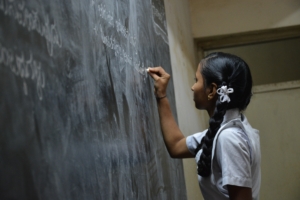 Thousands of marginalized girls in developing countries have been impacted by the Leave No Girl Behind (LNGB) initiative. On top of literacy, numeracy and vocational skills, many have developed a stronger sense of agency. Yet, a recent report shows that without wider collaboration and context-specific support, social and economic barriers may continue to stunt girls’ newfound confidence and skills. Shifting community and stakeholder perceptions emerges as a vital focal point, with successes in this area offering hope for progress beyond the program.
The Evaluation
The independent evaluation analyzes a U.K.-funded program targeting out-of-school girls in low-income countries. The LNGB initiative provides education pathways for marginalized girls, with options to transition into formal schooling or work environments. Reaching 230,000 adolescents across 10 African and South Asian countries, it focuses on those who have never attended school or dropped out early, mostly from impoverished backgrounds. Many are early brides, teenage mothers or face additional challenges due to disabilities.
The Research for Equitable Access and Learning (REAL) Centre at the University of Cambridge led the report. The Borgen Project interviewed the study’s lead researcher, Dr. Asma Zubairi, who shared insights about key findings and recommendations.
Girls’ Perspectives
An estimated 122 million girls are out of school worldwide, and women account for two-thirds of all adults unable to read. In low-income countries, girls are more likely to be out of school than boys, according to the UNESCO Institute for Statistics. The recent evaluation focuses on LNGB case studies from Nepal, Kenya and Ghana, where the compounded effects of poverty and gender norms impact education outcomes. Female youth not in education, employment and training is estimated at 25.3% in Ghana, 25% in Kenya and 45.8% in Nepal.
Foregrounding female adolescent perspectives was at the heart of the study, and Dr. Zubairi emphasized the significance of participatory research methods to mitigate power imbalances and center marginalized voices. “River of Life” exercises allowed participants to chart their personal experiences visually, encouraging nuanced perspectives to emerge.
Some of the data collected was quantifiable; for instance, 91% of girls interviewed identified the basic literacy and numeracy lessons as the most positive aspects of the projects. Meanwhile, powerful stories of personal change were spotlighted through individual responses. In Ghana, for example, a 17-year-old girl who had become less shy after the LNGB program stated: “No matter the number of people available, I will be able to speak in their midst.” Meanwhile, a 19-year-old from Kenya, forced into marriage at 14, described how the project taught her to protect herself and start a business.
Contexts and Marginalization
Marginalization, according to Dr. Zubairi, has “no set definition”. While many projects focused on girls coming from ultra-poor households, others, such as in Nepal, targeted early brides. Nepal presented additional issues of familial and cultural resistance to female youth traveling to the learning centers unaccompanied.
Successes, therefore, varied according to context. One aim was to shift social norms, like perceptions of girls entering traditionally male fields. In Garissa, a county in Kenya bordering Somalia, there was “not the appetite to focus on male-dominated vocations,” Dr. Zubairi said. Instead, the program led to girls opening up tailoring businesses, a more traditionally female endeavor. In a different Kenyan town, Kilifi, girls had more success choosing non-traditional specializations, including mechanics and plumbing.
Furthermore, levels of marginalization vary within the female adolescent category according to age. “The cultural barriers that a 10-year-old will face are very different to those an 18-year-old comes across in accessing education,” Dr. Zubairi said, emphasizing older adolescents’ increased domestic responsibilities.
Community Change
Community and household sensitization programs were a significant aspect of the program. In Nepal, the project worked closely with community agents termed ‘change champions’ to sustain commitment to girls’ education. These included religious leaders from temples and mosques as well as government stakeholders.
For example, religious leaders received messages about the importance of delaying early marriage and pregnancy, with emphasis that girls should not be married until 21. With government stakeholders, a lack of “political will” to finance the projects was addressed. Dr. Zubairi said, “Funding for this type of schooling is really, really, low.” Less than 1% of the education budget is designated to education pathways outside of formal schooling across Kenya, Ghana and Nepal.
Shifting community perceptions was successful in some cases. A vocational training provider in Garissa said: “We didn’t know the importance of educating a girl child before, but now we know. They taught our village girls different skills in their program. They also discouraged FGM in our community.”
Meanwhile, in Kilifi, female youth taking up careers like plumbing and mechanics resulted in changed community perceptions of the propriety of these paths for women. Previously, investing in girls was seen as a waste of money, whereas now the community sees girls opening up their businesses as elevating household incomes and proving their competence.
Dr. Zubairi said the projects “try to communicate why investment and political will for these programs are crucial. These projects are only six to nine months, but changing community norms — that takes a generation.”
Empowerment
Empowerment is a central theme in the new report, assessing changes in girls’ decision-making. In Nepal, a female aspiring doctor whose father had initially supported her in attending the Learning Centre faced hinderance due to his changed attitude once she left the center. Now 15, he forbade her from attending school. Empowered by the program, she vocalized her desires and attended school secretly while her father worked elsewhere, stopping whenever her father returned.
The study also assessed household decision-making. Approximately one-third of the participants reported feeling confident in making informed life choices, including the ability to go to the market alone and decide what to purchase. An older girl from Kenya shared that the project had provided her with the skills to make independent decisions, allowing her to gain empowerment through her newfound income in her daily life.
Unfortunately, in some cases, empowerment increases the risk of reactionary violence. “These girls suddenly feel empowered. But often, they’re still contained within contexts where perceptions around girls’ agency have not moved. So there is a risk that if projects don’t continue to support them, girls are at extreme risk because the tools are incompatible within the community, to some degree,” the research lead said.
In Kenya, women gained independence through sewing machines that helped them generate income. However, this new empowerment sometimes created tension within the community. Although the women became self-reliant, some men held onto traditional gender roles, leading to conflict and resentment. Consequently, a few men chose to damage their wives’ sewing machines.
Continued Investment
Ongoing investment and long-term commitment are crucial to sustain female empowerment. Most participants highlighted financial barriers as a hindrance to their aspirations after leaving the program. Girls transitioning to formal school often lacked the means to acquire equipment, and some starting businesses could not afford to buy tools.
The study recommends developing multi-stakeholder relationships to ensure progress does not end with the LNGB program. The need to develop community contexts in which girls can thrive is clear. The report provides hope and actionable proposals for long-term change in this direction. “These girls are absolutely worth continuing to invest in,” Dr. Zubairi said.
Centering on personal stories, the study illustrates both the program’s successes and its current limitations, illuminating the barriers marginalized girls face and the profound potential for their empowerment.
– Anum Mahmood
Photo: unsplash
