Efforts to Address Child Poverty in Slovenia
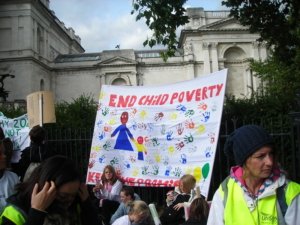 Child poverty is one of the most pressing issues that humanity faces. Children who do not have access to essential human needs like a stable food source or access to medical care have a far greater chance of disease and death than a child with access to those fundamental rights. Although it has made significant strides in the last decade in reducing child poverty and providing health care to its people, roughly 10.5% of children born in Slovenia are born into poverty, according to the World Bank. Fortunately, strategies are in place to alleviate the poverty rate among children in Slovenia.
Government Initiatives to Address Child Poverty in Slovenia
In 2021 each member of the European Union vowed to implement initiatives that would drive down the rate of poverty among its citizens. Slovenia, like every other EU nation, came up with its own strategies to help alleviate the child poverty rate in their country. Despite the significant number of people in Slovenia and Europe who have access to good health care, a stable food source and places to live, the EU still values Child Poverty as a pressing issue that must be eliminated.
One of the initiatives taken by the Slovenian government is implementing more accessible health services for children who may not otherwise have access to them. In particular, there has been a steady effort since 2018 to make mental health care a priority among Slovenian youth. Studies show that 50% of mental health disorders develop by age 15 in teenagers. By the age of 25, that number has increased to 75%. With the implementation of a National Mental Health Program, Slovenia hopes to build 25 mental health centers by 2028. Nineteen of these have already been constructed. The plan underscores suicide prevention and the prevention of all mental illness in children as a critical component of their overall strategy to fight child poverty in Slovenia.
Another initiative that aims to help curtail child poverty in Slovenia is the availability of beds specifically for marginalized groups who are left homeless due to forces outside their control. All in all, 1,280 beds are available to those who need them most. These houses give people a place to live when they otherwise would have been turned away for a litany of reasons. Whether they come from an abusive household or came to Slovenia from another country, this program aims to temporarily resolve housing issues and help children have one less thing to worry about.
Food Aid for Children in Slovenia
In 2021, 20.14% of all the people in Slovenia who required food aid were children 15 years and younger. The “Fund for European Aid to the Most Deprived” is one such program that deals with this exact issue. In 2019 the EU conducted a mid-term evaluation of what their FEAD program had done since 2014. They had assisted over 1.2 million people with aid for food, clothing and other essentials. Thirty percent of the recipients of aid were children. That equates to close to 360,00 children who received aid from this program in the years of 2014-2017. This program’s goal is “to eliminate the most severe forms of poverty by providing non-financial assistance to the most deprived in the form of food” and to “eliminate the most severe forms of poverty by providing non-financial assistance to the most deprived.” As a response to the COVID-19 pandemic, additional food was made available via the EU, giving the commission more money to get this program off the ground. All these goals that the Slovenian Government has put forward aim to reduce child poverty by the year 2030.
Final Thoughts
Despite the vast majority of people in Slovenia having access to necessities, there is still a minority that needs assistance from their government. Whether through housing provided until they find their footing, mental health facilities designed to help diagnose and treat mental illness in children, or food aid programs that make it so people don’t have to worry about their next meal. The Slovenian government has shown that it is ready and committed to ending child poverty in Slovenia.
– Calder Miller
Photo: Flickr
