Navigating Gender Equality in Turkmenistan
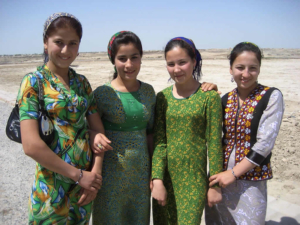 Turkmenistan, a Central Asian nation known for rich history and diverse culture, has made notable strides in various aspects of development since gaining independence in 1991. Among the many areas of focus, women’s rights has been a forefront topic sparking debate both within the country and on the international stage. While challenges still persist, there has been substantial progress.
Historical Overview: Understanding the Journey of Gender Equality in Turkmenistan
Like many countries in Central Asia, Turkmenistan has a traditional society influenced by deeply rooted cultural norms and patriarchal values. Especially under the Soviet Union in 1920, women had limited opportunities for education, employment and political participation until the country gained independence. After 1991, the government began to address gender inequality. This included “aligning Turkmenistan’s legal framework, policies and practices for children and women with international standards and best practices.”
Education Equality: Breaking Barriers to Provide Equal Access to Education
Turkmenistan has made significant progress in providing equal access to education for women. Women and men in Turkmenistan have equal rights to pursue education at all levels. According to data from UNESCO, the number of girls enrolled in primary education was approximately 275,071 in 2022 compared to the number of boys enrolled, which was 289,941. As well as education being accessible at primary levels for girls, women in Turkmenistan have the opportunity to pursue higher education. Universities and institutions of higher learning admit both male and female students with no gender-based restrictions on education choices. According to figures from UNESCO, the number of female students enrolled in higher education institutions was 237,454 in 2022 compared to the number of male students enrolled, which was 248,425.
Political Participation: Women’s Role in Shaping Turkmenistan’s Future
Turkmenistan has made efforts to increase women’s political participation, with women occupying seats in the national parliament and local government bodies. In the March 2023 elections, 25.6% of the parliament seats were held by women. This represents substantial progress compared to previous years; in 2013, women made up 16.8% of parliament. The presence of women in parliament works in hand with the legislation aimed at protecting women’s rights, which includes measures against domestic violence and gender-based discrimination. These include:
- Constitutional Provisions. Turkmenistan’s Constitution contains provisions related to women’s rights; Article 18 of the Constitution states men and women have equal rights.
- CEDAW Commitment. Turkmenistan is a signatory to the Committee on the Elimination of Discrimination Against Women; the signage of this international treaty reflects the government’s ongoing commitment to gender equality and women’s rights.
- Maternity and Family Support. The country has policies in place aimed at providing support for maternity and family needs. These measures include maternity leave, childcare facilities and family support services to promote the well-being of women and families. As discussed by UNFPA, Turkmenistan’s efforts ensure “that every woman exercises her right to a safe pregnancy and childbirth and to decide on when and how many children she will have.”
Women as Agents of Change: Gender Equality in Turkmenistan
Turkmen women have increasingly joined the workforce, making vital contributions to the nation’s economy. As established businesses and start-ups become more frequently present throughout the country, entrepreneurship is on the rise among Turkmen women. One woman in particular has put this into practice. Bahar Shihkulieva founded and directs The Business Women’s Center. It supports the “development of women’s entrepreneurship in Turkmenistan” and their creative initiatives by organizing events that strengthen and expand the cooperation of Turkmen women. With empowered women like Bahar founding organizations that actively support women in the workforce, this actively inspires and promotes education among children and future generations.
To further advance women’s rights in Turkmenistan, it is crucial for the government and civil society organizations to work together to continue the efforts made to promote education among women and children. Promoting gender equality requires not only legal reforms but also changes in societal attitudes and behaviors. Turkmenistan has come a long way in promoting women’s rights. However, there is still work to be done to ensure that women can fully participate in all aspects of society without discrimination.
– Mia Deniz Duru
Photo: Flickr
