5 Facts About Living Standards in Jammu and Kashmir
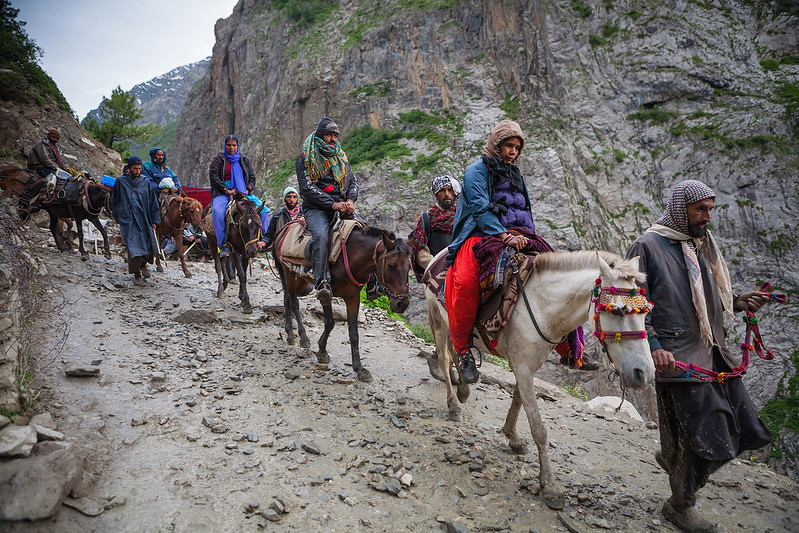
In one of the most politically contested areas of the world, poverty and inequality have been severely affecting the population. Jammu and Kashmir (J+K) are to the north of India, the northeast of Pakistan and west of China, with all three nations laying territorial claims to some or all of the region. This article will delve into how poverty and inequality are affecting the J+K population, as well as look at what some are doing to assist and alleviate those living in poverty. Here are five facts about living standards in Jammu and Kashmir.
5 Facts About Living Standards in Jammu and Kashmir
- Poverty rates are decreasing, but the statistics do not tell the whole story. According to an Indian government report published in 2023, the percentage of people living in multidimensional poverty in J+K in 2016 was 12.56%, falling dramatically to 4.8% in 2021. While this may initially seem like an encouraging statistic, it is important to remember that this is still 655,000 people living below the national poverty line of India (₹1286 a month, equivalent to $15.62). Rural areas in J+K (75.19% of the population) also report much higher rates of poverty than urban areas, meaning that the figure may be altered by disproportionately low levels of poverty in urban areas. For example, the largest J+K city of Srinagar recorded poverty rates of just 1.2%, whilst the far more rural Ramban district has a staggering 35.26% poverty rate.
- Electricity is not available to some of the population. The MPI Report also stated that 2.9% of the J+K population is without a reliable source of electricity, a crucial resource that people use in cooking and for providing hot water and heating during the colder months. About 45.2% of J+K residents also do not have adequate fuel to cook their food, exacerbating the electricity shortages in the region and causing a problem of malnutrition, with more than a quarter of J+K citizens reporting inadequate levels of proper nutrition. While a lot of progress has occurred to ensure that more and more people receive electricity each year, it is clear that more is necessary to ensure that every J+K household has reliable access to fuel and energy, two necessities crucial for the alleviation of poverty.
- Almost half of the population does not have access to proper sanitation. About 47% of J+K is without proper sanitation, a statistic that the fact that 14.2% of residents do not have access to safe drinking water has likely bolstered. This, along with the high levels of malnutrition outlined in the previous section, poses a big problem for public health and health care services across the region. J+K health care took a heavy hit following COVID-19, and development in the pharmaceutical industry is difficult for an area restricted by a low-density population and overall poor transport connectivity between major population hubs.
- Literacy rates are gradually improving across the region, albeit at unequal rates. The 2023 J+K census found that the literacy rate stood at 67.16% compared to 54.5% in 2010, clearly showing significant progress in education and development in the region, especially considering the increasing population rates over the past decade. However, males and females do not share the improvements in education, as male literacy stands at 76.75%, with female literacy only at 56.4%. This is reflective of the ongoing struggle for gender equality in the region, with men and women not receiving equal citizenship rights, and instances of rape at the hands of military personnel have been at very high rates since the 1988 insurgency.
- Action is underway to improve living standards in Jammu and Kashmir. In 2022, Manoj Sinha, the Lt. Governor of J+K announced a series of economic investment proposals between the government and business groups that would help accelerate economic development in the region. These economic advancements have already helped fuel innovations to help those living in poverty, such as Tauseef Ali Malik, who increased the portability of a traditional Bukhari heater. The positive effects of these investment programs are also felt within public infrastructure, such as the J+K Power Department, who used this extra funding to repair 500 feeders of 11kVs in under eight hours following heavy snowfall, showing the determination of the government to provide reliable energy to all.
Looking Ahead
Overall, poverty in Jammu and Kashmir is steadily decreasing, and living standards are steadily increasing. However, the effects of the COVID-19 pandemic and the continuing insurgency have hampered many attempts to alleviate poverty further. Gender inequality continues to be a persistent problem, and sanitation issues put further pressure on an already failing health care system. However, the swathe of development and investment initiatives that the Lt. Governor announced have the potential to make significant progress in tackling poverty, having already made positive developments in the provision of electricity and heating. While there is still a long way to go, there is a growing sense of optimism that these initiatives will make a real difference to those suffering in Jammu and Kashmir.
– Tom Lowe
Photo: Flickr
