Mercy Ships Brings Health Care Services to Africa
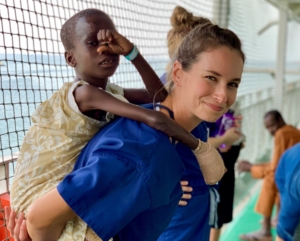
Mercy Ships, a U.K.-based charity, has offered to improve health care in developing nations for more than 40 years. With more than 44% of the world’s population living within 100 miles of a coast, Mercy Ships utilizes a fleet of repurposed and purpose-built vessels to bring life-changing health care where it is needed most. In recent years, Mercy Ships has focused on bringing health care services to Africa, particularly the sub-Saharan region. Central Africa has the highest extreme poverty rate in the continent at 54.8% as of 2022, making it a key area for Mercy Ships’ aid efforts.
Mercy Ships: History and Mission
Mercy Ships, founded in 1978, currently operates two hospital ships, the Africa Mercy and the Global Mercy. Both ships have space on board for 400–600 volunteers, who do most of the charity’s work. The volunteers include doctors, surgeons, crew, cooks, teachers, electricians and more. The Global Mercy, the charity’s first purpose-built Hospital Ship, is currently the largest charity-run hospital ship in the world.
Mercy Ships’ vision is to tackle the issues in the countries it visits by providing access to free health care and collaborating with the host government to address the root causes of these issues. In 2021, Mercy Ships brought health care services to people in Liberia, Senegal, Togo, South Africa and Benin. Mercy Ships aims to strengthen the country’s health care systems and drive policy change via training and mentoring local health care professionals and improving health care infrastructure.
The Value It Provides
In sub-Saharan Africa, which accounts for two-thirds of the global extreme poor population as of 2017, medical facilities with up-to-date equipment are often few and far between, with trained professionals difficult to hire and retain. With a chronic shortage of medicine and skilled personnel in the continent, deaths from preventable illnesses have always been an issue. According to the World Health Organization (WHO), in 2021, there were 619,000 global malaria deaths, and Africa accounted for 96%.
Malaria can be prevented or treated with access to the appropriate medicines and treatment. As such, Mercy Ships has worked in more than 55 countries, providing services valued at around £1.3 billion. By working closely with their host country, Mercy Ships provides the medication, treatment and trained personnel to treat preventable illness in the locations it ports.
Mercy Ships also leaves a lasting impact through the training it provides and the medical infrastructure it assists in creating. In 2021, Mercy Ships brought health care services to Africa exclusively and provided 3,138 surgical procedures, 16,067 dental procedures and 157,812 hours of participant training.
A Lasting Impact
Mercy Ships has various strategies for the longevity of the host port long after its visit. When Mercy Ships reaches an agreement with the respective Government, two years of preparations begin before the vessel sets sail. This preparation includes extensive research on the needs of the host nation. The organization draws up a strategy to implement in the particular country. Educating medical professionals is usually a top priority. Mercy Ships aims to share its skills and knowledge with local professionals to contribute to improving health care delivery after it leaves. Local professionals observe the work aboard the vessels and receive training in plastic surgeries, eye operations, orthopedics and gynecology.
The hope is that the local professionals pass their knowledge on to others, improving health care throughout the country. Mercy Ships also provides online training courses free of charge to reach even more people beyond their direct impact. A second focus on medical longevity is the Mercy Ships Renovation Project strategy. The charity identifies that often, in developing countries, there is a choice between paying staff and improving facilities. By renovating facilities in the countries it visits, Mercy Ships solves the dilemma and enables local facilities to increase the capacity and quality of their surgical care.
Renovations are often underway before the vessel even arrives in the host country. The organization’s strategy entails acquiring and renovating outpatient facilities to house and care for patients who live far away from the port before the surgeries. A notable clinic is the hospital outpatient extension center in Madagascar, which Mercy Ships refurbished and donated back to the community. The charity also acquires and renovates eye and dental clinics. When the charity departs, the clinics and centers are given to the local government so that they can continue to use them.
Looking Ahead
Mercy Ships, a charity that aims to fight health care poverty one patient at a time, provides a life-saving service to people who need it most. Focusing on a lasting impact improves the long-term infrastructure of the places it visits and encourages the continual improvement of medical care in developing nations. Recently, Mercy Ships has acknowledged the need to bring health care services to Africa and has begun to focus on the region. Mercy Ships hopes that more attention and support will be provided to this area in need by continuing to do so.
– Myron Westgarth
Photo: Flickr
