Period Poverty in the Democratic Republic of the Congo
 Period poverty in the Democratic Republic of the Congo (DRC) manifests itself in high costs of sanitary products, lack of access to hygiene and sanitation facilities and stigma. Fortunately, the non-governmental organization Uwezo Afrika Initiative is working to address these issues.
Defining Period Poverty
Period poverty entails a lack of access to menstrual hygiene products, facilities, education and waste management. For young girls and women unable to purchase sanitary products, period poverty interrupts their progression as these girls cannot attend school or work. Period poverty can have negative effects on mental and physical health and serves as a barrier to the advancement and progression of females across the globe. Worldwide, period poverty affects an estimated 500 million people.
Period Poverty in the DRC
In Kinshasa, in the commune of Makala, specifically in the M’Fidi district, menstruating girls are separated from their peers and may not use the same sanitary facilities as the other children. In the M’Fidi district, almost all schools have only one communal toilet facility for both males and females, making it impossible for menstruating girls to use alternative facilities.
Due to the financial hardship many families face, many girls cannot afford adequate sanitary products. The cost of disposable sanitary pads in the country ranges between $2 and $3 per month. In 2022, almost 62% of Congolese, equal to around 60 million people, lived on less than $2.15 a day, the World Bank highlights. In a country with high poverty rates where the average family has around three daughters, the cost of menstrual hygiene products represents a significant financial burden. As a result, many girls are forced to reuse sanitary products or resort to unhygienic alternatives, which poses risks to their health.
Dangers of Poor Menstrual Hygiene
Poor menstrual hygiene can pose several potential risks to women’s reproductive health. Using unclean alternatives or used sanitary products can introduce bacteria into the vagina, leading to infections in the reproductive and urinary tract and possible infertility.
Another rare but dangerous complication of poor menstrual hygiene is toxic shock syndrome (TSS). TSS manifests as flu-like symptoms, blistering rash, low blood pressure, disorientation, vomiting and diarrhea. Bacterial toxins cause the condition and menstruating females who use tampons are at particular risk when proper hygiene protocols are not followed.
DRC Period Poverty Statistics
A study by Laura Rossouw and Hana Ross published in 2021 seeks to analyze the extent of period poverty in the Democratic Republic of the Congo and seven other developing countries. The study found that 57% of the sample of women surveyed in Kinshasa reported that menstrual hygiene management facilities lacked privacy and 35% reported that these spaces are not safe. A staggering 75% of the surveyed females cannot lock the hygiene facility they use. In Kinshasa, as many as 84% of the sample reported a lack of access to water and/or soap in toilet facilities.
Impact of Reusable Sanitary Pads
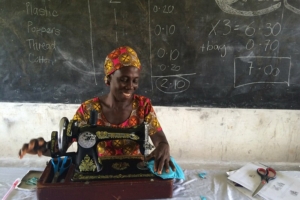
The Uwezo Afrika Initiative, a non-governmental organization, launched a program in 2018 to eradicate period poverty in the Democratic Republic of the Congo. The organization manufactures reusable sanitary pads, called Maisha Pads, using fabrics from local markets and distributes them to schools, orphanages and low-income families. The reusable Maisha Pads sell in sets of three for the affordable price of $2.50 and one can reuse the pads safely for several months. Notably, the initiative provides employment opportunities for women on the production line and enables them to earn commissions on sales.
Looking Ahead
Period poverty in the Democratic Republic of the Congo poses a significant challenge to the emotional and physical well-being of girls and women throughout the nation. Nevertheless, the production and distribution of reusable pads offer a glimmer of hope to those facing the impacts of period poverty.
– Jess Steward
Photo: Flickr
