Taking a Feminist Approach to Foreign Policy
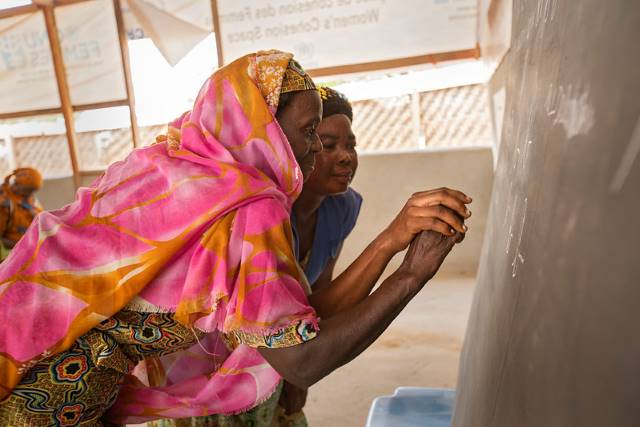 On March 8, 2021, Rep. Jackie Speier [D-CA-14], a well-known advocate for women’s rights, introduced H.Res.196: Expressing the importance of taking a feminist approach to all aspects of foreign policy. The bill’s focus is to close the gender gap between men and women globally by taking a feminist approach to foreign policy. The resolution has 43 co-sponsors with an array of male and female representatives supporting the resolution, several of whom serve on the Foreign Affairs Committee.
Global Gender Equality Issues
The inequalities among men and women exist in a myriad of forms, several of which are intersecting issues. One of the most prevalent inequalities exists in the workforce. Globally, women earn 24% less than men. This gap is so large that the current rate of progress would see 170 years pass before the gender pay gap is closed. Women often work longer than men when accounting for unpaid work such as household duties and child care. Despite this fact, women still earn less money by a considerable margin. According to Oxfam, women do double the amount of unpaid care work as men, sometimes even 10 times as much. The estimated monetary value of the unpaid work women do is, at minimum, $10.8 trillion.
Also, the fundamental reason women have waned behind men is that women have fewer rights. Worldwide, women have only three-fourths of the rights that men have. The lack of rights means women are not able to progress and develop at the same rate as men despite being disproportionately affected by poverty. Unfortunately, gender inequality impacts developing countries the most, mainly because an annual amount of $9 trillion is lost due to inequality. This significant amount of money could instead uplift economies and reduce poverty in communities.
Sustainable Development Goals
Goal 5 of the 2030 Sustainable Development Goals relates to achieving gender equality. Taking a feminist approach to foreign policy would help achieve this goal due to the influence the approach would have on promoting and supporting global adoptions of policies that directly improve gender equality. More so, achieving gender equality would help accomplish several other Sustainable Development Goals such as fair and equal employment for all and ending poverty.
Rep. Jackie Speier
Rep. Jackie Speier has advocated for women’s rights throughout her tenure in Congress. Newsweek nominated Speier as one of the 150 most “Fearless Women” in the world. Rep. Speier was also considered one of the 50 most influential people in U.S. politics for introducing the Me Too movement to Congress. Rep. Speier and Sen. Gillibrand introduced the ME TOO Congress Act in 2017, which formed the fundamental part of the Congressional Accountability Act (CAA) Reform Act.
H.Res.196
H.Res.196 provides solutions to the global problem of gender inequality. The focus is on recognizing all examples of inequality and attempting to end them accordingly. The priority is to advocate peacefully and methodically for women’s rights worldwide. H.Res. 196 works with clear and precise objectives to address gender equality. The policy goals are reached by allocating more money to support worldwide efforts in increasing women’s rights. The feminist approach to foreign policy not only benefits women who have suffered from inequality but serves for the betterment of the entire world.
H.Res.196 profoundly expresses how a feminist approach to foreign policy can help solve several intersecting issues worldwide. Supplying foreign aid and support would bring the world closer to achieving several Sustainable Development Goals. Adding a feminist focus to this will accelerate global development efforts to end poverty worldwide.
– James Van Bramer
Photo: Flickr
