Ending Child Labor in Pakistan
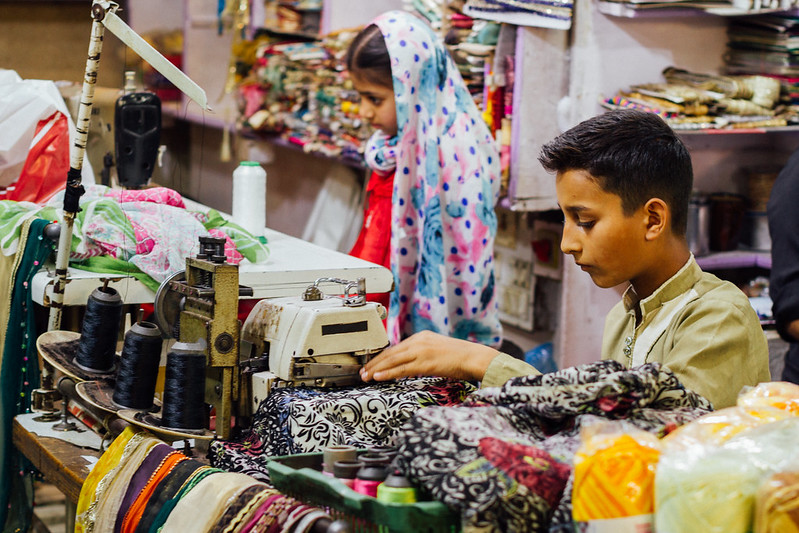
Child labor is a prevalent issue in the world’s most impoverished countries, including Pakistan. Pakistan ranks in the top 20 for countries with the worst rates of child labor. This measurement does not include children with general employment or beneficial jobs. People frequently only deem employment for children as “child labor” when it results in deprivation. Child labor is work that denies children education and other vital childhood opportunities. This type of exploitative work poses detrimental effects on their mental and physical health. The effects linger later in life and create a cyclical pattern. In Pakistan, unemployment, lack of education and high poverty rates contribute to a higher prevalence of forced labor. There needs to be an end to this devastating cycle, an end to child labor in Pakistan. Luckily, the Pakistani government and NGOs are working toward ending child labor in Pakistan.
Unemployment Takes a Toll
As of 2020, the unemployment rate in Pakistan was 4.4%, which is a substantial decrease from the 2018 rate. However, this is an increase from the 2019 4.1% unemployment rate. The country needs to get back on the path of boosting its employment. One way to achieve this is by ending child labor in Pakistan as child labor increases adult unemployment. One of the main reasons why children have to work at such a young age is due to their parents not being able to find substantial work. Another cause of unemployment is the rapid growth in population. Multiple reasons exist for the increase in population and they all contribute to the high unemployment rate, exacerbating child labor. Some of the factors include a lack of education, high fertility rates and poverty.
Lack of Education
Pakistan ranks second highest in terms of the number of children not in school. UNICEF estimates that 22.8 million children aged 5-16 are not attending school. One of the primary reasons Pakistani children do not receive an education is due to a lack of funding for school systems. Further, educational disparities exist across different demographics. Pakistani girls fall behind boys at every stage in the schooling process. Also, underdeveloped regions in Pakistan experience more of an economic struggle when it comes to education than more developed parts. This leaves the disadvantaged more vulnerable to working at a very young age instead of receiving an education. To combat this, UNICEF is working closely with Pakistan’s government to help create effective educational programming. The plans include quality alternatives to traditional learning pathways, equitable planning and budgeting, strengthening data and assessment systems and policy advocacy.
The Impact of Poverty
Nearly a quarter of Pakistani natives live below the poverty line. Many families in Pakistan struggle financially. As a result, children are often vulnerable to numerous developmental struggles, such as inconsistent access to clean drinking water and malnutrition. The fight to end child labor in Pakistan has become increasingly difficult due to childhood poverty and the lack of governmental support. According to Humanium, the Pakistani government allocated only 3% of its budget to health services and only 3% to education in 2018. The government needs to take more steps to provide aid for children. Increased funding is necessary so children can access essential resources for mental and physical development. Families should have the finances to be able to allow their children to experience childhood rather than the woes of child labor.
Looking Toward the Future
The Pakistani government has made strides towards ending child labor in Pakistan, such as creating labor laws. Pakistan’s constitution prohibits minors working in dangerous conditions, such as factories and mines. The constitution also requires that children receive an education from the state. However, Pakistan’s economy is suffering and many in the country still see child labor as a culturally acceptable practice. Moreover, economic challenges force many households to rely on their children’s income, making child labor a prevalent issue today.
Fortunately, organizations like the Child Care Foundation of Pakistan (CCFP) are taking steps to mitigate the issue. The Foundation has a mission to offer Pakistani children a more stable life through “education, health and vocational training sectors for the poverty alleviation, women’s empowerment and elimination and rehabilitation of all forms of child labor in the country.” Founded in October 1996, CCFP has helped serve 235,161 people through its instrumental programs. More accountability and acknowledgment from Pakistan’s government, in conjunction with aid from CCFP, will help make child labor in Pakistan a thing of the past.
– Montana Moore
Photo: Flickr
