How the GEPP Can Limit the Spread of Epidemics
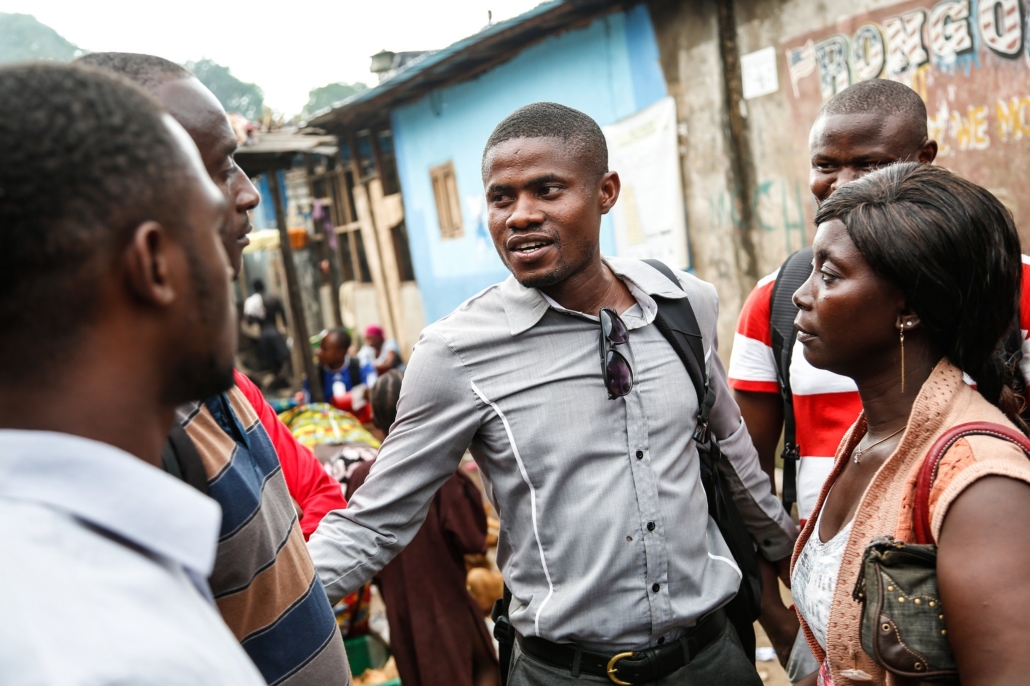
In the past, there has been some difficulty in tracking and containing epidemics. In 2014, the Ebola virus killed thousands in West Africa. At the time, many national health systems had trouble properly addressing and controlling its spread. With aid agencies not knowing where to dedicate their attention, more people fell to Ebola. Determining where to distribute a vaccine is critical for the future of any region. It is often difficult to make the correct decision when there is not enough information on human mobility, the spread of an epidemic and its lethality in certain areas. People could have better contained Ebola had newer technology been available to help aid agencies track its spread. The Global Epidemic Prevention Platform (GEPP) may be able to limit the spread of epidemics.
A Solution for Limiting the Spread of Epidemics
The Global Epidemic Prevention Platform (GEPP) is a project that Korea Telecom (KT) Corporation and the Ghanaian government created to improve Ghana’s health information system and limit the spread of epidemics. The project employs information and communications technology (ICT) to gather data on epidemics. It works by gathering existing data and by incorporating newer input from its users. It analyzes Call Detail Record (CRD) data to determine the spread of people such as cross-border movement. Its main goal is to prepare its users for possible epidemics, whether its users consist of the general public or the Ghanaian government. Its existence helps detect the early spread of an epidemic, allowing governments more time to respond and giving humanitarian agencies and NGOs the opportunity to identify possible relationships and trends.
GEPP Explained
There are three parts to the GEPP: GEPP Public, GEPP Clinic and GEPP Gov. The GEPP Public’s intention is to inform Ghanaians of epidemic-prone areas. When someone is nearing one such area, they receive a notification and warning of its status. If a user is in an area that may become contaminated soon, the app provides disease information and prevention measures for pre-response during their stay. They also receive a list of nearby hospitals.
The GEPP Clinic is for the public to make real-time reports to nearby health centers in the event of an epidemic outbreak. Users can fill out a report for either themselves or another individual with their symptoms. This report goes into the GEPP Clinic’s database and gives the government a better idea of what is happening in a particular region.
The government uses GEPP Gov, which allows it to access the data gathered from GEPP Public and GEPP Clinic to monitor any possible health crises. As a result of the digitization of airport immigration information, the government can consider immigration levels when monitoring. This also takes away the need to manually compile this information. All of this aims to help developing countries and their governments prepare for and reduce the impact of epidemics.
If a disease has already spread and it is too late to prevent infection, the GEPP can also address the aftermath of disease by conducting communications in the area. Not only can it address health crises, but it can also apply to natural disasters and their control. In the event of a natural disaster, the GEPP can help aid workers provide shelter, food and health care to victims. If an area does not have a working mobile network, as a result of a natural disaster or not, the GEPP can use its collected data to contact them via satellites and Geographical Information Systems (GIS).
GEPP Support
The Ghana Health Service, KT, Mobile Network Operators (MNOs), Resolution 202, Resolution 136, Resolution 36 and WTDC Resolution 34 support the Global Epidemic Prevention Platform. While all of these play a large role in assisting the GEPP in its goal to limit the spread of epidemics, MNOs arguably do the most. MNOs provide the app with its official data. It gathers data from around the world and its software anonymizes it to protect privacy. This data then stays on a server or an International Telecommunication Union (ITU) cloud and can go towards creating a dynamic map for the ITU. Humanitarian actors and NGOs can, with permission, view this data through MNOs.
– Nyssa Jordan
Photo: Flickr
