10 Facts About Education in Saudi Arabia
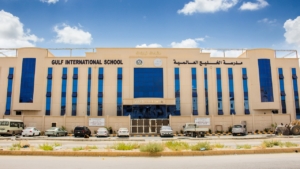
Saudi Arabia has made significant progress in expanding access to education and improving literacy among its population. Youth literacy is now nearly universal, and women have made substantial gains in higher education. At the same time, the country is reforming its education system to better prepare students for a changing economy, including through expanded vocational training and new university programs. Despite this progress, disparities remain, particularly in women’s participation in the workforce and the alignment between education and employment opportunities. Here are 10 facts about education in Saudi Arabia.
10 Facts About Education in Saudi Arabia
- Saudi Arabia requires children to attend school. Education is compulsory for children between the ages of 6 and 15, meaning students are expected to complete at least nine years of schooling.
- Islam, the religion of Saudi Arabia, is the core foundation of Saudi Arabia’s education system. Students study the Quran (the sacred text of Islam) and Muslim traditions. In Saudi Arabia, religion plays a crucial role in fields that are usually considered secular, including education, medicine and law. Students are expected to memorize the Quran and apply it to every part of their life.
- Women could not attend school before the 1960s, and the education system is still segregated. In 1961, Saudi Arabia mandated that women receive some education, but their schools were separate from those of men. To this day, the education system is completely segregated, with men and women attending different schools.
- While some women now stay in school longer, their educational attainment is not reflected in employment. Although 66% of Saudi Arabia’s 2018 university graduates in the fields of natural sciences and mathematics were women, women attend graduate programs at far lower rates than men, and women’s employment rate is very, very low (only 18.9% of the labor force was female in 2025). Thus, while some women may attain tertiary education, they are generally still unable to apply this education.
- The literacy rate has risen significantly. In 1992, the literacy rate for Saudi adults was just 71%. That figure rose to 95% by 2015. Further, the 2015 literacy rate among youth was 99%. There was still a five-percentage-point gap between adult women and men, with literacy rates of 92% and 97%, respectively. However, literacy rates among young people were more equal between the sexes, representing significant progress from the 1970s, when only 2% of women were literate.
- The Saudi Arabian school system has five categories: kindergarten, primary, intermediate, secondary and higher education. Children 4 to 6 years old are in the kindergarten stage. The primary stage educates children over the following six years. Intermediate education comes next for three years, followed by secondary education for the next three. After that, students may pursue higher education.
- Institutions of higher education are working to better align education with the needs of the job market. To this end, universities are creating new courses that better prepare students for future employment. For example, in early 2026, the Saudi Data and Artificial Intelligence Authority launched an initiative to educate students in higher education on how to effectively utilize AI in their studies and work.
- Saudi Arabia spends heavily on education. In 2023, Saudi Arabia spent $50 billion on education, which amounted to 17% of GDP. This was more than any other Persian Gulf State.
- Most university courses are taught in Arabic, but English is on the rise. More courses, such as those in science and engineering, are being offered with English as the language of instruction. For example, the King Abdullah University of Science and Technology, which accepts many foreign students, only offers courses in English.
- In order to prepare students for the workforce, Saudi Arabia is expanding vocational education. Students can attend vocational secondary schools or obtain a degree in vocational studies.
Looking Ahead
Saudi Arabia has improved the literacy of its adult population, but still has goals to widen its educational efforts. It is working to align students’ education with the needs of the economy, yet much reform is still needed to provide women with an equitable education.
– Sofia Ponomareva, Jackson Mayer
Photo: Pixabay
