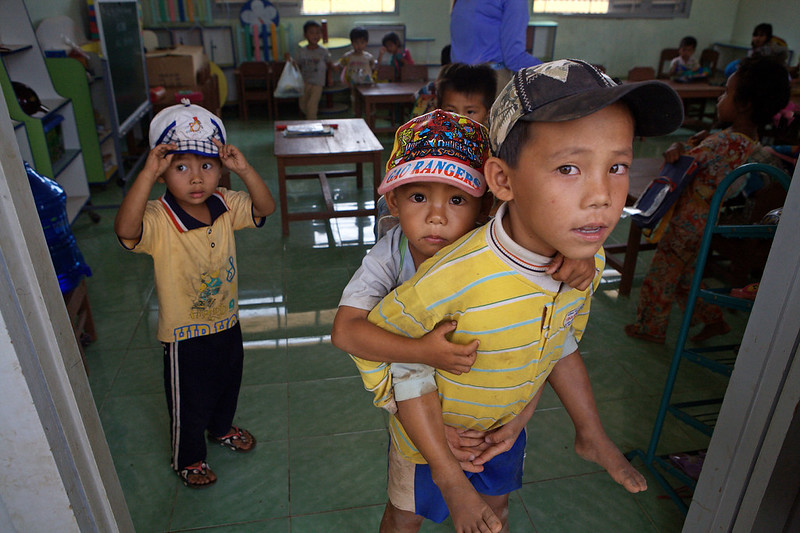
Since the late 1980s, Vietnam has transformed its education system into one of the strongest performers among lower- and middle-income countries. The country has combined high public investment, robust foundational learning and rapid expansion of access. Today, the conversation is no longer just about enrollment – it’s about equity and preparing students for a modern economy. Below are seven facts that reflect both Vietnam’s progress and its remaining obstacles.
7 Facts About Education in Vietnam
- Vietnam continues to prioritize education spending. According to the World Bank, the government spends around 4-5% of GDP on education, a relatively high level for its income group. However, experts note that how money is spent matters as much as how much is spent. As a UNICEF Vietnam education specialist stated, the key challenge is ensuring resources “reach the most vulnerable children and improve learning outcomes,” not just expand infrastructure.
- Vietnam has achieved near-universal primary enrollment, with rates above 98% in recent years. More importantly, completion rates have improved significantly compared to earlier decades, signaling reduced financial barriers and better school access. Government reforms have decreased informal school fees, which previously limited participation for poorer families. Consequently, more children, particularly in rural areas, are now staying in school through the full primary cycle.
- Access to lower secondary education is now widespread, but disparities persist across regions and ethnic groups. The World Bank reports that children from ethnic minority communities are less likely to complete secondary education compared to majority Kinh students. These gaps are especially visible in mountainous and remote areas, where infrastructure and teacher shortages still impact outcomes.
- Vietnam’s most notable achievement is the quality of learning. In PISA 2022, Vietnamese students scored at or above the OECD average in mathematics and science, despite having much lower per-student spending than many developed countries. This has led experts to describe Vietnam as an “outperformer” in global education.
- Vietnam has experienced a dramatic rise in higher education participation. According to government and World Bank data, millions of students are now enrolled in universities and colleges. However, this growth has introduced new challenges. Employers often report a skills mismatch, where graduates lack practical or technical competencies required in the labor market.
- Vietnam’s adult literacy rate now exceeds 95%, spurred by decades of investment in basic education. Yet, ethnic minority populations, who make up about 15% of the population, continue to face lower literacy and attainment levels. Language barriers and geographic isolation remain key obstacles to equal outcomes.
- International organizations are partnering with the government to close gaps. UNICEF has been active in Vietnam for decades, focusing on inclusive education, early childhood development and digital learning systems that track student progress.
Meanwhile, Room to Read has supported literacy programs across Vietnam since the early 2000s, helping improve reading outcomes for hundreds of thousands of children. These programs promote foundational literacy and gender equality, ensuring girls and marginalized students benefit from education reforms.
Vietnam has evolved into one of the world’s most impressive education success stories, combining high enrollment with strong learning outcomes. However, the next phase of reform will depend on addressing inequality, improving workforce readiness and ensuring that gains extend to ethnic minority and rural students.
– Jeff Zhou
Photo: Flickr
