Top 10 Facts about Pollution in India
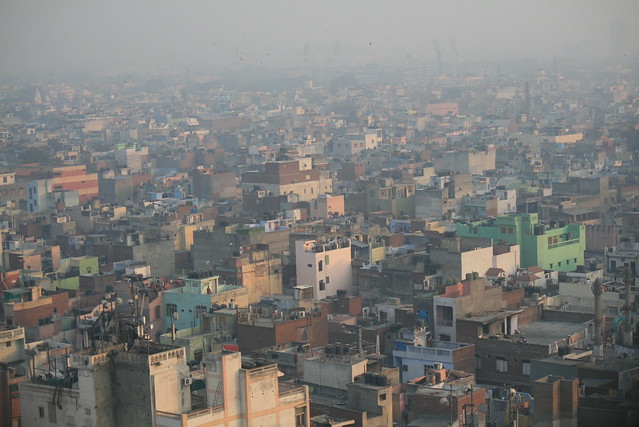
Experts around the world believe that pollution is killing millions of people. In fact, the Lancet Medical Journal believes that in 2015, pollution accounted for three times as many deaths as AIDS, tuberculosis and malaria combined. The report also said that it caused around nine million premature deaths. While pollution is an issue in almost every country, some nations deal with much higher levels than others. Year after year, India tops the list of the world’s most polluted countries. There are many important things to note about the problem, but here are the top 10 facts about pollution in India.
Top 10 Facts about Pollution in India:
- Eleven out of the top 12 cities with the highest levels of particulate pollution are located in India, according to a World Health Organization report. The report analyzed air monitoring stations across 4,300 cities worldwide in 2016. Kanpur, India tops the list, with a yearly average of 319 micrograms per cubic meter of the most harmful particle, PM2.5. Faridabad is next on the list, followed by Varanasi, Gaya, Patna and Delhi.
- Poverty and pollution are closely correlated. Tedros Adhanom Ghebreyesus, the World Health Organization’s director general, says, “air pollution threatens us all, but the poorest and most marginalized people bear the brunt of the burden.” In developing countries, mechanisms like cookstoves, heating fuels and kerosene lighting contribute to pollution. Additionally, ineffective governmental standards for pollutants have exacerbated the issue.
- In India, children are most affected by pollution. India has one of the highest rates of child mortality, in part due to both toxic air and polluted waters.
- The country’s geographical distribution contributes to the problem. Agricultural practices like burning crop stubble are still commonly used. Its smoke wafts over big cities like Mumbai. Given that these regions are landlocked, it is difficult for the smoke to dissipate. Additionally, it often combines with traffic exhaust and factory emissions.
- Air pollution accounts for an estimated 12.5 percent of deaths in India. The State of India’s Environmental Report found that it also kills around 100,000 children less than five years old every year. The risk is also higher for girls than for boys in this age group.
- Eighty-six percent of Indian bodies of water are deemed “critically polluted.” A study conducted by the nonprofit group, Centre for Science and Environment, found that most polluted waters are in the Karnataka, Telangana and Kerala regions. This is likely due to an increase in highly polluting industrial presence.
- The country’s capital, Delhi, is looking for solutions. In 2018, the city created 52 teams to increase compliance and safety, as well as take quick action. Additionally, the Environmental Pollution Control Authority (EPCA) halted all construction in the area for 10 days in November when pollution seemed particularly bad. The EPCA is even looking at implementing more vehicle emission control in the near future.
- The state of Gujarat is implementing the first-ever “cap-and-trading” program to help reduce particulate air pollution. The state’s government will set a cap on industrial emissions and will allow companies to trade permits in order to meet requirements. It will be tested out in the industrial city of Surat first, as the city is home to high amounts of polluting industries.
- In January of 2019, India implemented the National Clean Air Program. Its goal was to cut pollution in 102 cities by 20-30 percent by 2024. Union Environment Minister, Harsh Vardhan, says: “Collaborative and participatory approach involving relevant central ministries, state governments, local bodies and other stakeholders with a focus on all sources of pollution forms the crux of the Program.”
- India’s political landscape could be making things worse. The existing anti-pollution laws are badly enforced. Dealing with a problem of this magnitude requires high levels of organization and crucial coordination across state lines. However, there is tension between urban and rural political leaders, making communication difficult.
– Natalie Malek
Photo: Flickr
