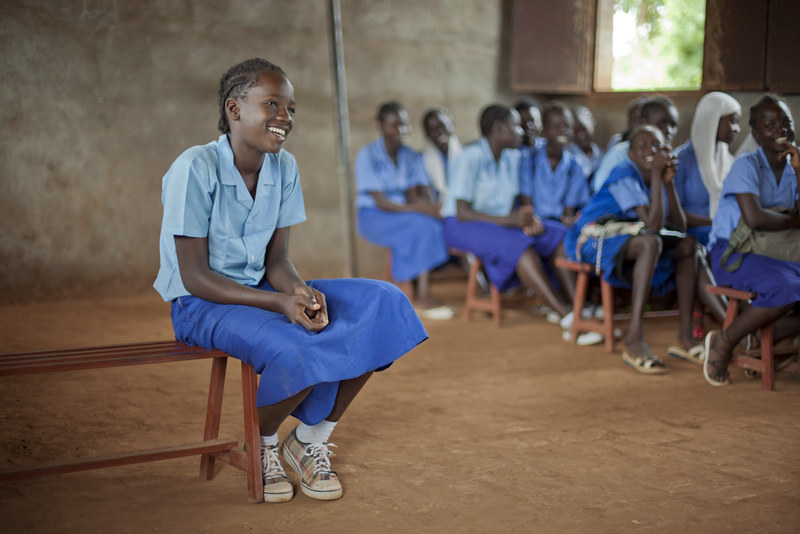
Sudan’s education system is facing one of the world’s most severe learning emergencies. Even before the war that began in April 2023, poverty, gender inequality, refugee displacement and underinvestment kept millions of children out of school. Today, the conflict has turned those long-standing issues into a national education crisis.
Top 7 Facts about Education in Sudan
- Before the current war, UNICEF estimated that about 7 million children in Sudan were already out of school or at risk of dropping out. Since the conflict started, the situation has worsened dramatically. The organization also reported in 2025 that more than 17 million of Sudan’s 19 million school-aged children were out of school. UNICEF’s warning is blunt: “Every day matters” because the longer children remain out of school, the greater their risk of exploitation, child labor, and early marriage.
- The war has significantly damaged school infrastructure. The Global Education Cluster found that around 54% to 55% of schools remained closed in 2025, while many school buildings were being used to shelter displaced families. Save the Children cautioned that more than three-quarters of Sudan’s children were out of school at the start of the 2025 academic year. UNESCO’s 2025 update gives a similarly stark picture: as of August 2025, fewer than one-third of schools had reopened.
- The education shutdown has created a long-term learning loss. The Education Cluster says the vast majority of Sudanese children have lost nearly two full school years since April 2023. This lost time matters because many children were already behind before the war. When schools close for years, students are more likely to drop out permanently, specifically girls and those from the poorest households.
- Girls’ education in Sudan remains especially vulnerable. War and displacement increase the likelihood that girls will leave school to support households, marry early or avoid unsafe travel to distant schools. Gender inequality has been a long-standing problem, as earlier education data revealed lower female literacy and attendance. Without targeted support (safe classrooms, female teachers, menstrual hygiene facilities) many girls may never return.
- UNHCR noted that by the end of 2024, approximately 9 million people in Sudan had been forcibly displaced since April 2023, including refugees and asylum-seekers. Additionally, the crisis affects Sudanese children who fled to neighboring countries. Among Sudanese refugee households surveyed in Chad, 76% claimed that their children were no longer attending school.
- Despite the scale of devastation, humanitarian actors are working to restore learning. In May 2026, UNICEF, Save the Children and partners launched a program to restore learning for 328,000 conflict-affected children. Save the Children’s Deputy Country Director in Sudan, Francesco Lanino, called it “a vital investment in their future”.
- Since many classrooms remain closed or unsafe, partners are experimenting with alternative learning. UNICEF has established 280 digital learning centers across 13 states, equipped with solar power, tablets and learning materials. These centers are designed to reach children cut off from regular schooling, particularly in areas where reopening schools is not yet possible.
Sudan’s education predicament is no longer only about enrollment- it’s about whether an entire generation can regain the chance to learn. The numbers are staggering: millions out of school, half of schools closed, and nearly two years of learning lost. However, the response from international organizations shows that recovery is still possible.
– Jeff Zhou
Photo: Flickr
