• Link to X
  • Link to Facebook
  • Link to Instagram
  • Link to TikTok
  • Link to Youtube
  • About
    • About Us
      • President
      • Board of Directors
      • Board of Advisors
      • Financials
      • Our Methodology
      • Success Tracker
      • Contact
  • Act Now
    • 30 Ways to Help
      • Email Congress
      • Call Congress
      • Volunteer
      • Courses & Certificates
      • Be a Donor
    • Internships
      • In-Office Internships
      • Remote Internships
    • Legislation
      • Politics 101
  • The Blog
  • The Podcast
  • Magazine
  • Donate
  • Click to open the search input field Click to open the search input field Search
  • Menu Menu
Blog - Latest News
Women and Female Empowerment

Where are Iraqi Women Now?
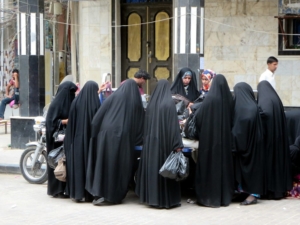

The end of a ten-year war seems like a time of hope, of rebuilding and starting over. Yet, for Iraqi women, hope does not seem like it’s in the cards. The last ten years have not been a time of progress for them. Rather, it has been a time of regression, in which many of their rights have been taken away, either by law or by the increasing amount of violence occurring in Iraq.

On paper, it looks like the women of Iraq are increasingly engaged with civil society. With elections happening in April, pictures of Iraqi women of different political parties are appearing throughout the city of Baghdad, giving a glimpse of equality amongst men and women. However, in reality, women are not making much of a political appearance, though not through the fault of their own. Iraqi Prime Minister Nouri al-Maliki has not elected a female to a single Senior Cabinet position and only one Department is headed by women: The Ministry of Women’s Affairs.

Violence in the streets of Iraq is also resulting in a loss of freedom for Iraqi women. It is no longer safe for them to walk in the streets alone, leaving many stuck inside their homes. According to many women’s groups, the increase in violence and poor security for women is the result of “the social and economic pressure that families face, the lack of public and political will to stop it, and the increased religious conservatism that often justifies the violence”. The lack of political will to stop it can be seen in the replacement of the Family Statutes Law, with one giving cultural and religious groups control of regulating family affairs, meaning that tribal leaders and religious groups can decide on issues involving divorce, marriage, custody, and inheritance using religious laws or cultural ways of living. Often times, these laws and ways of living do not favor women. This is a large setback for women because it means that women are not guaranteed equal treatment under the law.

The Iraq of today is worse for women than the Iraq of 1980. Yet, this has not discouraged Iraqi women from still standing up for women’s rights and hoping for change. Political participation is one way for women to gain freedom, yet, much more must be done to ensure equality is in their future.

– Angela Hooks

Source: CNN
Photo: CNN

March 24, 2013
Share this entry
  • Share on Facebook
  • Share on X
  • Share on WhatsApp
  • Share on Pinterest
  • Share on LinkedIn
  • Share on Tumblr
  • Share on Vk
  • Share on Reddit
  • Share by Mail
https://borgenproject.org/wp-content/uploads/borgen-project-logo.svg 0 0 Borgen Project https://borgenproject.org/wp-content/uploads/borgen-project-logo.svg Borgen Project2013-03-24 12:00:182020-04-27 06:02:59Where are Iraqi Women Now?

Get Smarter

  • Global Poverty 101
  • Global Poverty… The Good News
  • Global Poverty & U.S. Jobs
  • Global Poverty and National Security
  • Innovative Solutions to Poverty
  • Global Poverty & Aid FAQ’s
Search Search

Take Action

  • Call Congress
  • Email Congress
  • Donate
  • 30 Ways to Help
  • Volunteer Ops
  • Internships
  • Courses & Certificates
  • The Podcast
Borgen Project

“The Borgen Project is an incredible nonprofit organization that is addressing poverty and hunger and working towards ending them.”

-The Huffington Post

Inside The Borgen Project

  • Contact
  • About
  • Financials
  • President
  • Board of Directors
  • Board of Advisors

International Links

  • UK Email Parliament
  • UK Donate
  • Canada Email Parliament

Get Smarter

  • Global Poverty 101
  • Global Poverty… The Good News
  • Global Poverty & U.S. Jobs
  • Global Poverty and National Security
  • Innovative Solutions to Poverty
  • Global Poverty & Aid FAQ’s

Ways to Help

  • Call Congress
  • Email Congress
  • Donate
  • 30 Ways to Help
  • Volunteer Ops
  • Internships
  • Courses & Certificates
  • The Podcast
Link to: Millennium Consumption Goals Demand Sustainability Link to: Millennium Consumption Goals Demand Sustainability Millennium Consumption Goals Demand Sustainability Link to: Life for African Mothers Supports Neonatal Care Link to: Life for African Mothers Supports Neonatal Care Life for African Mothers Supports Neonatal Care
Scroll to top Scroll to top Scroll to top