A Guide to the Civil War in Libya
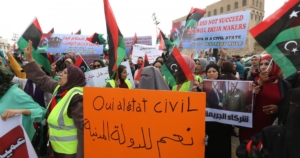
On Feb. 15, 2011, the first civil war in Libya, also known as the Libyan Revolution, began. The Libyan Revolution was fought between Muammar Gaddafi’s regime and opposing rebel forces who wanted to overthrow Gaddafi’s oppressive government. The war lasted over eight months until Gaddafi was captured and assassinated in October of that same year.
Post-Civil War
A year after the war ended, two major political groups emerged into power, the General National Congress and the House of Representatives, also known as the Tobruk government. The HoR allies with General Khalifa Haftar, the head of the Libyan National Army whose leadership resembles that of Gaddafi’s.
As rival governments, the GNC and the HoR both seek control over Libyan territory and oil. Consequently, the Libyan Political Agreement was proposed to resolve the conflict, mandating the division of power between both governments. Under these terms, The Presidency Council was created. The PC presides the United Nations-backed Government of National Accord (GNA) and is currently led by Prime Minister Fayez al-Sarraj.
Despite the agreement, more violence and instability ensued in Libya. Nevertheless, major actors like Haftar continue to violate terms mandated by the agreement. In particular, Haftar rejects the LPA and continues to oppose the GNC. In 2014, Haftar launched Operation Dignity, a campaign against Islamist militias. However, Libya Dawn, a pro-Islamist coalition, opposes this campaign and also seeks control over Libyan territory.
This breakout of violence spawned a second civil war in Libya.
The Current State of Libya
Today, the battle between rival factions is still ongoing and further exacerbated by the presence of terrorist groups, including ISIS. These groups have gained footholds in Libyan territories and seek control, training and recruiting members on Libyan grounds.
Moreover, the GNA mobilizes local militias to fight Haftar’s more organized and disciplined army. At the end of 2018, casualties in Libya reached 7,695 deaths with as many as 20,000 injured.
Having lost control over most of eastern Libya, Haftar has expanded the LNA westward. In April, the LNA advanced into the capital of Tripoli. Haftar has also launched several airstrikes into the city. Since the invasion of Tripoli, the U.N. Health Agency reported that 443 people have been killed and 2,110 have been wounded.
Humanitarian Concerns
The civil war in Libya has become an international issue, prompting the displacement of thousands of Libyans and causing a humanitarian crisis on the European border. About 90 percent of migrants crossing the Mediterranean Sea to Europe come from Libya. In 2018, the U.N. Refugee Agency reported that more than 1,111 migrants from Libya died or went missing while crossing the Mediterranean.
The European Union provides resources and training to Libyan coast guards to intercept migrant boats entering Europe. The coast guard sends refugees who are entering Europe back to Libyan detention centers, where they suffer inhumane conditions including torture, kidnap, rape and trafficking. Libyan detention centers hold nearly 6,000 migrants and asylum seekers. However, these migrants consist not only of Libyans, as Libya is a transit point for other migrants from Africa.
Aside from fleeing groups, nearly 1.3 million people in Libya are in need of humanitarian assistance. Thousands are living in unsafe conditions, according to the U.N. Refugee Agency. Within Libya alone, civil war has internally displaced 200,000 people as of October 2018.
Influence of Foreign Powers
The civil war in Libya is also highly diplomatic. All actors rely on external powers to support their efforts by providing funding and weapons. The civil war is sometimes seen as a proxy war between foreign powers because of their influence on internal actors.
The civil war in Libya impacts foreign powers, causing national security and economic concerns. Between ISIS’ increasing foothold in Libyan territory and thousands of refugees seeking asylum in Europe, the United States and the U.N. are concerned about national security. Additionally, many international oil companies rely on Libya’s oil production, and the conflict may disrupt oil prices.
The U.S. and the U.N. officially endorse the GNA, while Gulf states, such as Egypt and the United Arab Emirates, endorse the LNA. In April, the U.S. and the U.N. appealed for a truce between the LNA and GNA in Libya. However, Haftar refused.
Nonprofit Organizations
Amid the violence and instability pervading Libya, several nonprofit organizations are working to mitigate the crisis. These organizations have committed to providing civilians aid and protection amid the civil war in Libya.
Among the organizations helping Libyan civilians is the International Rescue Committee. The IRC works on the ground, providing urgent care and protection to Libyans in conflict-ridden areas. Additionally, the IRC has multiple health centers and shelters across Libya that provide medical care and supplies.
The UNHCR, the U.N. Refugee Agency, is another organization helping civilians amid the conflict. The UNHCR aims to protect Libyan refugees by providing life-saving assistance, such as medical care and access to water and sanitation facilities, in 12 different disembarkation points in western Libya. The UNHCR works to resettle refugees and reunite families and advocates for alternatives to refugee detention centers, including care arrangements for children and family tracing. While conflict plagues Libya, the people of Libya can seek some hope and comfort in the efforts of nonprofits on the ground.
– Louise Macaraniag
Photo: Heritage
