The 2013 Kenyan Election
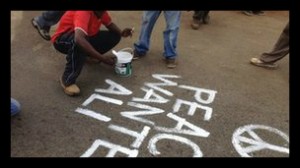 On Monday, the first general elections since December 2007 were held in Kenya. In 2007, the Kenyan election resulted in weeks of bloodshed, making this election an important push for political peace. These elections are also the first held under the new constitution passed during the 2010 referendum designed to avoid violence. Millions of Kenyans arrived at polling stations to cast ballots and vote for their representatives, members of parliament, governors, senators, and president. Running for President are Prime Minister Raila Odinga and Deputy Prime Minister Uhuru Kenyatta. Kenyatta along with his running mate William Ruto are facing trial by the International Criminal Court for crimes against humanity, accused of organizing the riots that took place in the 2007 Kenyan election.
In the minds of every Kenyan election is the violence that occurred in 2007. After incumbent President Mwai Kibaki was re-elected, riots erupted all over Kenya. Supporters of the opposition candidate, Raila Odinga, were enraged by allegations that the election was rigged by supporters of Kibaki. Ethnic violence erupted between members of the Kikuyu, Kibaki’s tribe, and the Luo and Kalenjin tribes, as opposed to the Kikuyu. Eventually, an agreement was reached wherein Kibaki would hold the position of President and Opposition leader Raila Odinga would be Prime Minister. Up to 1,000 Kenyans were killed and 600,000 displaced during the riots which lasted for more than a week. In light of the violence caused by the disputed and controversial election of five years ago, Kenyatta, Ruto, and other major politicians have urged voters to “keep the peace.”
In preparation for this recent election, people stocked up on supplies, food, and fuel, in case of riots did break out. Stores were closed and the roads were empty of cars. People strayed from ethnically-mixed urban areas fearing violence. There was a heavy security presence with trucks of police patrolling polling stations. Unfortunately, the day was not without some incidents of violence. In Kilifi, Mandera, and Changamwe, several people, civilians and police officers alike, were killed. A group of armed men attacked a police post in Mombasa killing at least ten people, including two police officers. The separatist Mombasa Republican Council has denied accusations that they were responsible for organizing some of these attacks. It is uncertain whether the violence that did break out is connected to voting. Police were critiqued as being “ill-prepared” for violence that occurred near polling stations.
The weather was hot and the voting process was slow with faulty biometric voting kits at some stations causing delays. In Nairobi and Kibera, lines stretched for more than a kilometer and people waited up to nine hours in sweltering heat complaining about the slow process to cast their vote. Despite these technical glitches and occurrences of violence, the underlying theme seemed to be the determination of the Kenyan population to cast their votes. People began lining up at five in the morning, an hour before polls opened, and many of the 30,000 polling stations remained open an hour after the official closing times with long lines of people refusing to leave until they vote. At two in the morning in Kisumu, people were blowing vuvuzelas, an alarm to call people to the polling stations early. Thousands were already in line at four in the morning, two hours before the poll opened. This election was commented as being the most complicated election that Kenya ever held, but also one of the most peaceful. It was a vast improvement from the process of the previous election that showed many discrepancies.
Last Monday truly was a “historic day” for Kenya. In Kibera, a man was seen painting “Peace Wanted Alive” on the walls and roads. “We have been waiting for this for the past five years,” said Anthony Wachira, a Kenyan who had been waiting in line for hours to vote. “Above everything we want to vote for peace.”
– Rafael Panlilio
