Top 10 Facts About Living Conditions in Senegal
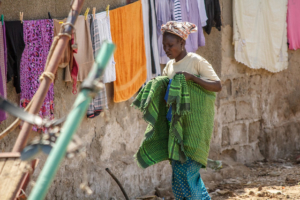
In the transition from a French colony to an independent nation, Senegal has made substantial progress in regards to improving the living standard of its people. As one of the most politically stable nations in Africa, there has been greater space in the political arena to focus on development. Despite the political stability and continual growth of the economy, there are still key aspects and dimensions in the life of Senegalese people life that can be improved. In the article below, the top 10 facts about the living conditions in Senegal are presented.
Top 10 Facts About Living Conditions in Senegal
- Senegal’s economy is primarily based on agriculture, as the sector contributes to approximately 15 percent of GDP and 77 of the workforce. Many initiatives to address development in Senegal, such as youth employment, empowerment of women and stability of rural communities are centered around agricultural developments.
- Women in Senegal perform 70 percent of the agricultural work, doing predominately manual labor because mechanical agricultural equipment used contemporarily is unavailable to rural communities. Organizations such as the Italian Development Cooperation Agency have trained women in modern technologies and practices, hoping this knowledge will empower women in their communities to teach and be given greater entrepreneurial autonomy over the land and yield.
- Climate change is drastically altering the yield and land each season which impacts the food and employment security of the Senegalese peoples. The Senegal Food and Livelihoods Enhancement Initiative (SFLEI) by the World Vision organization is implementing farmer-managed natural regeneration to address degraded soils, erosion and increase farmland fertility.
- Senegal has one of the highest electricity access rates, about 64 percent overall. The development of a centralized energy grid could provide more profuse access in the rural communities, but that is a cost-intensive endeavor for the nation. Solar and hydropower would be the most effective renewable sources for the country.
- NoPiwouma is the Senegalese offshoot of MeToo movement. It translates from Wolof to: “I will not shut up.” Due to the work of two women, Ndambaw Kama Thiat and Olivia Codouhe, Senegal is slowly beginning the conversation around sexual assault and harassment. The Google form these women created and Thiat’s blog are spaces that allow for women, traditionally suppressed by ideas of familial reputation, to tell of their experiences. Unlike the legal and economic aspects of the MeToo movement in the U.S., the mission of NoPiwouma is breaking the cultural boundaries of silence and submission.
- Hip-hop and rap is a medium that confronts Senegalese reality, recounts profound experiences of hardship and calls for actions of change. In Senegal, a 95 percent Muslim country, pervasive division of labor, societal roles and religious norms still exist. Rapping and involvement in this artistic movement allow for an honest, raw, politically charged reflection of these social values. Africulturban, a local youth organization, began a project for formerly incarcerated youth, encouraging access to the arts as an outlet for their stories and a space for stigmas in urban life to be discussed and molded.
- More than 60 percent of Senegal’s population is under the age of 25. A critique of many nations is the disengagement of the youth in politics, but the government of Senegal actively continues to try and engage this demographic through initiatives such as Plan of Action for Youth that aims to create coordinated policies through the National Youth Council of Senegal that integrate the youth in decision making and implementation of policies regarding education, employment, culture and health.
- Education in Senegal is free and compulsory until the age of 16. In 2000, primary school enrollment was 69.3 percent, and in 2009, it was 84 percent. While the percentage of Senegalese youth attending school is particularly high, there are various aspects that direly need improvement such as the material goods needed for modern education. USAID is working to improve education in Senegal by providing internet access to more rural locations, textbooks for each grade level and renovating schools.
- Senegal practices some of the best methods of combating HIV and AIDS. One of the first initiatives that the country enacted was the elimination of an excise tax that made condoms unaffordable, in conjunction with an education initiative to emphasize the importance of safe sexual practices. The religious community took action too, as AIDS became a regular topic in Friday sermons in mosques and religious figures addressed the issue on television and radio. Of the adult population between ages 15 and 49, 0.4 percent suffer from AIDS, indicating positive results from government and religious efforts.
- Senegal possesses one of the most developed water infrastructures on the African continent, but due to its location in sub-Saharan Africa, sustained and equal access to water is a challenge. There exists inequality in access and a disparity in the quality of water transportation systems. In 2010, the government and the World Bank began the Water and Sanitation Millennium Program that benefited 654,520 people in five years. Based on this success, the project was renewed for the period 2015-2020.
With Senegal showing and remaining dedicated to progress, the outlook for poverty reduction in the country is hopeful. These top 10 facts about living conditions in Senegal highlight the current situation in the country and are meant to give the face to the burgeoning development happening contemporarily in the country.
– Natalie Gates
Photo: Flickr
