Top 10 Facts About Education in Afghanistan
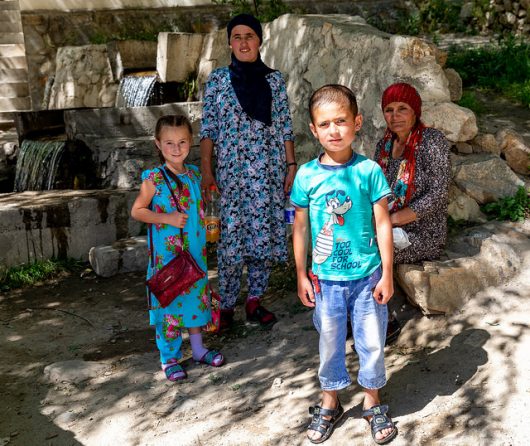 After the war with the Soviet Union and the subsequent takeover of the country by the Taliban, access to education in Afghanistan was limited. Moreover, the education system that was in place in that period was less than adequate. However, since the overthrow of the Taliban in late 2001 and the installment of a more democratic government in Afghanistan, the nation’s education system has seen improvements.
Facts About Education in Afghanistan
- In 2002, after the Taliban were overthrown by a U.S.-led coalition army, it was estimated that only about one million children were attending school. Of that number, the vast majority were boys.
- Prior to 2002, any education that children received was dominated by religion. Children were educated through the Quran and the teachings of Mohammed. Little attention was paid to courses in science, technology or liberal arts.
- Under the Taliban government, girls were pretty much prohibited from obtaining an education. Little education that girls did receive was based on scripture from the Quran, and basic reading and writing skills.
- College enrollment was also minimal while the Taliban controlled Afghanistan. In 2001, only 1% of college-aged students were enrolled in an institution for higher education.
- After the Taliban regime was overthrown, the number of students enrolling in colleges and universities increased. According to USAID (United States Agency for International Development), over 9.2 million students are currently enrolled in a higher education institution, and 39% of those students are female.
- Public and private universities (excluding technical or secondary schools) enroll around 300,000 students. Of that number, about 100,000 are female students.
- Access to education has also increased in recent years. As of 2016-2017, over 119,000 children in rural areas had access to education.
- In recent years, there has also been an emphasis on training and equipping teachers on how best to serve and educate the expanding number of students. USAID has trained over 154,000 teachers. Of that number of educators, over one third are women.
- The American University of Afghanistan (AUAF), the first private, independent, non-profit university in Afghanistan strives to expand educational opportunities for women. Its’ current student body is almost 41% female. This is quite impressive, given Afghanistan’s history of denying education opportunities to women and young girls.
- While the above facts showcase some of the accomplishments that have occurred in Afghanistan in the last 15 years, much work still needs to be done. For example, the overall literacy rate is still sub-par for most of the nation and many students still do not have easy access to schools. Also, many Afghan children cross the border to go to Pakistan so they can be taught in madrassas’, where Islamic fundamentalism is rampant.
Much has improved in the last several years regarding education in Afghanistan. Hopefully, this text will inspire you, the reader, about the necessity and importance of continuing the work of groups like USAID in helping in much-needed areas and countries. With international aid and support, the gains that Afghanistan has made in recent years, in education and in other areas, will not be in vain.
– Raymond Terry
Photo: Flickr
