Top 10 Facts About Poverty in Venezuela
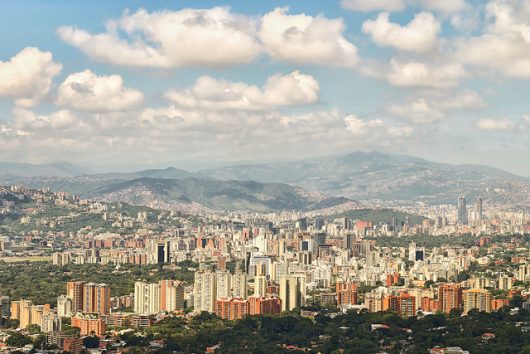 Venezuela is in crisis. On the verge of economic collapse, riots proliferate in the streets along with demands for an end to the populist, authoritarian government. Much of this anger is directed at President Nicolas Maduro — since his arrival to office in 2013, poverty rates in Venezuela have increased dramatically. Many struggle to provide for their families as food and medicine become scarce. Below are the top 10 facts about poverty in Venezuela that are essential to know.
Top 10 Facts About Poverty in Venezuela
- Poverty in Venezuela is an epidemic. Nearly 90 percent of Venezuelans live in poverty. According to estimates by the United Nations Economic Commission for Latin America and the Caribbean, this is a dramatic increase from 2014 when 48 percent of Venezuelans lived in poverty. Maria Ponce is an investigator with the local universities researching the food shortage, and she stated that “this disparity between the rise in prices and the population’s salaries is so generalized that there is practically not a single Venezuelan who is not poor.”
- Economic statistics are disappearing. In an attempt to stifle economic outrage, the Venezuelan government ceased publication of poverty statistics in 2015. It is now the responsibility of universities and sociologists to report on the current state of Venezuela and provide alternative sources of information. Luis Pedro España, a sociologist at the Universidad Católica Andrés Bello in Caracas, estimates that up to 70 percent of households in Venezuela could fall below the poverty line this year. It would be the highest rate of poverty since statistic tracking began in 1980.
- Venezuela is experiencing ‘hyperinflation.’ Venezuela is experiencing one of the worst inflation rates in history. According to Robert Renhack, deputy director of the IMF’s Western Hemisphere Department, Venezuela “is one of the most severe hyperinflation situations that we’ve known about since the beginning of the 20th century.” And the nation shows no sign of stopping. Currently, Venezuela’s inflation rate sits at 27,364 percent, dooming those without savings or foreign aid to poverty.
- Oil industries in Venezuela are crumbling. Many economists blame Venezuela’s heavy reliance on oil exports for the poor economy. One of the world’s largest exporters for oil, Venezuela was reported to possess 20 percent of the world’s oil reserves in 2012. Since then, production of crude oil in Venezuela has dropped heavily. Global Data, a digital media company, has predicted that by the end of 2018, Venezuelan crude oil production would drop by one million barrels a day.
- Government corruption is deeply rooted. Other economists blame deep political corruption and government mismanagement for Venezuela’s poverty crisis. Despite months of protests, Maduro has recently cemented his power by replacing an opposition-controlled legislative branch of the government with loyalists. Since then, thousands of Venezuelans responsible for running the large oil exports have been fired or arrested in an act of power consolidation for Maduro. The White House has issued a statement reporting that President Trump refuses to speak to Maduro until “democracy is restored in that country.”
- Minimum wage in Venezuela is $6.13. In an attempt to control inflation, the minimum wage in Venezuela was recently raised 58 percent. Based on current exchange rates, this values at about $6.13. Yaimy Flores, a Caracas housewife, struggles to provide basic necessities for her family. Her household income, provided by her husband’s minimum wage job as a janitor, is 5,196,000 bolivares a month. That is approximately $20. Much of the food they eat is dispersed from government programs and hygiene products are rationed. Despite working long hours in dire conditions, Venezuelans are barely scraping by on the minimum wage under heavy economic inflation.
- Food crisis leads to “Maduro diet.” Malnutrition is spreading. According to a recent survey, over two-thirds of Venezuelans report losing an average of 25 pounds in the last year and 61.2 percent of Venezuelans report going to bed hungry. Doctor Marianella Herrera states that “people are developing strategies to survive but not to feed themselves.” Iron-rich foods, such as maize and vegetables, have been nearly eliminated from the Venezuelan diet while government food programs fail to end the hunger.
- Medicine is running out. Due to the poor economy, Venezuela is experiencing a severe medicine shortage and hospitals are struggling to stay open. The Pharmaceutical Federation of Venezuela estimates the country is experiencing an 85 percent shortage of medicine. This has forced many Venezuelans to seek medication, often expired or unaffordable, on the black market. Meanwhile, President Maduro continues to refuse foreign humanitarian aid, blocking pharmaceutical shipments from entering the country.
- Government food subsidies aren’t enough. Iron-rich foods, such as maize and vegetables, have been nearly eliminated from the Venezuelan diet, and programs like CLAP — a government subsidized food box platform — fail to end the hunger. Initially, these packages included products like eggs, chicken and pasta and were distributed in poverty-stricken neighborhoods. Originally a ‘temporary measure,’ these boxes have become a method to generate government dependency and supply nearly half of Venezuela’s food requirements.
- Venezuelans are fleeing the country. In the past two years, nearly one million Venezuelans have fled the struggling nation, one of the biggest migration crises in Latin American history after the mass exodus following Fidel Castro’s 1959 revolution. Many Venezuelans report they no longer feel safe in their home country and have lost hope in government officials.
A Fork in the Road
Poverty has encapsulated the nation with seemingly no end in sight. These top 10 facts about poverty in Venezuela aim to provide a comprehensive understanding of the crisis in Venezuela and how it affects everything from inflation, to food and medicine.
Although the Venezuelan government still refuses to accept foreign aid, supporting local organizations in Venezuela allows for humanitarian aid to be distributed in poverty-stricken areas. As for the future, many Venezuelans envision only two possible directions: either Maduro leaves, or they do.
– Brooke Fowler
Photo: Flickr
