Top 10 Facts About Poverty in Libya
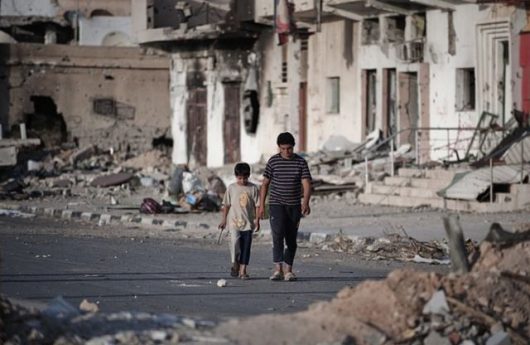
While Libya may be primarily known for its involvement in the Arab Spring and the subsequent civil war, the country has since undergone a period of drastic socio-economic change. This period has left a large portion of Libya impoverished. These are current facts about poverty in Libya.
Facts About Poverty in Libya
- Oil is the primary source of wealth for Libya, accounting for 86 percent of the country’s revenue. This is three times higher than Libya’s 2017 earnings from oil. This increase in revenue has cut the national budget deficit in half, which may be an encouraging sign for poverty rates.
- The rise in oil revenue, however, raises an interesting and unique issue in Libya. The 2018 oil figures are based on statistics from the Central Bank of Libya, which formally controls the country’s oil revenue. However, the Central Bank is based in Tripoli and controlled by the General National Congress (GNC). This government body was the formally-recognized government prior to the Arab Spring uprising, but has not been recognized by any international bodies since. Instead, the rival Council of Deputies is recognized as the established government, though it does not control the Tripoli-based Central Bank.
- The assassination of President Muammar Ghaddafi was a formative moment for the outbreak of poverty in Libya. Before his assassination, the poverty rate was so low that fewer people lived in poverty in Libya than in the Netherlands. Today, nearly a third of Libya lives below the poverty line.
- According to Global Research, Libya also once had the highest life expectancy rate and GDP-per-capita across Africa. Today, however, the country is what many consider to be a failed state, and GDP per capita is down nearly 10,000 USD.
- According to MSNBC, Libya is the largest gatekeeper of migrants attempting to travel to Europe through Africa. Without a functioning government to monitor the country’s Mediterranean coast, smugglers have consistently sent more than 100,000 migrants to Italy alone in the years following the government’s collapse. With even more migrants living in Libya until they can raise the money to travel to Europe, the country’s resources are being drained, further exacerbating poverty in Libya.
- Libya is not, however, a completely failed state. The Government of National Accord (GNA), which houses the House of Representatives, has been recognized by many international bodies. The GNA has even gone to great lengths to bring rival political factions together. While unsuccessful so far, the GNA has brought the clear majority of Libya under unified control, strengthening the fight against poverty.
- While the U.N. successfully brokered the 2015 Libyan Political Agreement, progress in reaching peace between political bodies has stalled. Initially, the agreement sought to establish a temporary government to house both rival parliaments in order to bring them into dialogue. However, further talks between rival factions have fallen apart. This has left many to speculate the need for a new agreement to be reached as the current Libyan Political Agreement has clearly become null and void.
- In southern Libya, ethnic groups have been in armed conflict with each other or the national government ever since the country’s civil war. This has caused many in the region to fall into crippling poverty. Tribes often shut down oil facilities as a means to negotiate, but this leaves many in the region who are dependent on those jobs in dire circumstances.
- Ethnic groups and rival political factions are not the only groups contributing to poverty in Libya. ISIS formally established itself in 2014 and has since carried out countless attacks ever since, including a car bombing in recent elections.
- As a result of these continued issues, more than 180,000 Libyan citizens remain internally displaced. Due to this displacement, most do not have jobs and remain extremely impoverished. Many citizens left their homes during the civil war and are now attempting to return, but do not have the financial resources to do so.
These facts about poverty in Libya are complex and rapidly changing. While there is still considerable uncertainty for poverty in Libya, and for the country itself, Libya has already taken important steps forward. These steps will hopefully lift the country out of poverty and restore its economic power in the region.
– Sam Kennedy
Photo: Google
