Cyclone Gita in Tonga: The Impact and Solution
 Tonga, or the Kingdom of Tonga, is a Polynesian archipelago of 170 islands of which 36 are inhabited. With a population of 109,008 people, Tongans rely heavily on each other and the little they have to survive.
As of 2016, 22.5 percent of the population lived at, or below, the poverty line. In fact, 8,456 people lived off of $3.10 or less a day, and 1,125 people of that lived off of $1.90 a day. According to Pacific Islands Report, Tonga suffers from poverty because Tongans need to depend on overseas trades, tourism, aid donors and private sectors to bring money into their economy. At the same time, the nation lacks access to basic living essentials and services, and face poor climate.
The Impact of Cyclone Gita in Tonga
On February 3, 2018, Tongans were hit with a tropical cyclone named Cyclone Gita — the most impactful tropical cyclone to hit Tonga in recorded history. After three long weeks, Gita heavily affected 70 percent, or 50,000 people — one-third of them being children. While only two people died from this tragedy, hundreds of homes, schools, buildings, churches and agricultural land were destroyed.
Specifically, 171 homes were destroyed, more than 1,131 homes were damaged, about 5,700 people sought shelters, 129 classrooms in 83 schools were damaged (leaving 25,000 students affected and a total of 35,000 children affected) and $152 million worth of damage hit agricultural land.
Cyclone Gita put Tongans at more of a risk as this population mainly depends on fishing and agriculture for an income. Nearly 36 percent of Tonga is agricultural land and agriculture accounts for 30 percent of the GDP.
Also, 98 percent of students were left without a school. Instead of working in the fields for income or going to school, Tongans had to refocus their attention on rebuilding their country.
How the U.S. Helped People Affected by Cyclone Gita in Tonga
In 1967, the U.S. brought the U.S. Peace Corps to Tonga to work and build a relationship with the Tongans. In 1970, the U.S. and Tonga began a bilateral relationship after the U.S. accredited Kevin Franzheim II, the U.S. Ambassador, to New Zealand, Fiji, Samoa and Tonga.
Since then, the U.S. and Tonga have held a strong relationship with each other through trades and donations. In February, USAID donated $100,000 to assist the people affected by Cyclone Gita in Tonga; every year, the U.S. provides $21 million to the Pacific Island funds.
The World Bank also provided $14.95 million to the Pacific Resilience Program, a program dedicated to strengthening awareness and preparedness for natural disasters.
Lasse Melgaard, Resident Representative from the South Pacific, said funds to the Pacific Resilience Program will go towards rebuilding 30 schools, which will put 9,000 students into a safer-built school.
Steady Support & Recovery
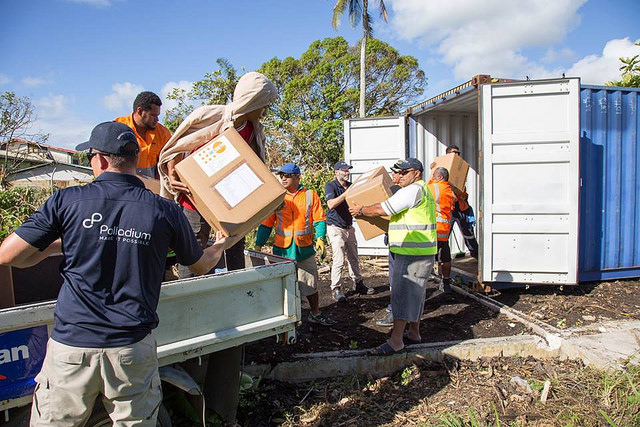
Other countries including New Zealand, India, Asia and Australia have also funded Tonga in relief efforts by donating money and humanitarian supplies. Although the people of Tonga still struggle to put families back into homes and children into school, the Tongan people continue to help each other rebuild their homes from the ground up. The unfortunate news is that it is expected to take months for Tonga to recover, but the good news is that there is more than enough helping hands to speed up the process.
– Kristen Uedoi
Photo: Flickr
