Farmer Training Promoting Sustainable Agriculture in Micronesia
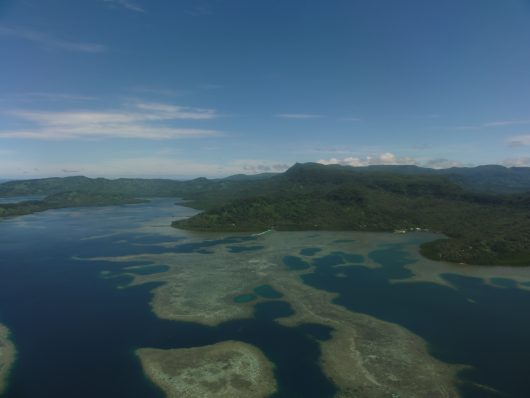 The Federated States of Micronesia is comprised of more than 600 islands in the western Pacific ocean, broken down into four nation-states: Pohnpei, Kosrae, Chuuk and Yap. In recent years, the main focus for the government has been to foster sustainable agriculture in Micronesia, for the sake of farmers and the Micronesian economy.
Agriculture is a very large part of the Micronesian economy, and the majority of its economic activity revolves around subsistence agriculture and fishing, some of the country’s main crops including breadfruit, banana, taro and yams, its main exports being fish, black pepper and betel nut.
However, despite the fruitfulness and diversity of the Micronesian food supply, local communities have little opportunities to purchase fresh produce, because the majority of produce available in Micronesia is imported and expensive. The truth is that Micronesia can improve its agricultural environment by taking advantage of adequate resources and skilled farmers to improve the situation.
Virendra Verma, a researcher and faculty member at College of Micronesia – FSM, brought up key issues surrounding sustainable agriculture in Micronesia approximately nine years ago. In his research, his most prominent suggestion was finding more effective ways for farmers to raise livestock and grow food without wasting resources. He believed the best way to do this would be to train local farmers on how to effectively use sustainable and integrated agricultural systems.
In 2009, Dr. Virendra proposed the Western SARE project On-Farm Implementation and Demonstration of Integrated Sustainable Agriculture and Livestock Production Systems for Small-Scale Farmers in Micronesia, an intricate, hands-on plan that uses local resources to demonstrate integrated farming systems involving swine and crop production.
Some specific objectives of the project are as follows:
- To develop cropping systems for multipurpose crops in order to maximize sustainable production.
- To develop swine production systems based on local resources.
- To develop easy techniques for using various components of crops for many purposes, such as food and nutrients for plants.
- To educate and train farmers the necessary components of improving and carrying out sustainable agriculture in Micronesia.
In the proposal year, this project was awarded $38,220 and approved by Sustainable Agriculture Research and Education (SARE). From 2009 to December 2011, Dr. Viendra’s plan proved to be active and successful, as it resolved many concerns within Micronesian agriculture.
The program held training for agricultural professionals that focused on key concerns within the scope of food security and family well-being. Activities in the training included presentations, hands-on activities, discussions and a variety of “field trips” that covered topics such as vegetable production, chicken farming and food processing. Additionally, workshops were taught covering a wide range of topics, also focusing on food security and sustainable measures.
In total, 80 people attended training activities in Chuuk, Palau and Yap, and participation was nearly equal for males and females; 47 percent of the participants were male and 53 percent were female. Likewise, 13 percent of the program participants were agricultural extension agents and 23 percent were farmers. This diverse turnout and the information relayed through the training made this program widely successful and beneficial in terms of improving sustainable agriculture in Micronesia.
The training, workshops and presentations that shaped this program were crucial in increasing the local population’s awareness regarding the importance of implementing effective and sustainable agricultural production. Due to the training, farmers are now able to make better use of their crops, and they are able to produce at higher rates, both things that have the power to improve the Micronesian economy in the coming years.
– Alexandra Dennis
Photo: Flickr
