Sustainable Agriculture in Malaysia Promoting Production of Palm Oil
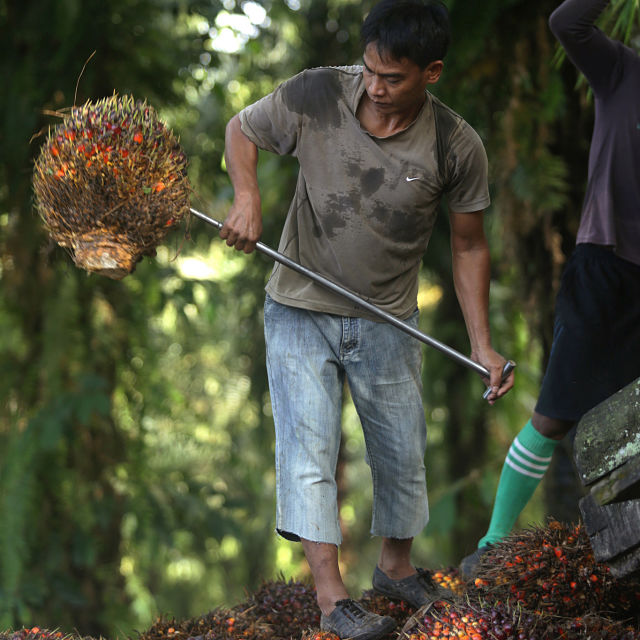 Sustainable agriculture in Malaysia centers on the production of palm oil. Globally, people consume more palm oil than any other vegetable oil and it is found as an ingredient in products ranging from soap to bread.
Palm oil grows in tropical environments, and Malaysia, located in southeast Asia, has that ideal climate. Because people consume such great quantities of palm oil, its vast production has large effects on the environment and the communities in which it is grown. As demand for palm oil continues to increase, conventional farming practices decrease biodiversity and harm the regions where it is grown.
However, on the positive side, when palm oil is produced sustainably, the environmental harms are minimized. While some countries use destructive farming practices such as clearing forests to grow palm oil, Malaysia is a model for sustainable agriculture.
Malaysian palm oil production meets the U.S. definition of sustainable agriculture. The U.S. standard is based on the 1990 Farm Bill by the Department of Agriculture. This bill lays out a framework for sustainable agricultural practices.
Malaysian production of palm oil is able to meet the standards of the bill largely due to Malaysia’s certification for sustainable palm oil, Malaysia Sustainable Palm Oil (MSPO), which started in 2015 and will be mandatory by 2019. MSPO is based on seven principles that emphasize a commitment to sustainable agriculture in Malaysia.
Below are the seven principles and the ways palm oil farming practices commit to sustainable agriculture in Malaysia.
- Management and commitment responsibility
Malaysia has committed to having 100 percent of its palm oil plantations MSPO certified by 2019. - Transparency
Malaysia is transparent with its agricultural practices as they pertain to palm oil. Additionally, Malaysia is transparent with the percentage of palm oil plantations that are MSPO certified and its plan to obtain 100 percent certification. - Compliance with legal requirements
This is a basic principle whereby Malaysian plantations will abide by laws and regulations governing palm oil agricultural practices. - Social responsibility, health, safety and employment conditions
The palm oil industry employs over 500,000 people in Malaysia and is an integral part of the economy. Growing palm oil improves the standard of living for many farmers in Malaysia and can aid in diminishing poverty. - Environment, natural resources, biodiversity and ecosystem services
Palm oil is an efficient crop, meaning a large amount of palm oil is gained from a small area of plants. This allows for a smaller environmental impact compared to other crops. Additionally, the Malaysian Palm Oil Wildlife Conservation Fund oversees the production of palm oil and ensures it does not negatively affect biodiversity where it is grown. - Best practices
The cultivation of Malaysian palm oil uses sustainable farming practices. These include integrated pest management and biomass, as well as avoiding deforestation. - Development of new plantings
As of 2017, Malaysia had 5.74 million hectares of palm oil plants. As new plants are introduced, Malaysia wants to ensure that it meets the standards that have been laid out for the already existing plantations.
As more palm oil plantations become MSPO-certified, the model of sustainable agriculture in Malaysia is one that other countries can base their own farming practices on. The positives of sustainable agriculture, especially relating to palm oil, benefit the farmers, the environment and even the consumer.
– Hayley Herzog
Photo: Flickr
