• Link to X
  • Link to Facebook
  • Link to Instagram
  • Link to TikTok
  • Link to Youtube
  • About
    • About Us
      • President
      • Board of Directors
      • Board of Advisors
      • Financials
      • Our Methodology
      • Success Tracker
      • Contact
  • Act Now
    • 30 Ways to Help
      • Email Congress
      • Call Congress
      • Volunteer
      • Courses & Certificates
      • Be a Donor
    • Internships
      • In-Office Internships
      • Remote Internships
    • Legislation
      • Politics 101
  • The Blog
  • The Podcast
  • Magazine
  • Donate
  • Click to open the search input field Click to open the search input field Search
  • Menu Menu
Blog - Latest News
Global Poverty

Progress of Road Infrastructure in Mali Drives Development
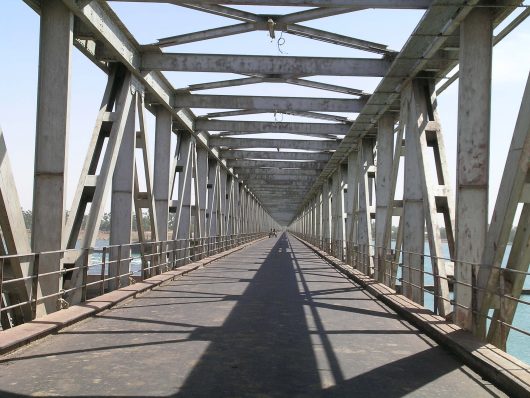
infrastructure in mali
Mali is the eighth largest country in Africa bordering Algeria, Niger, Mauritania, Guinea, Senegal, Cote d’Ivoire and Burkina Faso and is located in the North-Western region of the continent.

Infrastructure Development

Most of the population in Mali is concentrated in the southern area with mostly nomads inhabiting farther north. In the south, there is easier access to resources, agriculture and the market for buying/selling goods.

Infrastructure greatly reflects the accommodation to this geographic and demographic distribution. Road infrastructure in Mali is particularly keen on creating a network of connectivity between people, resources and export ports. This is why Mali has one of the most spatially concentrated infrastructure networks in the continent.

There are three international corridors that link landlocked Mali to the sea: Tema-Ouagadougou-Bamako, Dakar-Bamako and Abidjan-Ferkesessedougou-Bamako. These routes help bring Malian exports to central ports for shipping as well as interregional trade between other nations. Both of these help build the economy in Mali rather than keeping it as a self-reliant country struggling with poverty.

Local and Global Connectivity

The connectivity of road infrastructure in Mali has greatly improved local and global business prospects. For example, there is a transnational intercity highway known as Kankan-Kourémalé-Bamako that is the only way to enter and exit between Conakry (a port city in Guinea) and Bamako (the capital city of Mali). The African Development Bank Group highlights how this highway has “revolutionized the daily lives of thousands of people.” The highway has seen an increase in traffic for commuting workers who are now able to travel longer distances for better work. Traders set up their stalls along the highway and have seen a significant increase in customers and profits.

Mali does excellent work to maintain their roads, especially the significant highways and interregional methods of transport. Road infrastructure in Mali has guaranteed excellent safety for all users; in fact, a newly generated Road Authority has allowed for necessary maintenance throughout the year.

Despite inadequate funding, road infrastructure in Mali has been a highlighted priority to pave the way for economic growth. The nation’s government has directed much of its national funds toward maintenance and development of the overall road network, and as a result, Mali has set an excellent example for neighboring countries for how to diversify the economy by expanding transportation networks.

– Caysi Simpson

Photo: Flickr

January 25, 2018
Share this entry
  • Share on Facebook
  • Share on X
  • Share on WhatsApp
  • Share on Pinterest
  • Share on LinkedIn
  • Share on Tumblr
  • Share on Vk
  • Share on Reddit
  • Share by Mail
https://borgenproject.org/wp-content/uploads/borgen-project-logo.svg 0 0 Borgen Project https://borgenproject.org/wp-content/uploads/borgen-project-logo.svg Borgen Project2018-01-25 01:30:432024-05-29 22:38:53Progress of Road Infrastructure in Mali Drives Development

Get Smarter

  • Global Poverty 101
  • Global Poverty… The Good News
  • Global Poverty & U.S. Jobs
  • Global Poverty and National Security
  • Innovative Solutions to Poverty
  • Global Poverty & Aid FAQ’s
Search Search

Take Action

  • Call Congress
  • Email Congress
  • Donate
  • 30 Ways to Help
  • Volunteer Ops
  • Internships
  • Courses & Certificates
  • The Podcast
Borgen Project

“The Borgen Project is an incredible nonprofit organization that is addressing poverty and hunger and working towards ending them.”

-The Huffington Post

Inside The Borgen Project

  • Contact
  • About
  • Financials
  • President
  • Board of Directors
  • Board of Advisors

International Links

  • UK Email Parliament
  • UK Donate
  • Canada Email Parliament

Get Smarter

  • Global Poverty 101
  • Global Poverty… The Good News
  • Global Poverty & U.S. Jobs
  • Global Poverty and National Security
  • Innovative Solutions to Poverty
  • Global Poverty & Aid FAQ’s

Ways to Help

  • Call Congress
  • Email Congress
  • Donate
  • 30 Ways to Help
  • Volunteer Ops
  • Internships
  • Courses & Certificates
  • The Podcast
Link to: Sustainable Agriculture in Honduras Helping Rural Farmers Link to: Sustainable Agriculture in Honduras Helping Rural Farmers Sustainable Agriculture in Honduras Helping Rural Farmers Link to: Drugs and Poverty in Albania: What it Means for Europe Link to: Drugs and Poverty in Albania: What it Means for Europe Drugs and Poverty in Albania: What it Means for Europe
Scroll to top Scroll to top Scroll to top