Nanoly: Delivering Vaccines to Developing Countries
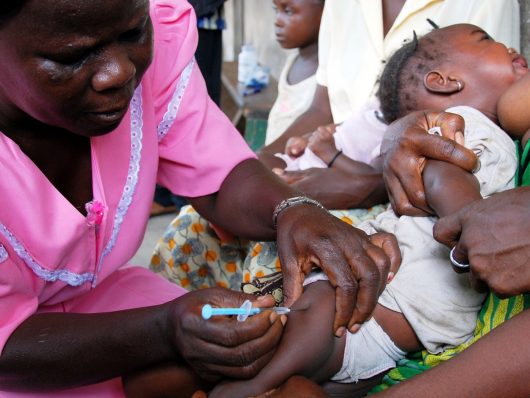 In the developed world, vaccines are readily available: they are kept refrigerated until they are needed in a doctor’s office or in a hospital. Unfortunately, delivering vaccines to developing countries is a big issue that needs to be addressed. Nanoly, a bioscience company, hopes to address the issue of vaccine transportation without refrigeration, through the use of its revolutionary polymer called NanoShield.
The proteins within a vaccine need to have a controlled environment to survive, thus, controlling storage temperature is the most important factor. The polio, measles and tetanus vaccines all need to be kept within a 35-45 degrees Fahrenheit temperature. These are also some of the most important vaccines that developing countries need.
If the vaccines are not stored in that temperature range, the proteins in the vaccine cease to function, rendering the vaccine useless.
The current “cold chain” method of delivering vaccines to developing countries requires the use of a chain of cold storage units that maintain the optimal temperature for vaccines during transport. However, the cold chain becomes difficult to maintain when it gets closer to rural areas due to the lack of electricity.
Nanoly’s creation is a new way to keep the vaccines temperature regulated and is more reliable than the cold chain. By blending the proteins with NanoShield, the polymer protects the proteins in the vaccines from outside temperatures.
During tests with high temperatures over a two week period, vaccines with NanoShield had an 88 percent efficacy rate while vaccines without it had only an 18 percent efficacy rate. The NanoShield protected the proteins and a large number of the vaccines were still usable. NanoShield can be applied to anti-viral vaccines, antibody drugs and therapeutics to help keep the temperature regulated.
It seems that there are also no adverse reactions to the polymer as well. Not only does the polymer protect the proteins from deteriorating due to high temperatures, it also does not need to be removed to administer the vaccine.
Delivering vaccines to developing countries can be difficult due to the lack of electricity. Thanks to Nanoly and their NanoShield polymer, delivering the vaccines becomes much more viable.
Developing countries need these vaccines to help protect their citizens from diseases like polio and measles. Nanoly can potentially save millions of lives thanks to the polymer they have developed.
– Daniel Borjas
Photo: Flickr
