Education in Brunei
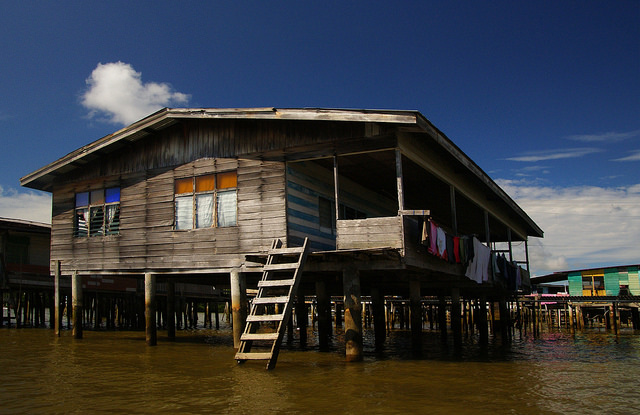
Brunei Darussalam, known as Brunei, is a tiny Southeast Asian Islamic sultanate. It is located on the South China Sea along the northern coast of the island of Borneo, bordering Malaysia. Brunei became a British protectorate in 1888 and achieved independence in 1984. A high-income country with a small population (491,900), half of its GDP ($35.26 billion) is based on petroleum exports.
The government employs a majority of the population, which provides education, health care and most other living expenses for its citizens. Here is more information about education in Brunei.
Overview of Education in Brunei
Brunei’s education system is free to citizens, including university abroad, but not compulsory. This includes textbooks, transportation, food and hostels. Education comprises one year pre-primary, six years primary and six years middle and secondary school. Either pre-university or vocational education follows this. Tertiary education is available from institutes, technical colleges, training centers and the senior education center, the University of Brunei Darussalam. The alternative tertiary education is overseas education that the government pays for.
Wawasan Brunei 2035
Wawasan Brunei 2035, which launched in 2008, outlines Brunei’s aspirations to ensure that by 2035, its people are well-educated, highly skilled and accomplished; enjoy a high quality of life; and that the nation possesses a dynamic and sustainable economy.
The desired educational outcomes (Goal #1) are a first-class education (high-quality teachers, schools and accomplishments), equal educational opportunities (high participation) and human resource development (post-secondary education and life-long learning).
SPN21, the National Education System for the 21st Century, approved in 2007, is the platform of the Ministry of Education to achieve the educational objectives of Wawasan Brunei 2035. Its three main pillars are education structure, curriculum and assessment and technical education.
Education Challenges
Brunei and SDG 4: The United Nations’ 2030 Agenda for Sustainable Development sets out 17 Sustainable Development Goals to be achieved by 2030. SDG 4 is Quality Education, to ensure inclusive and equitable quality education and promote lifelong learning opportunities for all. The U.N.’s Sustainable Development Solutions Network measures progress on the SDGs and reports them in the annual Sustainable Development Report (SDR).
Despite the vision outlined for 2025 and the plan outlined in Brunei’s SPN21, the 2025 SDR assessment of Brunei’s progress on SDG 4 was that “challenges remain,” with its score stagnating or increasing at less than 50% of the required rate. The assessment sees the country as on track or remaining for three indicators: literacy (98%), net primary enrollment rate and lower secondary completion rate, although the secondary completion rate is stagnating. The significant challenge is in the participation rate in pre-primary organized learning, which is seeing a downward trend.
Lack of Appropriate Job Opportunities: Although the government has reported that Wawasan Brunei attained significant progress regarding education, public sentiment reflects concerns about a decline in education standards and a disconnect between job opportunities and higher education.
Economic Diversification
Brunei’s economy has been highly dependent on oil and gas, and this may be part of the employment problem, especially since it has been suggested that the country’s oil and gas reserves would last only until 2035. The Ministry of Finance and Economy reports that this dependency has, however, been declining since the initiation of Wawasan Brunei 2035, with the oil and gas sector’s contribution to the GDP in the second quarter of 2024 reduced to 50.3%. New policies and initiatives have focused on economic diversification with the promotion of the development of agriculture, fisheries, tourism and financial services. This will, perhaps, bring higher education and employment opportunities into better alignment.
Ministry of Education Strategic Plan 2023-2027
The Ministry of Education’s most recent strategic plan reflects Wawasan Brunei 2035 and SPN21. Its key success measures are primary level achievement, secondary level achievement, renowned higher education institutions, post-secondary level enrollment, employable graduates, employer satisfaction and sustainability.
The plan notes a major strategy “to provide multiple pathways in increasing access into higher education” along with “schemes… to ensure there is opportunity to enrol [sic] into higher education in the private sector.” In 2022, the plan provided 388 programs across multiple fields and levels. The 2022 enrollment rates across Brunei’s five priority sectors were: services 59.78%, downstream oil and gas 19.27%, information and communication technology 16.03%, tourism 2.69% and food 2.23%.
Education and Environmental Stewardship
Brunei Darussalam has, therefore, prioritized education and the role this sector plays in the long-term future of the country. A recent innovation is the link created between education and sustainability. In line with the country’s commitment to a climate-resilient and sustainable future, Brunei’s Greening Education Plan 2025-2035 provides a comprehensive national framework where all levels of the country’s education system will include “eco-conscious” principles. Attention is given to curriculum, policy, infrastructure, procurement and data management. The plan’s six primary objectives are to:
- Inspire long-term behavioral change
- Reduce resource consumption and environmental impact
- Promote environmental literacy
- Support green skills and career pathways
- Foster community and national collaboration
- Institutionalize sustainability in educational systems
– Paula Gibson, Staff Reports
Photo: Flickr
