• Link to X
  • Link to Facebook
  • Link to Instagram
  • Link to TikTok
  • Link to Youtube
  • About
    • About Us
      • President
      • Board of Directors
      • Board of Advisors
      • Financials
      • Our Methodology
      • Success Tracker
      • Contact
  • Act Now
    • 30 Ways to Help
      • Email Congress
      • Call Congress
      • Volunteer
      • Courses & Certificates
      • Be a Donor
    • Internships
      • In-Office Internships
      • Remote Internships
    • Legislation
      • Politics 101
  • The Blog
  • The Podcast
  • Magazine
  • Donate
  • Click to open the search input field Click to open the search input field Search
  • Menu Menu
Blog - Latest News
Global Poverty, Sanitation, Water

Water and Sanitation in Lesotho Delays Poverty Reduction
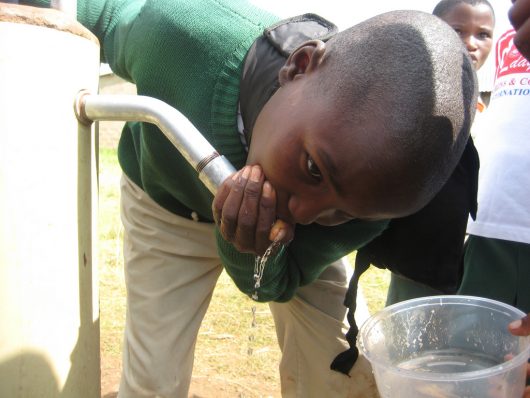
Water and Sanitation in LesothoLesotho is a small landlocked country surrounded by South Africa, located within the Orange River Basin. Water resources in Lesotho are abundant, but scarcity in supply is due to climate change and the Lesotho Highlands Water Project (LHWP).

Water resources in Lesotho include high levels of rainfall that collect and drain off into the major river systems of the Senqu (Orange), Mohokare (Caledon) and Makhaleng. Because these resources exceed the Basotho population’s current levels of use, the country exports water to South Africa and other neighboring countries.

Water is Lesotho’s main income generator, earning millions of dollars for the country each year though the LHWP. Despite Lesotho’s economic dependence on the richness of its water resources, the country faces some water-related challenges.

Nearly 25 percent of the population lacks access to safe drinking water. In 2016, 17 percent of households in Lesotho reported using unprotected water sources. Climate change and variable rain patterns lead to periods of chronic drought in Lesotho, resulting in water shortages and Basotho people needing to walk hours to collect water.

Even worse is the provision of sanitation in Lesotho, with 75 percent of people lacking access to adequate sanitation services. Without sanitation facilities, or access to working toilets or latrines, people’s only option is open defecation. Open defecation and the absence of washing facilities get associated with poor hygiene and an increased risk for diarrheal diseases.

Children under the age of five are the most vulnerable group.  Each year, 500 children under the age of five die from diarrheal diseases caused by unsafe and inadequate water and sanitation in Lesotho.

The inability to access to safe drinking water and sanitation in Lesotho has impinged upon human development and poverty reduction. The Metolong Dam Project plans to increase water accessibility in Lesotho by 2020. Until then, the Basotho population has to deal with the chronic drought conditions and the far-reaching negative consequences resource shortages have for national health and development.

– Gabrielle Doran

Photo: Flickr

August 17, 2017
Share this entry
  • Share on Facebook
  • Share on X
  • Share on WhatsApp
  • Share on Pinterest
  • Share on LinkedIn
  • Share on Tumblr
  • Share on Vk
  • Share on Reddit
  • Share by Mail
https://borgenproject.org/wp-content/uploads/borgen-project-logo.svg 0 0 Borgen Project https://borgenproject.org/wp-content/uploads/borgen-project-logo.svg Borgen Project2017-08-17 07:30:232024-05-27 09:28:02Water and Sanitation in Lesotho Delays Poverty Reduction

Get Smarter

  • Global Poverty 101
  • Global Poverty… The Good News
  • Global Poverty & U.S. Jobs
  • Global Poverty and National Security
  • Innovative Solutions to Poverty
  • Global Poverty & Aid FAQ’s
Search Search

Take Action

  • Call Congress
  • Email Congress
  • Donate
  • 30 Ways to Help
  • Volunteer Ops
  • Internships
  • Courses & Certificates
  • The Podcast
Borgen Project

“The Borgen Project is an incredible nonprofit organization that is addressing poverty and hunger and working towards ending them.”

-The Huffington Post

Inside The Borgen Project

  • Contact
  • About
  • Financials
  • President
  • Board of Directors
  • Board of Advisors

International Links

  • UK Email Parliament
  • UK Donate
  • Canada Email Parliament

Get Smarter

  • Global Poverty 101
  • Global Poverty… The Good News
  • Global Poverty & U.S. Jobs
  • Global Poverty and National Security
  • Innovative Solutions to Poverty
  • Global Poverty & Aid FAQ’s

Ways to Help

  • Call Congress
  • Email Congress
  • Donate
  • 30 Ways to Help
  • Volunteer Ops
  • Internships
  • Courses & Certificates
  • The Podcast
Link to: 5 Things You Need to Know About the Cost of Living in Egypt Link to: 5 Things You Need to Know About the Cost of Living in Egypt 5 Things You Need to Know About the Cost of Living in Egypt Link to: Water Quality in Monaco Sets a Powerful Example Link to: Water Quality in Monaco Sets a Powerful Example Water Quality in Monaco Sets a Powerful Example
Scroll to top Scroll to top Scroll to top