Where Do the World’s Refugees Come From?
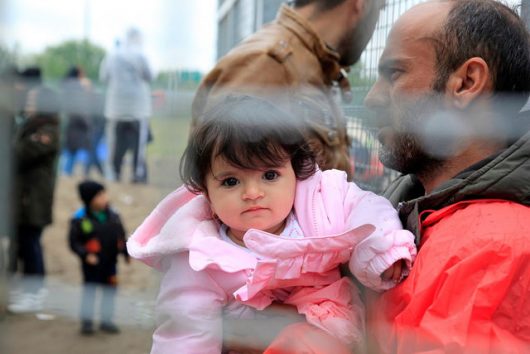
2015 UNHCR statistics estimate that 65.3 million people have been forced from their homes around the world. This equates to roughly one out of every 113 people on Earth. Almost one percent of the Earth’s population is displaced either internally, as an asylum-seeker, or as a refugee. Approximately 21.3 million of these people are considered refugees, and over half of these refugees come from just three countries: Syria, Afghanistan, and Somalia.
Syria
Approximately 4.9 million refugees are from Syria. This is a subset of the 12.3 million people who have been displaced from their homes within or outside of the country. The Syrian Civil War began in 2011 with anti-government protests, creating an opening for the militant group ISIS to infiltrate the country. The fighting has killed many citizens while destroying infrastructure including homes, schools, and hospitals.
Most Syrian refugees are resettled in five neighboring countries: Turkey, Lebanon, Jordan, Iraq, and Egypt. Many struggle to meet their basic needs and most live below the poverty line in these countries. Yet, life is still better in refugee camps than at home.
Afghanistan
Around 2.7 million refugees come from Afghanistan. Most of these individuals are resettled in Pakistan and Iran, where their human rights are in constant jeopardy. The number of Afghan refugees continues to dwindle because of continued efforts to repatriate them. These efforts are controversial because citizens still face poverty and war upon their return.
Afghanistan has had economic and security-related difficulties since the withdrawal of many international humanitarian programs in 2014. At the end of 2015, an earthquake displaced even more people. Violence continues to put those remaining in the country in danger. The country’s failing infrastructure has caused a lack of access to electricity, education, and clean water. Women and children are also heavily abused.
Somalia
Roughly 1.1 million refugees come from Somalia. Since disastrous battles in 1991, Somalia has endured continued conflict. In combination with ongoing flooding and drought, many face extreme poverty and malnutrition.
Seventeen percent of the population is either displaced or living elsewhere as refugees. Thousands of Somalis live in the Dadaab refugee camp in Kenya, where they have remained for multiple decades. Many others live in Ethiopia and Yemen. From 1990 to 2015, the number of Somalian-born people living outside the country doubled.
Humanitarian crises have put these countries at the forefront, in terms of numbers, of displaced persons and refugees. Nonetheless, waves of refugees change with global conflict. Most refugees today are fleeing conflicts in the Middle East and Africa. The 1970s saw many from Vietnam and Cambodia, while the 1990s saw mostly European refugees from the former Soviet Union and Kosovo. No matter where refugees come from or where they resettle, we must continue supporting them.
– Lindsay Harris
Photo: Flickr
