Fighting Poverty in Tuvalu Through Community
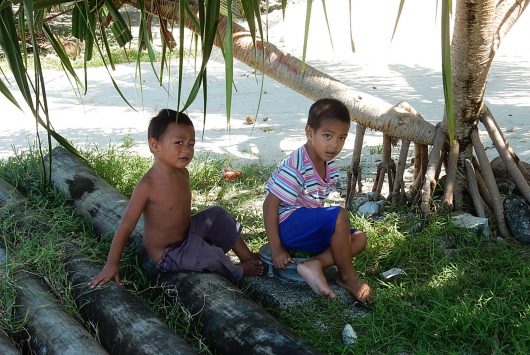
Tuvalu (pronounced two-vah-loo) is a small island nation in the South Pacific with a population of around 11,733 people. They are the only ones in the world who can speak their native language and their way of life is very remote. The small island nation relies primarily on subsistence living, which completely redefines what poverty means in this setting. Tuvalu is the fourth most impoverished nation in the world. However, it is important to look at this South Pacific island nation from a different perspective. Suppose one measures poverty in terms of income level. In that case, they will view Tuvalu in a much bleaker light than what is appropriate.
Facts About Poverty in Tuvalu
- Given the country’s remoteness, little data is available. However, the United Nations Children’s Fund (UNICEF) reports a 20.4% mortality rate among children younger than 5. According to another report, only 37% of the country’s population had access to safely managed sanitation services in 2022.
- Factors such as overpopulation affect poverty in Tuvalu because they exacerbate food scarcity. Saltwater intrusion affects the soil in Tuvalu, leading to the death of crops. This intrusion can be detrimental to the crops in the region. For example, pulaka, a native fruit that symbolizes Tuvalu culture, suffers as saltwater infiltrates the limited soil, causing the pulaka pits to die. Consequently, many families have resorted to imported rice instead.
- According to the Asian Development Bank (ADB), Tuvalu lacks many of the resources for sustainable growth and poverty reduction. Limited private businesses cause a huge reliance on the public sector. Considering the climate impact as well, storms are commonplace and can have a devastating effect on livelihoods, revenue and fiscal security.
- Tuvalu only has one hospital on the capital island, Funafuti. However, there are two more health clinics and eight health centers distributed across the islands.
- Although the country comprises nine islands and numerous small islets, it has seen tremendous population growth. According to the Food and Agriculture Organization (FAO), Tuvalu had 10,600 people as of 2017. In one year, this number increased by almost 1,000 people. More people means more mouths to feed. Despite food scarcity, “everybody helps everybody,” according to John Goheen, director of the upcoming documentary “We Are Tuvalu.” “Nobody goes hungry. It’s a country that’s very small, very close-knit,” stated Goheen in an interview with The Borgen Project.
- Tuvaluans spend less than $2 on food per day. Ironically, many in Tuvalu are overweight. The population eats about one-fourth of the recommended intake of fruits and vegetables per day. When it comes to food scarcity, it all comes down to what is easily accessible. Tuvalu imports rice and sugary foods, which are cheap to buy, while vegetables are hard to grow and fish are becoming scarce.
- Only recently has Tuvalu had to rely on imports. Before, it lived a subsistence lifestyle. Most families own pigs and many own chickens or roosters, but fish remains their main source of protein. However, fish surrounding the islands are becoming scarce. It is getting harder and harder for Tuvalu’s fishermen to come home with a good catch, said Jake Pieczynski, executive producer of “We Are Tuvalu,” when speaking with The Borgen Project. “And that’s primarily caused by changing climatic conditions, specifically, the warming of the ocean. As the temperatures rise, the reefs that surround Tuvalu die. Fish lose their homes; they migrate to other areas.”
- Another factor in coral reefs dying is waste from pigs. Pig sites are close to the shoreline, so feces washes into the ocean and kills off some of the coral by the coast. Of course, without coral, fish cannot breed. One solution the government has been putting in place is planting thick, dense grass imported from Fiji to shield much of the pig waste from washing into the water.
- In 2017, 35% of the population were youth between the ages of 15 and 35 and 39% of them did not have employment. Culturally, children must take care of their parents once they hit the proper age, which makes that statistic a bit more alarming. Pieczynski talked to the Minister for Labor during his time in Funafuti. He reported that the minister estimated that probably more than half of the population did not have employment. However, Pieczynski also noted that he never observed anyone living on the streets; no one goes homeless. “You don’t really need to have everyone in your household working a full-time job in order to survive and live a good lifestyle in Tuvalu,” Pieczynski said.
Efforts to address poverty in Tuvalu
Significant effort is being made to improve the quality of life for the people of Tuvalu. As Tuvalu is now part of the global economy and depends on imported goods, money holds much more value than before. The Australian dollar is the currency used in Tuvalu and many individuals seek employment abroad to support their families back home.
To address food scarcity, many nongovernmental organizations (NGOs) travel to Tuvalu to re-educate Tuvaluans and help them adapt to changing climate conditions. One such organization is Live and Learn Environmental Education. Its Tuvalu Food Futures program aims to increase local food consumption and decrease reliance on imported goods.
Final Remark
While poverty in Tuvalu may not seem as big a threat as local food scarcity, it is still relevant. Many live without making much money and rely instead on their families. Luckily, there seems to be a strong sense of community on the islands. Hopefully, with the help of NGOs, food scarcity can be reduced through more sustainable agriculture.
– Annie Kate Raglow
Photo: Flickr
Updated: June 11, 2024
