Brick Kilns in Bangladesh Reduce Emissions and Poverty
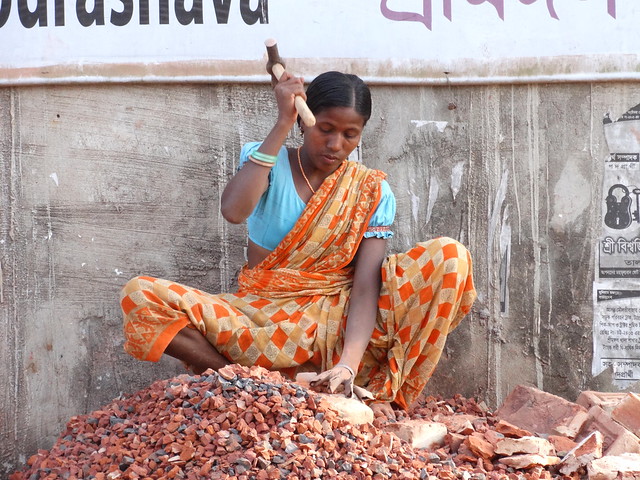 In South Asia, traditional brick kilns are known for both labor exploitation and the massive amount of pollutants they spew. A project sponsored by the World Bank Group is introducing new Hybrid Hoffman Kiln (HHK) technology into brick kilns in Bangladesh. The cleaner, more efficient kilns produce less pollution, better labor conditions and more stable income for workers.
Poor children who drop out of school to feed their families become a source of cheap labor for kiln owners in the northwestern Indian state of Jammu and Kashmir. These children often develop health problems as a result of long-term exposure to smoke and coal dust.
Along the same lines, an openDemocracy article published on July 21, 2016, revealed the cycle of debt and poverty generated by brick kilns in Pakistani Punjab.
Traditional fixed chimney kilns are also an environmental concern. According to the World Bank Group, an estimated 8,000 traditional kilns emit 10 million tons of carbon dioxide every year in Bangladesh alone.
The Bangladeshi HHK project, which began in 2008, has sought to address the many problems associated with traditional kilns. Thanks to financing and support from the World Bank Group and the Industrial and Infrastructure Development Finance Company Limited (IIDFC), there are now nine HHK brick kilns in Bangladesh.
HHK technology originated in Germany but has been modified to fit local needs. By recycling waste heat from the kiln and using a greener mix of coal and clay to burn the bricks, HHKs use only half as much coal as fixed chimney kilns, reducing pollution by 50 percent.
In addition to being environmentally friendly, the new brick kilns also have incredible economic benefits; their technology allows them to operate year-round. An HHK kiln can produce an average of 11 million more bricks per year than can a fixed chimney kiln. More efficient production means higher income for kiln workers.
Reduced pollution becomes an additional source of revenue for HHK kiln operators. By cutting carbon emissions, they receive certified carbon credits (CERs), which the World Bank Group’s Community Development Carbon Fund (CDCF) and the Danish government then purchase from them. Kiln owners must spend some of the money they earn from carbon credits on healthcare, better facilities and new safety measures.
The biggest problem with HHKs is the price tag. Building an HHK kiln costs 15 times as much as building a traditional one. It will take an estimated $3 billion to construct 1000 HHKs. However, their many environmental and economic benefits make these improved brick kilns a worthwhile investment.
– Philip Katz
Photo: Flickr
