10 Facts About Forced Migration
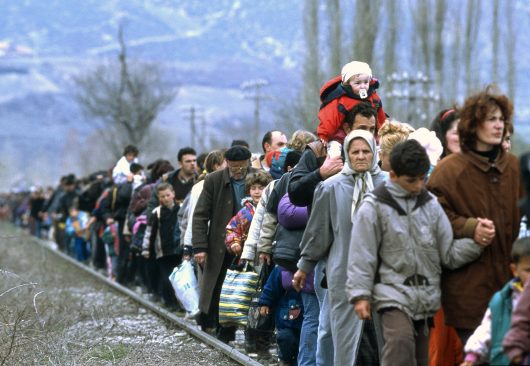
The subject of forced migration, especially related to refugees, is a major topic in current news and politics across the world. Columbia University defines forced migration as “the movements of refugees and internally displaced people (those displaced by conflicts within their country of origin) as well as people displaced by natural or environmental disasters, chemical or nuclear disasters, famine, or development projects.” Below are 10 facts about forced migration:
- Columbia University states that the three most common causes of displacement are conflict, development and disaster.
- Refugees are defined as individuals forced out of their home country due to persecution or armed conflict. Refugees are those recognized by the United Nations High Commissioner for Refugees (UNHCR).
- The most recent UNHCR report, published in 2014, stated there are 19.5 million refugees worldwide. The majority of refugees in 2014 were children. The U.N. reports 51 percent of refugees to be under the age of 18.
- Internally displaced persons (IDPs) are individuals who are forcibly
migrated within their own countries. The UNHCR reports there are over 38 million people classified as IDPs. - The 2014 Global Trends Report estimated 42,500 people being displaced daily within and outside of their home countries.
- Asylum-seeking individuals are those who have migrated across borders for protection but are not yet recognized as refugees. The U.N. reported 1.66 million people as asylum-seekers in 2014. 159,000 new asylum-seekers were reported halfway through 2015.
- The UNHCR Global Trends Report for 2015 is expected to show record breaking numbers related to forced migration. Mid-2015 data estimated the number of refugees to be 20.2 million. For the full year, the total number of individuals who have experienced forced displacement is expected to exceed 60 million for the first time in history.
- As of 2014, 86 percent of refugees are hosted by developing countries. Turkey hosted the largest amount of refugees (1.6 million) worldwide during this year.
- Syria became the largest source of refugees since 2014 due to the current conflict between the government and rebel forces.
- The UNHCR states that the ability for refugees to return safely to their homes has decreased to an estimate of 84,000 as of mid-2015. The report states, “if you become a refugee today your chances of going home are lower than at any time in more than 30 years.”
Forced migration has been a major issue for quite some time now. Although countries around the world have stepped in to help refugees and other displaced individuals, these facts further prove that it will take much more to reduce these numbers.
— Saroja Koneru
Photo: U.N. Multimedia
