4 Steps for Refugee Resettlement in the US
The U.S. first opened its doors to refugees in 1948 following World War II, when over 200,000 Europeans fled from Nazi persecution. The 1948 Displaced Persons Act granted these refugees permanent residence and the right to employment in the U.S. Later, the Refugee Act of 1980 standardized the process of refugee resettlement in the U.S. by defining official refugee status and becoming the legal framework for today’s U.S. Refugee Admissions Program.
Refugee Resettlement Process
Qualifying as a Refugee
U.S. Citizenship and Immigration Services (USCIS) defines refugees as “people who have been persecuted or fear they will be persecuted on account of race, religion, nationality, and/or membership in a particular social group or political opinion.” In the past, this has included people fleeing Nazi persecution or Communist regimes.
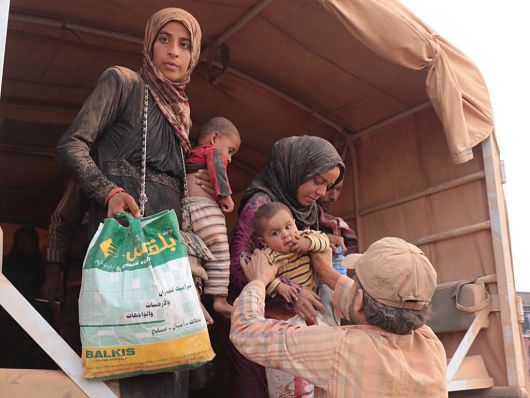
Today, thousands are fleeing Central America to avoid escalating violence as well as Syria to avoid what has been referred to as “the worst humanitarian crisis of our time.” The process by which refugees can enter the U.S. can only begin if a person is considered an official refugee under U.S. immigration law. If a person qualifies as a refugee, they must then be admitted to the U.S. Resettlement Program (USRP).
Being admitted to the U.S. Resettlement Program (USRP)
If a person qualifies as a refugee, they must then be admitted to the U.S. Resettlement Program (USRP) through a referral from the U.N. Refugee Agency (UNHCR), a U.S. Embassy, the U.S. Department of State or a family member already in the U.S. seeking to reunite. Nine Resettlement Support Centers (RSCs) around the world receive these referrals and assemble eligible applications for further consideration.
These centers are largely faith-based nonprofit organizations approved by the U.S. government to ensure utmost security when recommending an applicant for resettlement. Part of the application process requires a security screening (handled by the Department of Homeland Security and USCIS) and a health screening to ensure that applicants with a security concern or an infectious disease do not enter the U.S.
This process, on average, takes between 18 and 24 months.
Refugee Resettlement in the U.S.
If all is cleared, a refugee is paired with a sponsorship program, such as Sponsors Organized to Assist Refugees (SOAR) or Immigrant Connect, which provide new immigrants with counseling, translation and interpretation services, cultural orientation, English tutoring, financial stability during their transition to the U.S. and job search help.
Organizations like SOAR depend on community involvement in sponsoring or co-sponsoring a refugee and donating necessities such as clothing, bedding, lamps, dishes, diapers and toiletries. Volunteers help new immigrants navigate the public transit system, pick up their social security cards, obtain health services, and register for school. Refugees do not pay out of pocket for the initial cost of transitioning to the US.
Many sponsors receive grants from non-profit organizations that enable them to cover the first month’s rent and food for refugees so that newcomers may focus their energy on assimilating into the American way of life. Refugees are placed in the U.S. primarily according to connections they may have in a particular state.
A State Department spokesperson, speaking about refugees resettling in the U.S., explains, “We try very hard to get refugees close to people that they know because we think that they have a better chance of success if they have [a] support network when they first arrive, aside from just the volunteers.” Other factors include easy access to healthcare depending on personal medical conditions, fluency in English, and job prospects.
Assimilation and building a new life
After the initial chaos and novelty of entering a new country subsides, new immigrants seek to build a new life. They must acquire the appropriate credentials sanctioned by U.S. standards to continue in a field such as medicine or teaching. As a result, many immigrants find themselves at first in low-skilled jobs.
Though refugees do not pay out of pocket for any of their costs at the time of their resettlement, they must begin repaying their travel loan 6 months after arrival.
Though they receive up to three month’s rent, they do not enter subsidized housing, and therefore must find a job shortly after resettling in the U.S. In addition, U.S. agencies, such as Catholic Charities USA, are set up to help refugees apply for jobs and find education and training for their trade.
Just like any American citizen, they are free to relocate as they wish. Local organizations are set up in many cities to continue giving support to refugees.
– Mary Furth
Sources: Refugees, State.gov, UWB, USCIS, US News
Photo: Googgle Images
